Living with anxiety?
That tightness in your chest is real. The racing thoughts are real. And there are real things that help.
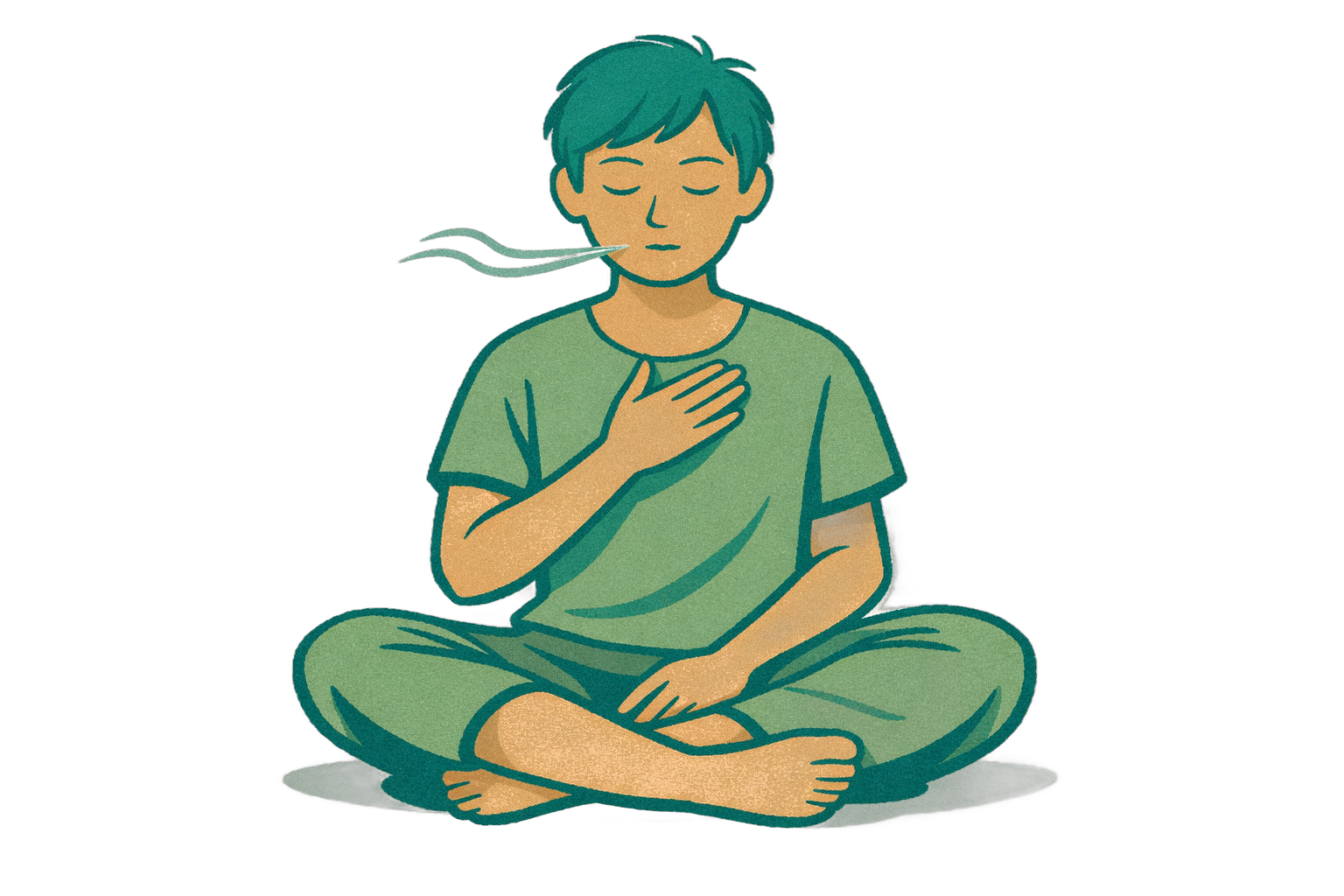
You're not 'just overthinking'
Anxiety isn't a mindset problem — it's your brain's alarm system stuck on high alert. Over 300 million people worldwide live with anxiety disorders. What you're feeling isn't weakness — it's a signal that something needs attention.
- It's normal to feel like something bad is about to happen
- It's normal for your body to be tense all the time
- It's normal to avoid things that used to be easy
- It's normal to feel exhausted even when you haven't done much

Try something right now
These exercises are used in clinical therapy. They're free and you can do them right here.
What Do You Believe About Your Worry?
Eight statements about worry. Mark how much each one resonates — then see which belief pattern is driving your anxiety cycle.
Inspired by the Metacognitions Questionnaire (Wells & Cartwright-Hatton, 2004). Items reworded — not the official MCQ-30. Snapshot, not a diagnosis.
Your metacognitive pattern
Saved on this device.
Why your mind fears its own thoughts
- Anxiety isn't just what worries you — it's also what you think about the fact of worrying. Wells & Cartwright-Hatton (2004) measured this precisely: metacognitive beliefs predict anxiety independently of their content (DOI: 10.1016/S0005-7967(03)00147-5).
- The metacognitive model of Wells (2009) identifies two belief types that fuel the cycle: those that use worry as a tool ("if I worry I'm preparing myself") and those that experience it as a threat ("my thoughts control me"). Neither is true, but both feel very real from the inside.
- Normann et al. (2014) analyzed 16 studies of metacognitive therapy and found large effects (d > 2.0) for generalized anxiety — comparable to CBT, often in fewer sessions (DOI: 10.1002/da.22273).
- Slow, diaphragmatic breathing modifies heart rate variability and lowers sympathetic activation within minutes. Zaccaro et al. (2018) reviewed 15 studies and found consistent effects — the direct route to the autonomic system (DOI: 10.3389/fnhum.2018.00353).
Box Breathing
A technique used by therapists and calm-seekers. 4 seconds in, 4 hold, 4 out, 4 hold. If you want, try 4 rounds.
If you feel dizzy, short of breath or uncomfortable, stop. This does not replace medical care.
Did this lighten the load a little?
Thank you for noticing.
What does your anxiety look like?
Everyone's anxiety is different. A few quick questions to find the tools that match yours.
Read something that gets it
Not advice from someone who's never been there. Real writing about real pain.
If you want to explore additional resources that we've researched and recommend, they're here: