A SPACE TO UNDERSTAND
You want to rest. Sleep will not come.
If nights turn into a long wait, start by understanding your habits and what may be disrupting rest. Find information about insomnia and when to seek advice.
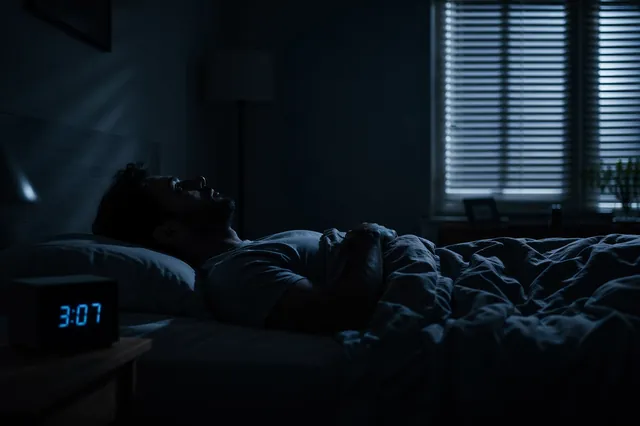
You're not just 'bad at sleeping'
Difficulty sleeping is not a character flaw. Your habits, health and what is happening in your life may all matter. These resources help you observe your experience and prepare questions for a professional if the problem persists.
What actually counts as chronic insomnia?
Chronic insomnia is not 'sleeping badly this week.' Clinically (ICSD-3, AASM) it means difficulty sleeping or staying asleep on at least 3 nights a week, for at least 3 months, and it has to cost you something during the day. A bad week is a bad week. This is the line clinicians use to tell a passing episode from something that needs treatment.
- At least 3 nights a week you have trouble falling asleep, staying asleep, or waking too early
- It has been going on for at least 3 months
- You feel the cost during the day: tired, unfocused, irritable, or skipping things you used to do
- Sleep medication or better sleep habits alone haven't fixed it
This is a description, not a diagnosis. Only a professional can diagnose you, and chronic insomnia usually responds well to CBT-I.
- You may dread bedtime
- You may feel exhausted but unable to sleep
- It's normal for your mind to race the moment your head hits the pillow
- You may feel like you've tried everything

Try something right now
Choose an activity and try it at your own pace. You can stop at any time; you do not need to finish the whole page.
Look at your week of sleep
Compare your time in bed with the time you estimate you slept. The result describes your entries; it does not tell you how long you should sleep or prescribe treatment.
Estimated sleep / time in bed
This proportion does not measure sleep quality on its own. For example, a high percentage can also occur after too few hours of sleep. How you feel during the day and what happens over several nights also matter.
You can note your schedule and how you feel over several days to discuss at an appointment. If poor sleep or sleepiness interferes with daily life, seek professional guidance. Do not reduce your sleep time based on this page.
Saving is optional and stays in this browser. Avoid saving on a shared device.
About these activities
Why sleep doesn't come through willpower
- Recording sleep times and how you feel during the day can help you explain the problem in a consultation. A percentage calculated from one night does not determine which treatment you need.
- Cognitive behavioral therapy for insomnia (CBT-I) is a recommended treatment for persistent insomnia. Its techniques are tailored to the individual; this record does not replace that assessment.
- The breathing activity is optional. Do not force yourself to follow timings that feel uncomfortable, and stop if you feel dizzy. It does not guarantee that you will fall asleep.
Body Scan
Mindfulness technique (MBSR, Jon Kabat-Zinn). 12 zones, about 4 minutes. Not about relaxing — about inhabiting your body.
If you have body trauma, the scan can activate strong sensations. You can stop anytime. If something overwhelms you, open your eyes and return to the room.
Breathe
You've returned to your body
It doesn't matter how many times you got distracted. Coming back is the practice.
What's keeping you up at night?
A few questions to understand your sleep pattern and find what might actually help.
Read something that gets it
Guides to understand what you are going through and consider what may help.

Return to the activities or keep exploring this topic.