How Anxiety Affects Your Relationships
How anxiety hijacks love: reassurance loops, overthinking, avoidance, and control — plus a five-step path to change the pattern with your partner.
 Ricardo De Castro KingPsychologist · Meet the author
How Anxiety Affects Your Relationships
Anxiety is a terrible roommate. It takes up space, makes everything louder, and picks fights with the people you love. But the hardest part is that it often hides behind behaviors that look like something else entirely.
You’re not “too needy.” You’re not “too controlling.” You’re not “too much.” You might just be anxious — and understanding that changes everything.
How Anxiety Shows Up in Love
The reassurance loop
You ask your partner: “Are we okay?” They say yes. You feel better for 20 minutes. Then the doubt creeps back. So you ask again. Or you look for evidence — analyzing their texts, their tone, their facial expressions.
This isn’t insecurity (though it looks like it). It’s your anxiety demanding certainty in a situation that can never be 100% certain. No relationship comes with a guarantee, and anxiety can’t tolerate that.
The overthinking trap
They didn’t respond for 3 hours. Your brain: They’re angry. They’re pulling away. I said something wrong at dinner. They’re going to leave.
By the time they text back (“Sorry, was in a meeting”), you’ve already lived through the breakup in your head. The relief is temporary. The pattern is exhausting — for both of you.
The avoidance pattern
Some anxious people don’t cling — they pull away. If getting close means potentially getting hurt, your anxiety might convince you to keep everyone at arm’s length. Not because you don’t want connection, but because connection feels dangerous.
The control instinct
Anxiety craves predictability. In relationships, this can look like:
- Needing to know the plan at all times
- Getting upset when things change unexpectedly
- Trying to manage your partner’s behavior to reduce your own anxiety
- Difficulty letting things be ambiguous
This isn’t about being controlling as a person. It’s about your nervous system desperately trying to feel safe.
What Your Partner Sees (vs. What You Feel)
This mismatch is where most relationship damage happens:
| What you feel | What they see |
|---|---|
| ”I need reassurance that we’re okay" | "You don’t trust me" |
| "I’m scared of losing you" | "You’re suffocating me" |
| "I need to know the plan" | "You’re controlling" |
| "I’m pulling away to protect myself" | "You don’t care” |
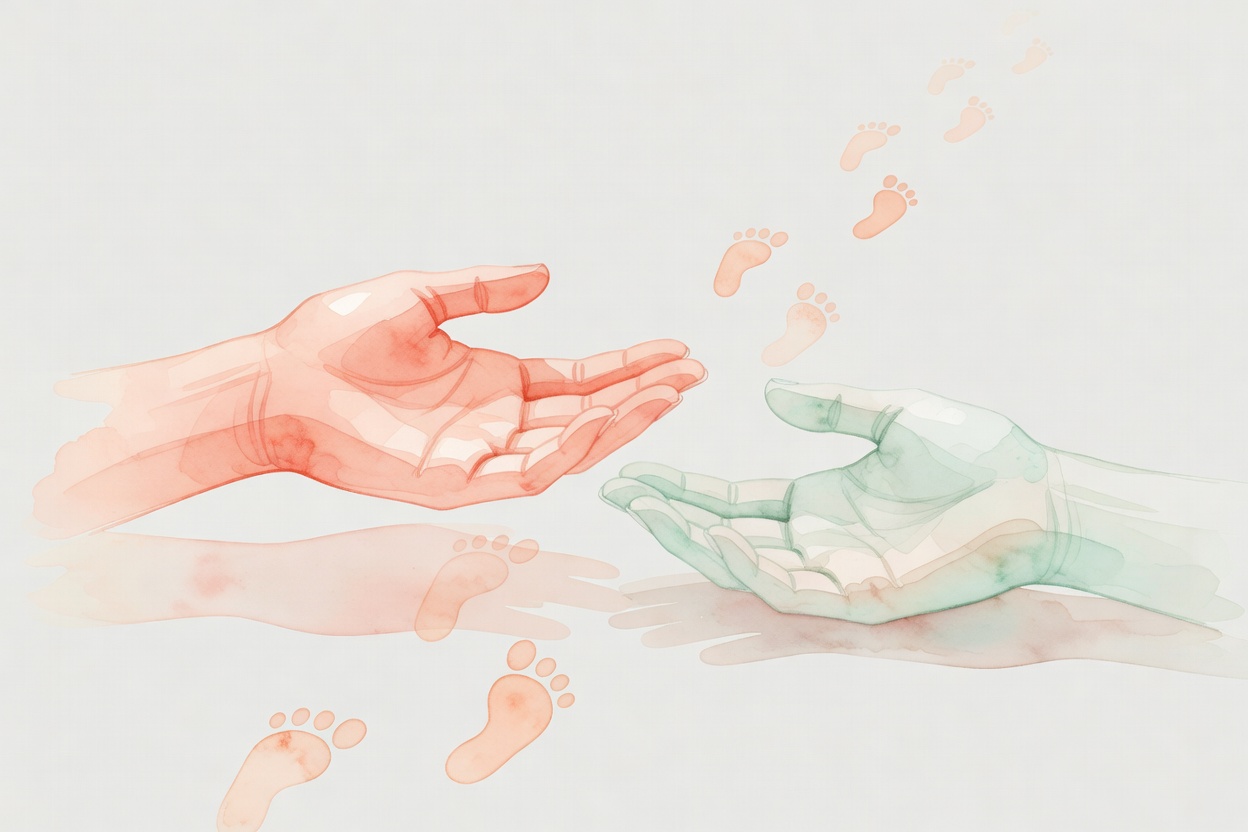
Neither perspective is wrong. But without understanding that anxiety is the engine driving these behaviors, both people end up hurt and confused.
Breaking the Patterns
1. Name it — out loud
“I’m feeling anxious right now. It’s not about you. I just need a minute.”
This one sentence can interrupt many anxiety-driven arguments. It removes the need for your partner to be the cure, and it removes the need for you to pretend you’re fine.
2. Stop seeking reassurance (gradually)
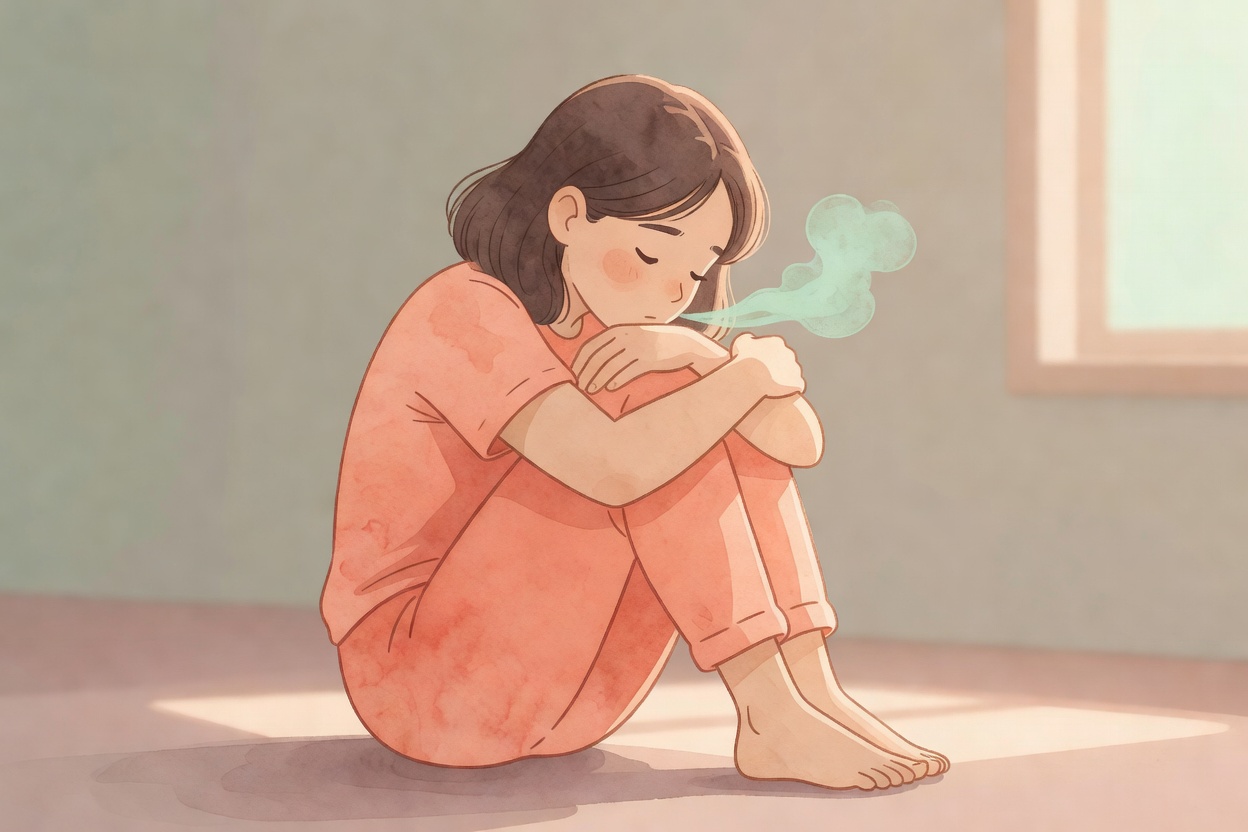
This is hard. But every time you get reassurance and feel temporarily better, you reinforce the cycle. Instead, try sitting with the discomfort for 10 minutes before asking. Notice that the anxiety peaks and then — on its own — starts to fade.
You’re teaching your brain that uncertainty isn’t an emergency.
3. Challenge the story, not your partner
When anxiety tells you “they’re pulling away,” ask yourself: Is this a fact or a feeling? Most of the time, it’s a feeling dressed up as a fact. You don’t need your partner to prove the story wrong — you need to question the story itself.
4. Have the meta-conversation
Sit down when things are calm (not mid-argument) and explain:
“I have anxiety, and sometimes it makes me need more reassurance than feels normal. I’m working on it. Here’s what helps me: [specific thing]. Here’s what I need from you: patience, not perfection.”
Most partners respond well to honesty. What they struggle with is trying to guess what’s happening behind the scenes.
5. Get individual support
Your partner can’t be your therapist. They can be understanding, patient, and kind — but they can’t fix your anxiety. That’s your work.
A therapist (Ricardo De Castro King works with anxiety online) can help you untangle which patterns come from anxiety and which come from legitimate relationship concerns. Because sometimes the relationship is the problem — and anxiety makes it impossible to tell the difference.
When Your Partner Has Anxiety
If you’re the partner reading this:
- Don’t take it personally. Their anxiety is about their brain, not your worth as a partner.
- Don’t accommodate everything. Reassuring them every 5 minutes isn’t love — it’s enabling the cycle.
- Do be honest. “I love you AND I can’t be your only source of security.”
- Do encourage professional help. Not as a criticism. As an act of love.
- Do take care of yourself. Loving someone with anxiety is exhausting. Your needs matter too.
The Good News
Anxious people are often deeply caring, thoughtful, and attuned to others’ emotions. The same sensitivity that creates anxiety also creates depth, empathy, and an ability to love fiercely.
The goal isn’t to eliminate the sensitivity. It’s to stop letting it hijack your relationships.
With awareness, communication, and the right support, anxiety and love can coexist. Not perfectly. But genuinely.
Before changing anything else, you can measure it: the anxiety test (GAD-7) is seven questions and ends in an orientative reading, not a diagnosis. Free, no registration.