Breathing Techniques That Actually Calm You Down
Five evidence-informed breathing techniques that may calm your nervous system in minutes — box breathing, 4-7-8, physiological sighs, extended exhales
 Ricardo De Castro KingPsychologist · Meet the author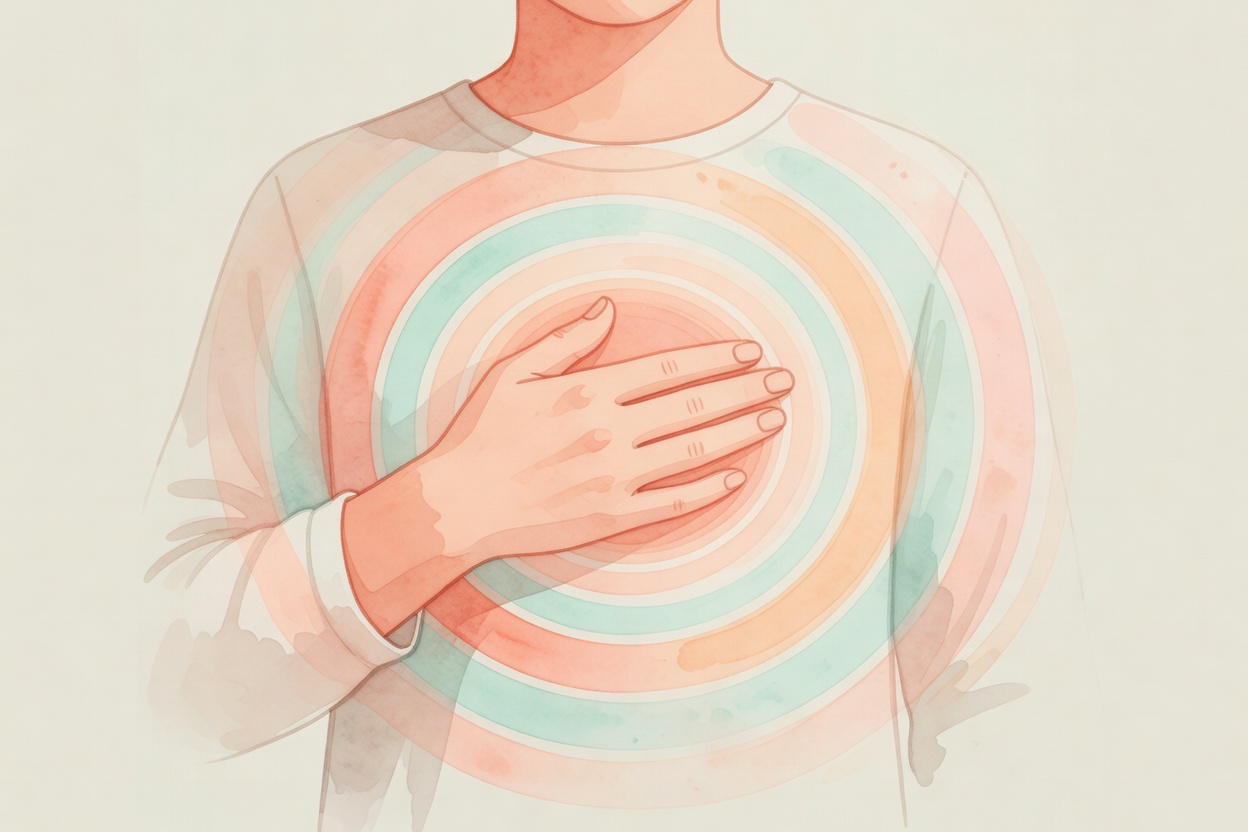
Breathing Techniques That Actually Calm You Down
“Just breathe” is the most annoying advice anyone can give someone with anxiety. Not because it’s wrong — but because how you breathe matters more than the fact that you’re breathing.
Most anxious breathing makes things worse: shallow, fast, from your chest. The right breathing technique can shift your nervous system from panic to calm in under 2 minutes. Here are the ones that actually work.
Why Breathing Works (The Science)
Your vagus nerve runs from your brain stem to your gut. It’s the main highway of your parasympathetic nervous system — the “calm down” system. When you exhale slowly, you stimulate the vagus nerve, which sends a direct signal to your brain: We’re safe. Stand down.
This isn’t metaphorical. It’s measurable. Slow breathing reduces heart rate, lowers blood pressure, and decreases cortisol levels within minutes.
The key principle: your exhale must be longer than your inhale. A long exhale is the parasympathetic trigger. A long inhale does the opposite — it activates your sympathetic (stress) system.
The Techniques
1. Box Breathing (4-4-4-4)
Best for: General stress, focus, pre-meeting nerves
- Inhale for 4 counts
- Hold for 4 counts
- Exhale for 4 counts
- Hold for 4 counts
- Repeat 4 times
This is the technique used by Navy SEALs and first responders. It works because the holds create a pattern that overrides the irregular breathing of anxiety. It’s also easy to remember when you’re stressed.
2. 4-7-8 Breathing
Best for: Falling asleep, acute anxiety, panic attack recovery
- Inhale through your nose for 4 counts
- Hold for 7 counts
- Exhale through your mouth for 8 counts
- Repeat 3-4 times
The long exhale (double the inhale) is what makes this so effective. Developed by Dr. Andrew Weil, it’s often called the “natural tranquilizer for the nervous system.” Don’t push it — if 4-7-8 feels too long, start with 3-5-6 and work up.
3. Physiological Sigh
Best for: Quick reset in 30 seconds, mid-conversation anxiety
- Double inhale through your nose (one normal breath + one short top-up breath)
- Long, slow exhale through your mouth
- Repeat 1-3 times
This is the fastest scientifically-validated calming technique. A study by Balban et al. (2023) compared brief structured respiration practices with a control condition and reported improvements in mood and physiological arousal. The double inhale pops open collapsed alveoli in your lungs, allowing more CO2 to be expelled on the exhale, which is what triggers the calm-down signal.
One to three of these sighs can shift your state in under a minute.
4. Extended Exhale (Simple Version)
Best for: Beginners, anyone who finds counting stressful
- Breathe in normally (don’t force it)
- Make your exhale as long and slow as you can
- Imagine you’re blowing through a tiny straw
- Repeat for 2 minutes
No counting. No holding. Just slow exhales. This is the most accessible version for people who find structured breathing stressful (yes, that’s a thing — and it’s normal).
5. Belly Breathing
Best for: Daily practice, chronic tension, reset
- Place one hand on your chest, one on your belly
- Breathe so that only your belly hand moves
- Your chest hand should stay relatively still
- Inhale for 4 counts, exhale for 6 counts
- 5 minutes daily
Most anxious people breathe from their chest — short, shallow breaths that keep the stress system engaged. Belly breathing (diaphragmatic breathing) shifts the pattern. It’s the foundation that makes all other techniques work better.
How to Actually Use These
Build a daily practice
Pick ONE technique. Do it for 5 minutes every morning. Not during a panic attack — during a calm moment. You’re training your nervous system, like physical therapy for your brain.
When you practice while calm, the technique becomes automatic when you’re stressed. If you only try it during panic, it feels unfamiliar and adds to the stress.
Create triggers
Attach your breathing practice to something you already do:
- Red light? 3 box breaths.
- Waiting for coffee? Physiological sighs.
- Before opening email? One round of 4-7-8.
During acute anxiety
When anxiety hits hard, don’t try to remember the “right” technique. Just do this:
- Exhale everything out
- Breathe in slowly
- Breathe out even slower
- Repeat
That’s it. Long exhale. That’s the only principle that matters in the moment.
What Breathing Can’t Do
Breathing is a regulation tool, not a cure. It calms your nervous system in the moment, but it doesn’t address the root cause of your anxiety.
Think of it as first aid. It stops the bleeding. But if you keep getting cut, you need to figure out why — and that usually means therapy, lifestyle changes, or both.
MomentoVital’s guided practices walk you through breathing step by step. They remove the guesswork and guide you through the techniques until they become second nature.
Start Right Now
Not later. Not when you “need it.” Right now.
Take a physiological sigh: double inhale through your nose, long exhale through your mouth.
Notice what shifts.
That’s your nervous system responding. It’s been waiting for you to give it the signal.
Before changing anything else, you can measure it: the anxiety test (GAD-7) is seven questions and ends in an orientative reading, not a diagnosis. Free, no registration.