Understanding Your Anxiety (A No-BS Guide)
Anxiety is not a character flaw: it is a threat-detection system running too hot. This plain-English guide explains the cycle and five practical ways to
 Ricardo De Castro KingPsychologist · Meet the author
Understanding Your Anxiety (A No-BS Guide)
Let’s skip the “anxiety is the most common mental health condition” intro. You already know that. You’re here because your chest is tight, your mind won’t stop, and you want someone to explain what the hell is happening inside you without talking down to you.
So here it is. No fluff. No inspirational quotes. Just the truth about what anxiety is and why your brain does this.
What Anxiety Actually Is
Anxiety is your brain’s threat detection system running hot. It’s not a character flaw. It’s not weakness. It’s your nervous system doing its job — just doing it too much, too often, or at the wrong times.
Here’s the simplified version:
Your brain has a smoke detector called the amygdala. Its job is to scan for danger and hit the alarm when it finds any. In a healthy brain, it fires when there’s actual danger — a car swerving toward you, a dark alley at night.
In an anxious brain, the smoke detector is set too sensitive. Research on threat-detection circuits is developing, but one study cannot explain every person’s anxiety. What is clear clinically is that anxiety is modifiable: support can target avoidance, arousal, thoughts, behavior, and the conditions around them. Your anxiety isn’t who you are. It’s a calibration issue in a specific brain circuit.
Anxiety isn’t a character flaw. It’s a smoke detector set too sensitive. The alarm is real. The danger usually isn’t.
The alarm fires at everything: a work email, a friend’s tone of voice, a vague feeling that something isn’t right. And because the alarm feels exactly like real danger, your body can’t tell the difference.
Why You Have It
Anxiety isn’t random. There are reasons yours showed up:
Genetics
Anxiety runs in families. If your parents or grandparents were anxious people, your nervous system was probably wired to be more reactive from birth. This isn’t destiny — it’s a starting point.
Early experiences
If you grew up in an unpredictable environment — emotionally volatile parents, bullying, financial instability, any kind of chaos — your brain learned early that the world isn’t safe. That lesson sticks, even when your circumstances change.
Stress accumulation
Anxiety isn’t always about one big thing. Sometimes it’s 47 small things that pile up until your nervous system says “enough.” You don’t notice the pile growing until it topples.
Trauma
Big or small, processed or unprocessed. Trauma changes the way your brain assesses risk. You don’t have to have been in a war zone — the end of a relationship, a health scare, losing a job can all rewire your threat detection.
What Anxiety Feels Like (Beyond “Worried”)
Anxiety isn’t just worry. It shows up in your body, your behavior, and your thinking in ways you might not recognize:
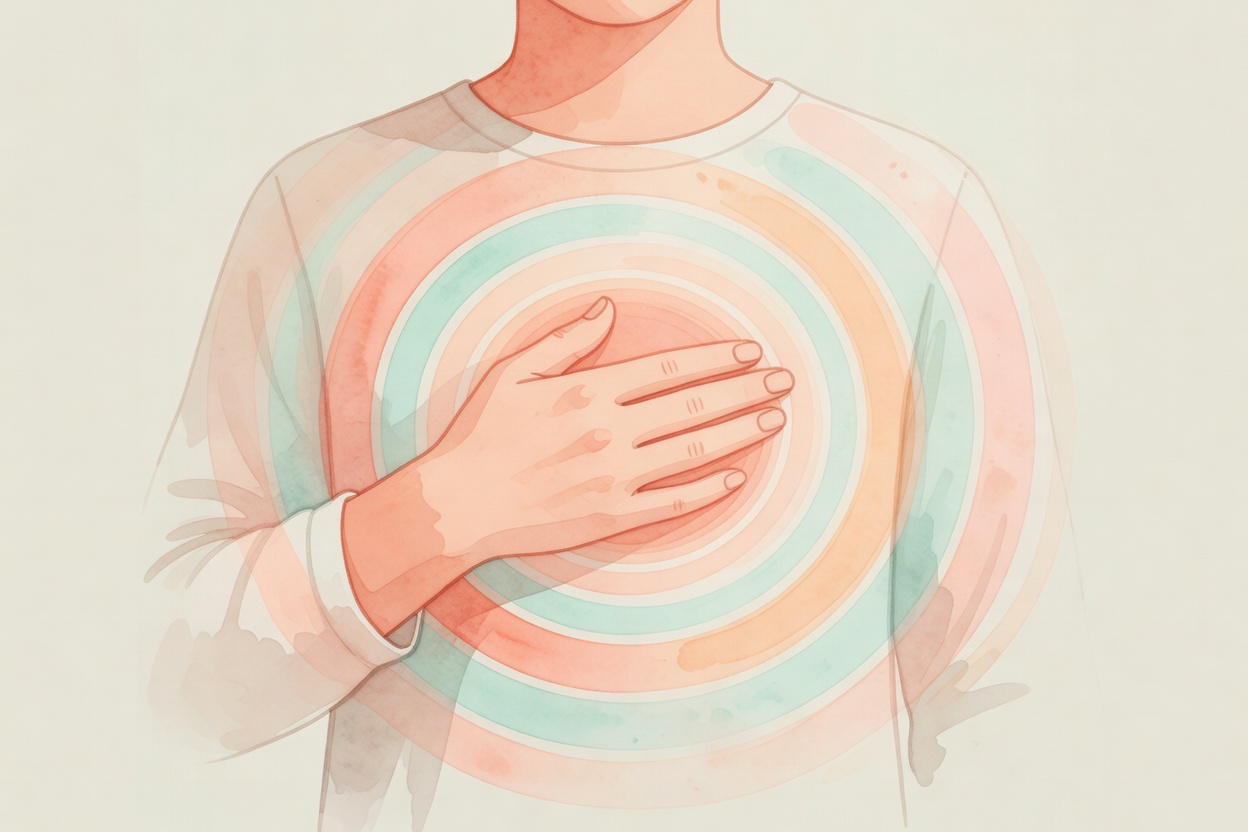
Body: Chest tightness. Shallow breathing. Stomach knots. Muscle tension in jaw and shoulders. Random heart racing. Feeling like you can’t take a deep breath. Dizziness. Nausea.
Mind: Racing thoughts. Catastrophizing (going straight to the worst case). Difficulty concentrating. Feeling like something bad is about to happen. Replaying conversations. Difficulty making decisions because “what if.”
Behavior: Avoiding situations that might trigger anxiety. Saying no to things you actually want to do. Over-preparing for everything. Checking your phone compulsively. Needing reassurance from others.
If you read that list and thought “wait, that’s just me” — that’s the point. Anxiety becomes so normalized in your life that you don’t realize it’s anxiety. You think it’s your personality.
The Anxiety Lie
Anxiety tells you a specific lie: “If you worry about it enough, you can prevent it.”
This is why anxious brains run scenarios. Your mind believes that by thinking about every possible bad outcome, you’re somehow preparing for them. But here’s what actually happens:
- You spend 2 hours worrying about something that has a 5% chance of happening
- It doesn’t happen
- Your brain says: “See? The worrying worked!”
- This reinforces the pattern
You don’t get credit for preventing things that were never going to happen. But your anxiety takes the credit anyway.
What Actually Helps
1. Understand the cycle
Anxiety → avoidance → temporary relief → more anxiety. Every time you avoid something because of anxiety, you teach your brain that the thing was actually dangerous. The avoidance feels helpful but makes the anxiety stronger long-term.
2. Move your body
Anxiety is trapped energy in your nervous system. Exercise — even a 15-minute walk — burns off stress hormones and tells your body “the danger has been dealt with.” This isn’t a platitude. It’s neuroscience.
3. Learn to tolerate discomfort
This is the hardest and most important skill. Anxiety says “this feeling is dangerous.” The truth is: the feeling is uncomfortable, but not dangerous. Learning to sit with discomfort without trying to fix it immediately is how your nervous system recalibrates.
4. Talk to someone who gets it
Not your friend who says “just don’t worry about it.” A therapist who understands anxiety. CBT (Cognitive Behavioral Therapy) has the strongest evidence for anxiety disorders. Ricardo De Castro King, a clinical psychologist, works with anxiety online, and you can start from home.
5. Daily nervous system regulation
Your nervous system needs daily maintenance, just like your body. This means:
- Breathing exercises (even 5 minutes)
- Time in nature
- Limited news and social media
- Physical touch or connection
- Sleep (yes, anxiety makes this harder — but it matters)
MomentoVital’s guided practices offer a structured daily routine for anxiety. They’re not a replacement for therapy, but they’re a solid daily practice.
The Truth Nobody Says Out Loud
Anxiety probably won’t fully “go away.” But it can go from running your life to being a manageable background signal. The goal isn’t to never feel anxious. The goal is to feel anxious and still do the thing.
That shift — from being controlled by anxiety to having a relationship with it — is what changes everything.
You’re not broken. Your alarm system is just too loud. And there are ways to turn the volume down.
This is not a diagnosis. To locate yourself: the anxiety test (GAD-7) is seven questions. Free, no registration.