When Anxiety Steals Your Sleep
Anxiety and insomnia feed each other in a vicious cycle. Learn what keeps your brain alert at night and practical ways to break the loop
 Ricardo De Castro KingPsychologist · Meet the author
When Anxiety Steals Your Sleep
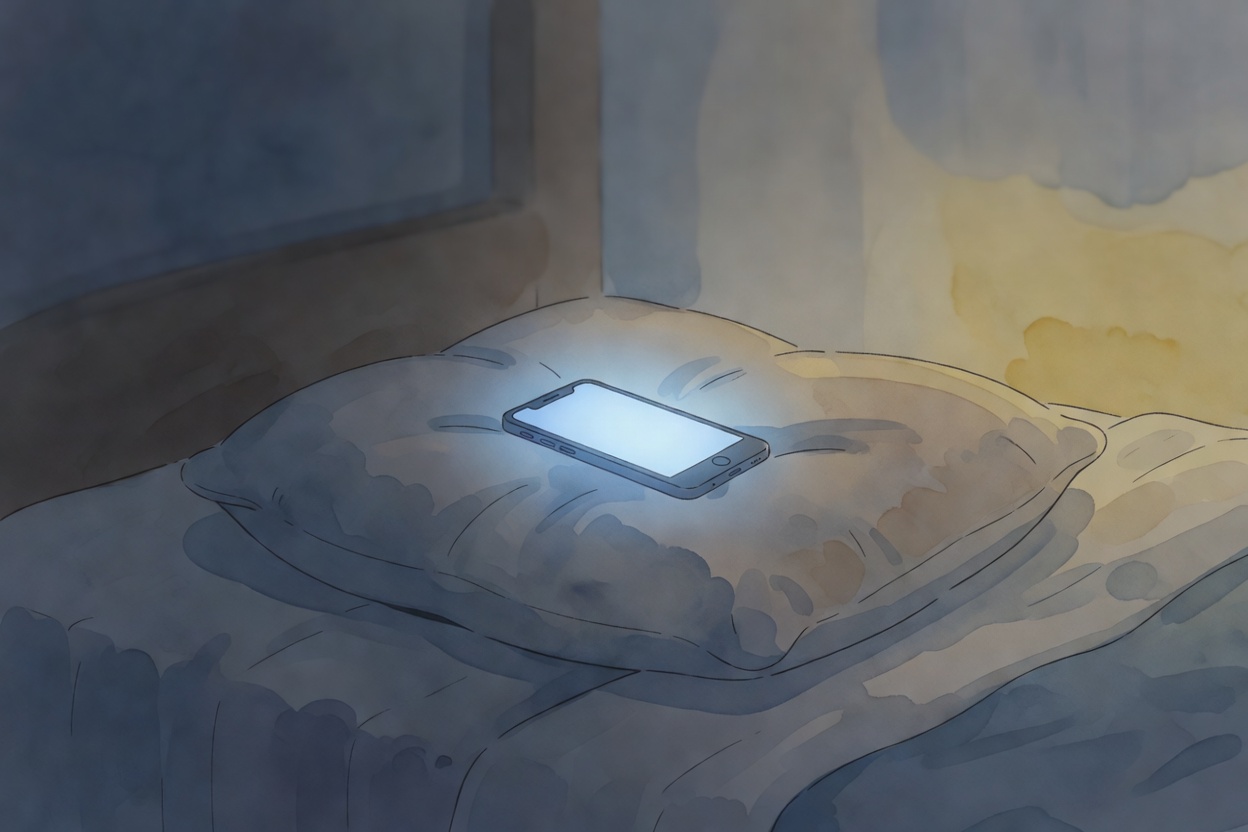
There’s a specific flavor of exhaustion that only people with anxiety-driven insomnia know. You’re so tired your bones ache. You need to sleep. You finally get into bed. And then — click. Your brain turns on.
The thoughts come fast: What if tomorrow goes wrong? Did I say something stupid today? What’s that pain in my chest? Why can’t I just be normal?
You’re not broken. Your brain is stuck in protection mode, and sleep feels like vulnerability.
Why Anxiety and Sleep Are Connected
Your nervous system has two modes:
- Sympathetic: fight or flight. Heart racing, muscles tense, mind scanning for threats.
- Parasympathetic: rest and digest. Calm body, slow breath, safe enough to let go.
Sleep requires your parasympathetic system to be in charge. But anxiety keeps hitting the sympathetic alarm button. Every worry, every “what if,” every physical sensation of anxiety tells your brain: Stay alert. This isn’t safe.
And here’s the cruel part: not sleeping makes anxiety worse. Sleep deprivation increases amygdala reactivity by up to 60%. Your emotional brain gets louder, your rational brain gets quieter. Which makes everything feel scarier. Which makes it harder to sleep.
The 3 AM Spiral
There’s a reason anxiety hits hardest at night:
- No distractions. During the day, you can stay busy, scroll, work, talk. At night, it’s just you and your thoughts.
- Cortisol shifts. Cortisol (the stress hormone) naturally dips at night and rises around 3-4 AM. If you’re already anxious, this surge can wake you up in a state of pure dread.
- Catastrophizing amplifies in the dark. Problems that feel manageable at noon feel catastrophic at 3 AM. The same brain, different chemistry.
What Actually Helps
1. Stop fighting it
The moment you start battling your thoughts — Stop thinking! Go to sleep! — you’re adding another layer of stress. Instead, try this reframe: “My brain is trying to protect me. It’s doing a bad job right now, but the intention is protection.”
You don’t have to believe your anxious thoughts. You also don’t have to fight them. Let them pass like cars on a highway — you can see them without chasing them.
2. The body is the shortcut
When your mind is spinning, logic doesn’t help. But your body can override your brain:
- 4-7-8 breathing: Inhale for 4 counts, hold for 7, exhale for 8. This directly activates your parasympathetic nervous system.
- Progressive muscle relaxation: Tense each muscle group for 5 seconds, then release. Start at your feet, work up. The physical release mimics the “letting go” your brain can’t do on its own.
- Cold water on wrists or face: Activates the dive reflex, instantly slowing your heart rate.
3. Write the anxiety out
Keep a notebook next to your bed. When the spiral starts, write everything down. Doesn’t have to make sense. Doesn’t have to be pretty. Just move it from your head to the paper.
Then write: “I’ll deal with this tomorrow at [specific time].”
You’re giving your brain a container for the worry — and a promise that it won’t be forgotten.
4. Use guided audio
This is where apps like Calm genuinely shine. A calm voice giving your brain something to follow is remarkably effective. It’s not meditation — it’s redirection. Sleep stories work because they give your attention something low-stakes to track instead of your own thoughts.
5. Address the anxiety, not just the insomnia
If anxiety is robbing your sleep, sleep tips alone won’t fix it. You need to work on the anxiety itself.
This might mean:
- Therapy (CBT is excellent for anxiety — Ricardo De Castro King works online with the anxiety-insomnia link)
- Journaling regularly, not just at 3 AM
- Identifying what you’re actually afraid of (often it’s not what you think)
- Medication, if appropriate — there’s no shame in it
A Note on Sleep Dread
If you’ve started dreading bedtime — if the thought of another sleepless night makes you anxious — you’ve developed what’s called sleep anxiety. It’s common, and it’s very fixable.
The key is to make your bed a neutral zone again. Some people need to temporarily sleep in a different spot to break the association. Some need to stop tracking their sleep. Some need to give themselves permission to be awake at night without it being a disaster.
The thought “I need to sleep or tomorrow will be terrible” is itself a sleep destroyer. Replace it with: “Rest is enough. Lying here calmly is better than lying here panicking.”
You’re Not Alone in This
Anxiety-driven insomnia affects millions of people. You’re not weak. Your brain is doing what evolution designed it to do — it’s just doing it at the wrong time.
With the right tools and the right support, your nervous system can learn that nighttime is safe again. It might take a few weeks. It will get better.
Breathe. You’ve survived every bad night so far. You’ll survive this one too.
And if what keeps you awake is not the fear of not sleeping but the same issue running on a loop, that has its own name and its own way out: why my mind will not turn off at night, what the loop is made of and how to break it, inside the rumination hub.
If you want to know how severe your insomnia is before you change anything, the insomnia test (ISI) measures seven questions and returns a result immediately. Free, no registration.