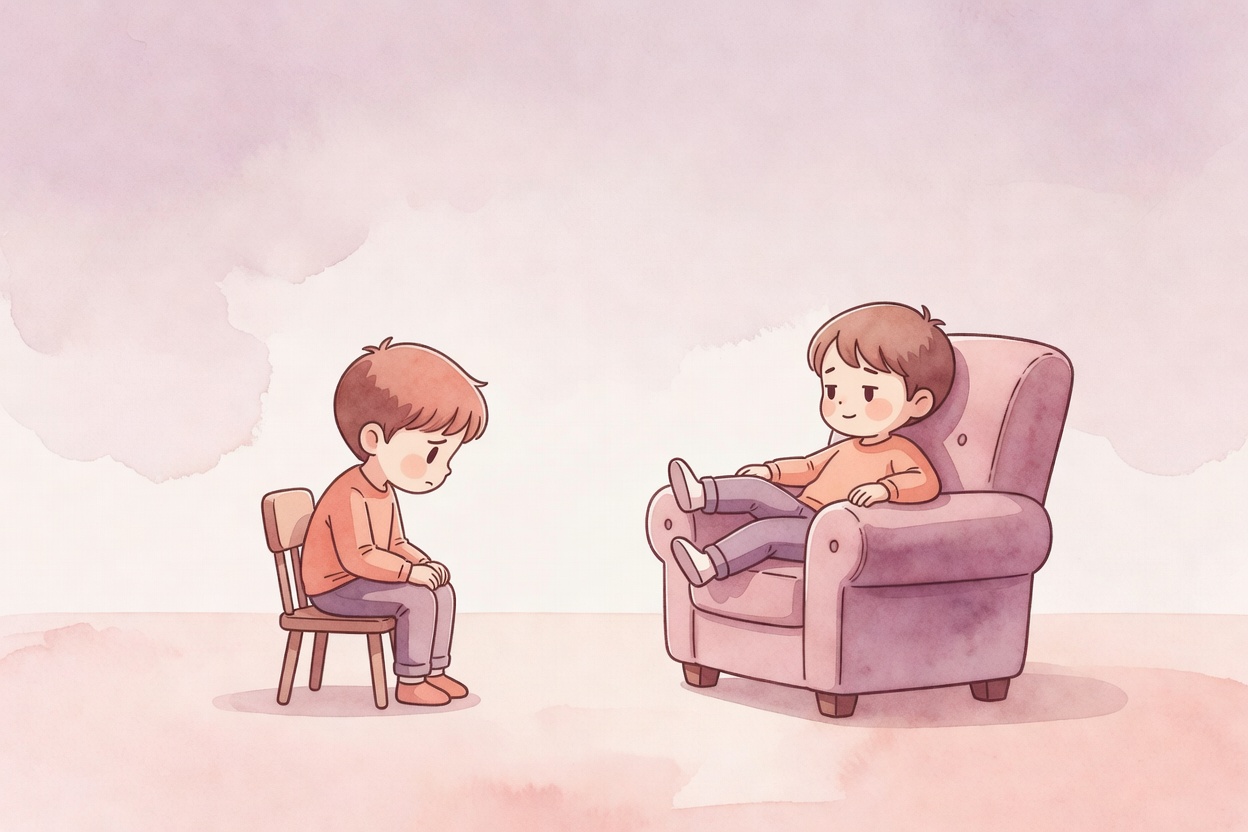
Self-compassion vs. harsh self-demand: what the evidence says
Self-compassion is not permissiveness. Learn what the evidence says about harsh self-demand, motivation, responsibility, rumination
 Ricardo De Castro KingPsychologist · Meet the author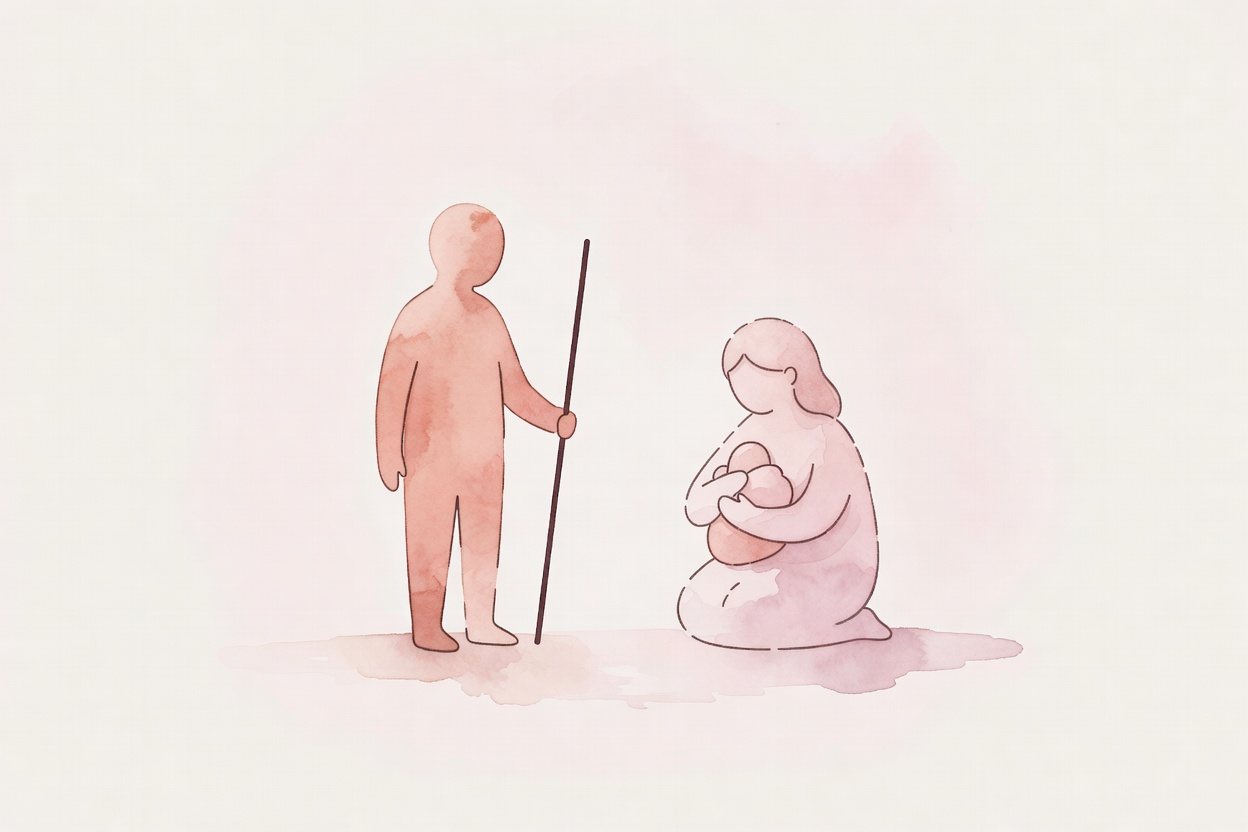
The most common belief that sustains severe self-criticism is this: “if I don’t push myself hard, I’ll become lazy, pretentious, insufferable.” It’s a logic so installed it’s almost never questioned. It feels obvious.
It isn’t. Kristin Neff, psychologist at the University of Texas at Austin, dedicated more than two decades to investigating what really happens when people treat themselves with self-compassion versus when they treat themselves with harsh self-demand. The evidence is compelling and goes against the common belief.
This article summarizes what each approach is, what the research says, and how to practice self-compassion without falling into permissiveness.
What self-compassion is
Neff (2003) defined self-compassion with three integrated components:
1. Self-kindness
Treating yourself with understanding and kindness in moments of suffering, failure, or imperfection — instead of harsh judgment. Internal equivalent to how you’d treat a friend in the same situation.
2. Common humanity
Recognizing that imperfection, failure, and difficulty are part of human experience — not personal defects of yours. You’re not isolated in your pain. All humans suffer. When you make a mistake, you make a mistake as a human, not as “defective.”
3. Mindfulness (balanced awareness)
Holding your painful emotions with balanced awareness — without denying them or over-identifying with them. Neither “nothing’s happening to me” nor “this is destroying me.” Something intermediate: “I’m feeling this, this hurts, and I can observe it without disappearing into it.”
The three components need each other together. Kindness without mindfulness is self-indulgence. Common humanity without kindness is resignation. Mindfulness without kindness is just cold observation.
What harsh self-demand is (severe self-criticism)
The opposite pattern:
- Severe judgment: you treat yourself with harshness when you fail.
- Isolation: you feel your flaws are unique, worse than others’.
- Over-identification: you merge with difficult emotions — “I am my anxiety”, “I am my failure.”
Many people believe this pattern produces excellence. The evidence says the opposite.
What the research shows
I’ll only cite robust findings — those replicated across multiple studies with large samples.
Finding 1: Self-compassion predicts less depression and anxiety
MacBeth & Gumley (2012) meta-analysis of 20 studies with more than 4,000 participants: strong negative correlation between self-compassion and depression (r = -0.52), anxiety (r = -0.51), and stress (r = -0.54). The more self-compassionate the person, the fewer clinical symptoms.
Finding 2: Harsh self-demand does NOT produce better performance
Breines & Chen (2012), University of California-Berkeley: people treated with self-compassion after failing a task showed greater motivation to improve and practice more than people treated with performance-based self-esteem. Harshness doesn’t motivate — it paralyzes or induces avoidance.
Finding 3: Self-compassion facilitates responsibility, doesn’t evade it
Leary et al. (2007): people with high self-compassion take more responsibility for their mistakes and more actively repair the consequences. The belief “if I forgive myself, I don’t learn the lesson” is false — compassionate people learn better because they can look at the mistake without collapsing.
Finding 4: Self-compassion reduces rumination
Raes (2010): people trained in self-compassion have less tendency to ruminate about their mistakes. Rumination (mentally and repetitively reviewing the mistake) is one of the main maintainers of depression. Self-compassion cuts it.
Finding 5: It’s trainable
Neff & Germer (2013) developed the Mindful Self-Compassion (MSC) program, 8 weeks. Results in randomized controlled trials: significant increase in self-compassion, reduction in depression, anxiety, stress and shame. Effects maintained at one-year follow-up.
The central myth, dismantled
Myth: “If I treat myself with compassion, I’ll become lazy.”
Self-compassion isn’t self-indulgence. Self-indulgence says “nothing’s happening, I don’t need to do anything different.” Self-compassion says “this happened, it hurts, humans make mistakes, what do I need now to do something different next time?”
It’s the difference between:
- Self-indulgence: “it doesn’t matter, it’s fine anyway.”
- Harsh self-demand: “you’re a disaster, this proves you’re useless.”
- Self-compassion: “this went wrong, it hurts me, I allow myself to feel it, and now I look at what I adjust so next time is different.”
The third approach is the only one that combines recognition of error with capacity for sustained correction. The other two collapse correction: self-indulgence because it doesn’t see it, harsh self-demand because it paralyzes you before you can do it.
Why harsh self-demand seems to work (sometimes)
Many successful people attribute their success to their harsh self-demand. “If I hadn’t pushed myself like this, I wouldn’t have gotten where I am.” Two nuances research shows:
1. Correlation isn’t causality
Those people may have succeeded despite their harsh self-demand, not thanks to it. Other factors — capacity, opportunity, sustained work — explain the success. Self-demand was the emotional price paid, not the engine.
2. The cost appears later
Harsh self-demand produces short-term performance. The cost accumulates in burnout, depression, anxiety, deteriorated relationships. Many people who “succeeded with self-demand” arrive at therapy at 45 asking themselves why they have everything they wanted and feel empty.
How to start practicing
Self-compassion pause (Neff, brief version)
When you notice suffering — mistake, emotional pain, failure — do this sequence in 60 seconds. Literal, not metaphorical:
- Name what you feel: “this is a moment of suffering” or “this hurts.”
- Recognize common humanity: “suffering is part of human life.” “I’m not the only one this happens to.”
- Direct kindness to yourself: “may I be kind to myself in this moment.” Can include a physical gesture — a hand on the chest, on the heart, on the belly.
Three phrases. A gesture. 60 seconds. It’s practiced several times a day. In 2-3 months of consistent practice, it starts appearing automatically in difficult moments.
Self-compassion letter (long practice)
Once a week: think of an aspect of yourself that generates self-criticism. Write yourself a letter from the perspective of an unconditional imaginary friend who knows you completely, sees your flaws, and loves you anyway. What would that friend tell you about what you criticize yourself for.
At first it’s extremely hard. It feels artificial. Keep doing it. With repetition, that imaginary friend’s voice starts to internalize.
Reformulation in moment of error
When you make a mistake, ask yourself: “what would I tell someone I love in this situation?” And say it to yourself. Not as intellectual exercise — as real response to yourself.
What self-compassion is not
Three common misinterpretations:
1. It’s not high self-esteem
Self-esteem depends on evaluating yourself positively — it’s conditional on your qualities. Self-compassion is unconditional — it doesn’t depend on you being good, it depends on you being human. Neff argues (and showed in research) that self-compassion is more stable and less fragile than self-esteem, because it doesn’t collapse when you fail.
2. It’s not passivity
Self-compassion includes looking at the error and correcting. It’s not “everything’s fine like this.” It’s “this hurts, I allow myself to feel it, and now I see what I do.”
3. It’s not self-indulgence
Self-indulgence says “I give myself what I want because I deserve it.” Self-compassion says “I give myself what I need to keep functioning healthily.” They’re different. A whole tub of ice cream at the first discomfort is self-indulgence. A conscious pause, validation of the emotion, and action from care is self-compassion.
Closing
The evidence is clear: harsh self-demand doesn’t produce the benefits attributed to it, and does produce important emotional costs. Self-compassion — which sounds like permissiveness if you haven’t studied it — produces better sustained performance, less depression, greater resilience, and greater capacity for repair.
It’s not optional to choose one approach or the other — we didn’t know. Now we know. The standard for self-treatment can change.
Start with 60 seconds several times a day. Name, recognize, direct kindness. That accumulates. Three months later, the internal tone starts being different — not because “you’ve become lazy,” but because for the first time you’re giving yourself what you’ve long been giving to those you love.
The self-esteem test (Rosenberg) measures ten items and orients without diagnosing. Free, no registration.