A SPACE TO UNDERSTAND
When a relationship starts to hurt you.
If there is control, fear or pressure to keep giving in, it is worth looking carefully at what is happening. Find information about these dynamics, boundaries and support options.
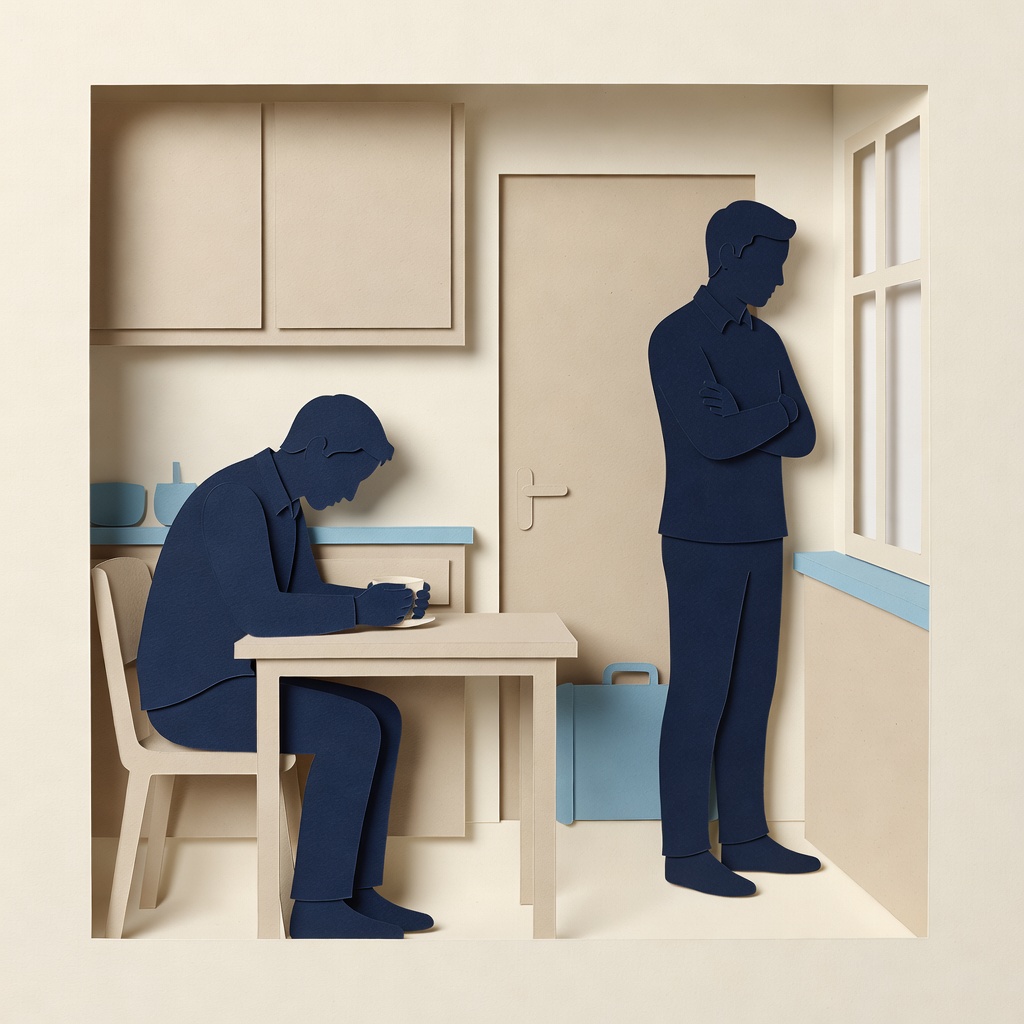
You are not exaggerating
A toxic relationship does not always arrive with a label. It arrives with a slow training: you learn to scan for the other person's mood before you open your mouth. You learn that the safest version of you is the one who does not contradict. You learn that your version of events is the one that gets edited, in conversation after conversation, until you are not sure what you saw. By the time you have a name for it, the name almost feels redundant. That is the pattern. And the pattern responds to work.
- It can happen to rehearse explanations for things you did not do
- It can happen to apologise first, even when you do not know what for
- It can happen to lose sleep, lose appetite, or lose the sense of who you were before
- It can happen to feel relief when the other person is away and dread when they come back
Try something right now
These exercises are used in clinical therapy. They are free and you can do them here.
Map of where the pattern lives
Eight short observations about your current relationship. Not a diagnosis — a personal map to help you decide whether it is worth talking to someone.
This is not a clinical scale. If you identify with several items — especially if there is fear, control, or physical harm — talking to a professional is urgent. A self-assessment cannot replace a conversation with someone trained.
How often has this been true in the last three months?
The bars show the average of your answers on a 0–100 scale. They are not probabilities, clinical cutoffs or a comparison with other people.
Your four dimensions
If you need support
This map cannot assess your safety. If distress persists, worsens or disrupts daily life, seek professional support. If you may hurt yourself or are in immediate danger, seek urgent help through local emergency or crisis services. You do not need a high score to ask for help.
- Colombia: Línea 123 — emergencies (24/7)
- Colombia: Línea 106 — psychosocial support (24/7)
- USA: 988 Suicide & Crisis Lifeline (24/7)
- Canada: 988 (24/7)
- Australia: Lifeline 13 11 14
If browser storage is available, answers stay saved in this browser. Someone using the same device may see them. Start over to clear this map.
Why a toxic relationship keeps its grip even when you want to leave
- The cycle of tension, explosion, reconciliation, and honeymoon is not a personal failing. Lenore Walker (1984/2006) documented it in the Battered Woman Syndrome as a measurable pattern with three repeating phases — tension builds, the incident happens, then comes the reconciliation that makes staying feel reasonable. DOI: 10.1891/9780826170996.0005
- The Karpman drama triangle (victim, persecutor, rescuer) is not a metaphor — it is a structural role switch. Nelson (2015) showed how the same dynamic appears in chronic-illness caregiving, where patients, family members, and clinicians rotate through the three positions without anyone holding one. DOI: 10.1177/2325160314562242
- Intimate partner abuse is now treated as a public-health event, not a private row. Nunn (2026) argues that investigative frameworks have to move beyond the courtroom, because the harm is measured in lost sleep, lost self-trust, and lost years — and the response must match that scale. DOI: 10.4324/9781003639817-3
- If you have been reading the room before you walk into your own home, or if you have been rehearsing explanations for things you did not do — that is not love. That is a pattern. It has a name, and it has paths out.
One small observation today
Walker's cycle is a chain of distinct phases — tension, incident, reconciliation, honeymoon. Naming which phase you are in right now is the first move toward breaking the chain. You do not have to act on it. You have to see it.
- Pick one argument from the last three months. Write the date, what happened, and what came after.
- Mark the four phases: tension / incident / reconciliation / calm. Which one had the longest stretch?
- Notice whether the reconciliation came with an apology, a gift, a promise, or all three.
- Hold the observation for a week. No decisions — just the seeing.
The framework comes from Walker (1984/2006). If the answer is "I cannot remember a calm phase," that is also information. The cycle is not a verdict. It is a map. DOI: 10.1891/9780826170996.0005
5-4-3-2-1 Grounding
This technique brings you to the present when anxiety pulls you to the future. Used in CBT therapy and psychological first aid.
If a sense doesn't respond (for example, you can't smell well), skip that step. There's no wrong way to do this.
SEE
Name 5 things you can see right now
You're here.
Take a moment. Notice how your body feels now compared to when you started.
Did the intensity ease a little?
Thank you for noticing.
Choose how you want to start
A choice to help you navigate this page. It does not assess symptoms or classify your personality.
Read something that names it
Not advice from someone who has never lived it. Real writing about a pattern that runs quietly.
If you want to explore additional resources we have researched and recommend, they are here:
See information and availability at rdkterapia.
Keep reading: when the relationship ends and starts again
There is a kind of wear nobody names: not the one that comes from a single breakup, but from the back and forth of leaving and returning. The hub on on-and-off relationships works on exactly that, the cycle and what it takes to leave it.
See on-and-off relationships →