Toxic vs Complicated Relationship: How to Tell Them Apart
A complicated relationship has rough patches. A toxic one has a pattern. Five structural differences to name what you are living — and what to do next.
 Ricardo De Castro KingPsychologist · Meet the author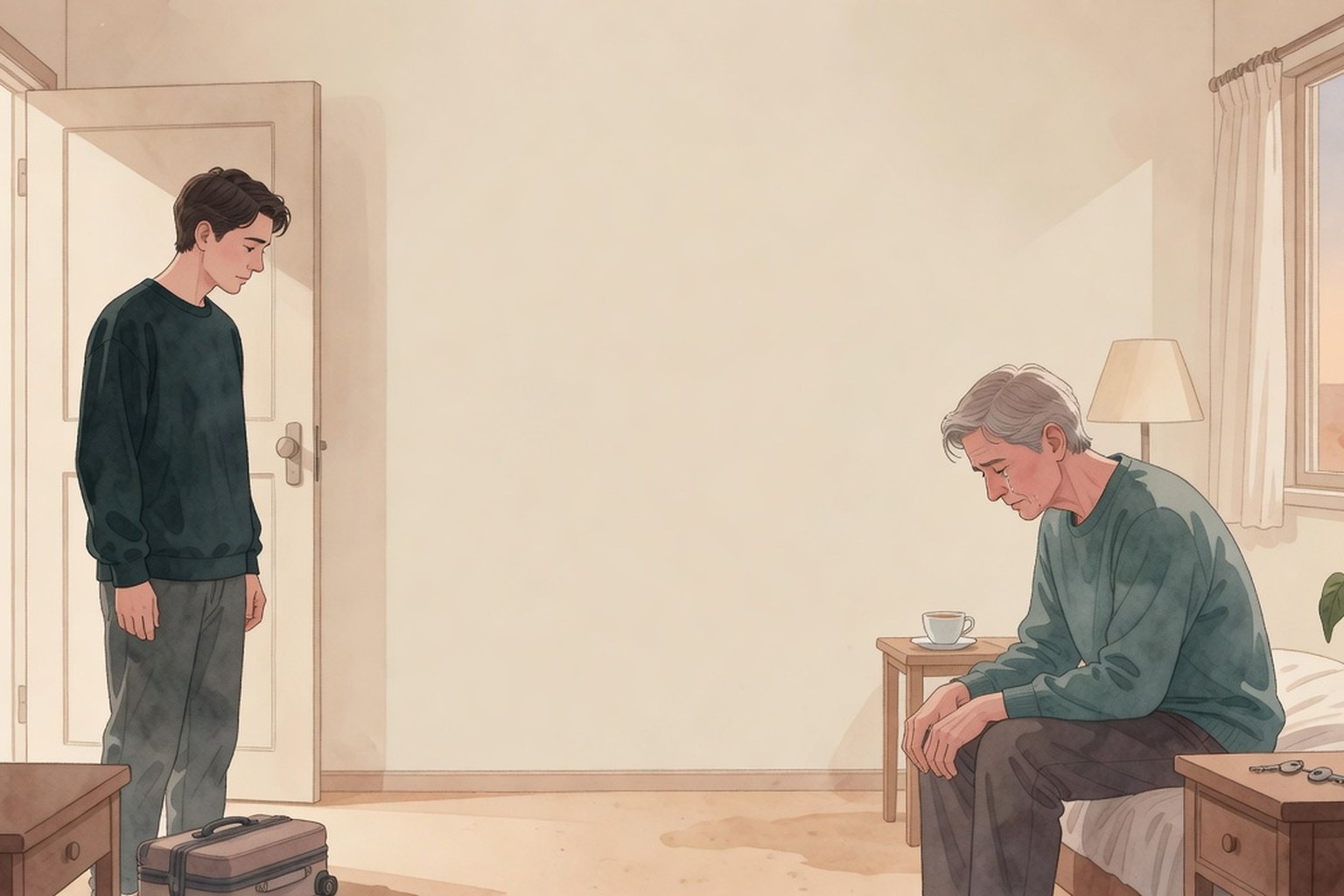
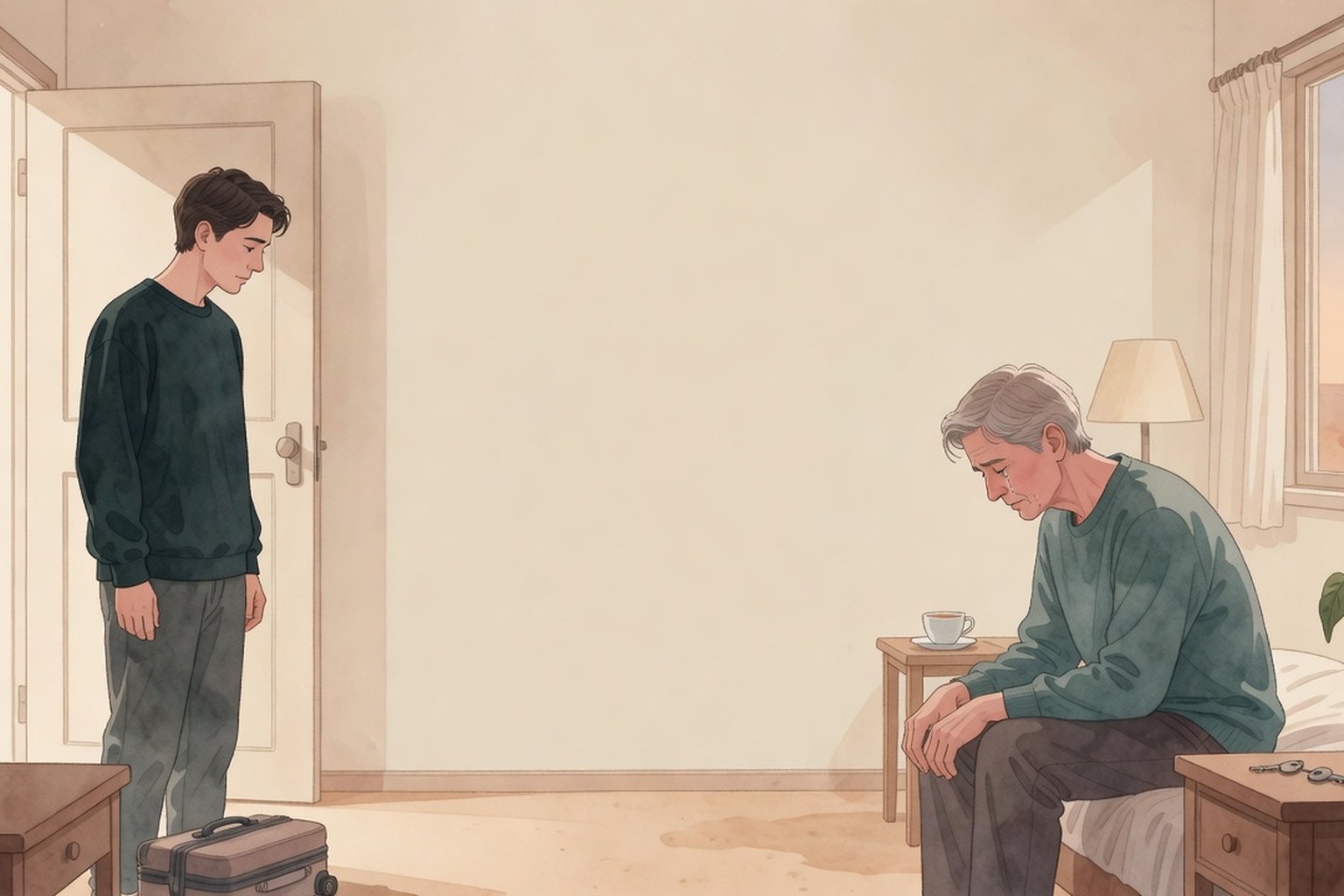
It is 11:40 PM. You are sitting on the kitchen floor with your back against the cabinet and your phone face-down beside you. The argument ended ten minutes ago. Nothing was thrown. Nothing was broken. What happened is what keeps happening: you said something, they turned it around, and after a while you stopped trying to explain what you had seen. You started trying to explain what you had not done. The room is quiet now. The under-cabinet light is still on. You are not sure what you are feeling, but you know you have felt this before — the same hollow, the same search for what you actually said, the same doubt that started in the middle of the conversation and is still here, in the dark, on the floor.
If that has been your week, or your year, this is for you. A complicated relationship has rough patches. A toxic one has a pattern. The difference is structural, not accidental — and it is the difference that tells you whether the work is to repair a hard season or to leave a configuration that has been eating you from the inside.
1. The two sentences people get confused
People often say “it is just a complicated phase” and “the relationship is toxic” as if they were two words for the same weather. They are not. A complicated relationship is one in which two people, often with good intentions, keep stepping on each other’s rough edges. The conflict is real. The repair is possible. The pattern does not accumulate.
A toxic relationship is one in which one or both people — through control, invalidation, or harm that keeps returning — steadily erode the other’s sense of self. The pattern accumulates. The cost compounds. The repair becomes harder to imagine, because the cost of staying and the cost of leaving start to feel similar.
Walker (1984/2006) named the cycle that keeps the pattern in place: tension, explosion, reconciliation, honeymoon. It is not a moral verdict. It is a structural description. The same phases show up in relationships that are not violent, in relationships where both people work, in relationships with children. The cycle is the point. The cycle is what makes leaving feel unreasonable.
2. The first difference — rough patches vs the same shape
The cleanest test. A complicated relationship has arguments that come from different causes. A toxic relationship has arguments that come from the same cause, over and over, with the same shape and the same aftermath.
Look at the last ten arguments. Are they about different things? Money, in-laws, sleep, work, a careless word? If the topics change but the pattern holds — you end up apologising, they end up explaining — the pattern is structural. The topic is the costume. The pattern is the work.
Nunn (2026), writing about how investigators handle intimate-partner abuse, argues that the field has moved from treating each incident as a discrete event to recognising the cycle. The same shift is available to anyone inside the relationship. Not every argument is a sign. The same argument, in the same shape, with the same consequences, is.
3. The second difference — repair vs reconciliation
A second test, harder to see from the inside. After a hard conversation in a complicated relationship, both people move toward repair. They each name what they did. They each adjust. The conversation leaves both of them more honest.
After a hard conversation in a toxic relationship, one person moves toward reconciliation. The other person moves toward resolution. The reconciliation is the offer that comes after the explosion — the apology, the gift, the promise, the sudden tenderness. The resolution is the explanation that reframes what just happened into something less than it was. The reconciliation is offered. The resolution is enforced. The two arrive together, and the person receiving both usually accepts both, because the alternative is the next explosion.
Nelson (2015) calls this the Karpman rotation — victim, persecutor, rescuer. The same people rotate through the roles, often in the same conversation. The person who hurt you becomes the person who is sorry. The person who is sorry becomes the person who is hurt by your not forgiving. The roles keep moving. The pattern stays still.
4. The third difference — doubt about the other person vs doubt about yourself
In a complicated relationship, the hard moments leave you doubting the other person. You wonder whether they are reliable, whether they meant what they said, whether they can hold the next hard thing. The doubt is directed outward. It is uncomfortable. It is also accurate.
In a toxic relationship, the hard moments leave you doubting yourself. You wonder whether you overreacted. You wonder whether you remembered it correctly. You wonder whether your version of events is the one that gets told when you are not in the room. The doubt is directed inward. It is corrosive. It is also what the pattern needs to keep running.
Walker (1984/2006) describes this as a measurable phenomenon in the Battered Woman Syndrome. The woman’s account of the violence is repeatedly pressured, edited, and reframed, until her own memory becomes unreliable to her. This is not a personal weakness. It is the predictable outcome of a long pattern in which one person’s account is systematically treated as less real than the other’s.
5. The fourth difference — repair reaches the wound, or stops at the surface
When you bring up something that hurt you in a complicated relationship, the response lands somewhere near the wound. The other person may not have understood the depth of it. They may be defensive. But the conversation reaches the wound, and the wound gets named, and the naming is, eventually, the start of repair.
When you bring up something that hurt you in a toxic relationship, the conversation stops at the surface. The other person talks about how hard their day was. The other person talks about the way you said it. The other person talks about the friend who once said the same thing. The wound is not reached. The wound is not even named. The conversation arrives somewhere else, and you leave the conversation uncertain about what you were trying to say. That is not a failure of communication. It is a feature of the pattern.
6. The fifth difference — who pays the cost
A complicated relationship shares the cost. Both people are tired, on edge, sometimes not at their best. The cost is uneven, but it is shared.
A toxic relationship concentrates the cost. One person loses sleep, loses appetite, loses friendships, loses the sense of who they were. The other person may not even be aware of the cost. The cost is invisible because it is being paid in someone else’s body. The pattern does not require the other person to notice. The pattern only requires the other person to keep going.
The literature on intimate-partner abuse now treats this as a public-health event, not a private row. Nunn (2026) argues that the response has to match the scale of the harm — measured in lost sleep, lost self-trust, lost years, lost friendships. The cost is real. The cost is countable. The cost is what makes the pattern a pattern and not a phase.
7. The case of the thread — what “complicated” can hide
Sophie is 38. She came to therapy for insomnia. By the third session she was talking about her marriage. The marriage had been “complicated” for nine years. She used the word carefully.
What she described was not a complicated marriage. It was a configuration. Her husband interrupted her in meetings, then later told her the interruptions were affection. He lost his temper with the children, then later told her the children were too sensitive. She stopped going out with friends, then later told herself she was tired. The word “complicated” was doing real work. It was keeping the answer at the level of weather.
The change did not start with a diagnosis. It started with a question: “If you describe your marriage to someone you trust, what words do you use?” She could not name the words. She could name the cost. The insomnia. The weight. The way she rehearsed explanations for things she did not do. The cost was the trail. The pattern was the animal.
A year later the marriage looked different. The pattern was named. The cost was named. The next move was not hers to make alone. But the seeing was different, and the seeing was the first thing.
8. Bar — how much of the pattern is in your relationship
Below is a soft self-check. Not a diagnosis — a way of seeing where the pattern sits.
If three or more of these are familiar, the pattern is in the room. The word “complicated” may be doing real work inside that room. The word “toxic” may be closer to what you are living.
9. The myth that holds the pattern in place — and the bar that shows you
The sentence that keeps the pattern running is “every relationship is hard.” The sentence is true in a narrow sense. Every relationship has hard moments. The sentence is wrong in a wider sense. Hard is not the same as harmful. Hard is the friction of two real people in one room. Harmful is the steady erosion of one person by another, dressed up as friction.
The myth says: stay. The pattern says: stay. The cost is what you cut out of yourself to keep the sentence true. The myth is not neutral. The myth is part of the pattern. You can test the myth in one sentence. If your closest friend described the relationship you are in, what would you say to them? If your answer would be different from what you say to yourself, the pattern is between those two answers.
The bar below shows where the pattern sits, on average, in the literature on intimate-partner abuse. It is not your bar. It is the room you are in.
10. Table — complicated vs toxic, side by side
These two are often confused. The difference is structural.
| Axis | Complicated | Toxic |
|---|---|---|
| Source of conflict | Different — money, in-laws, mismatched needs | Same — repeated pattern, same shape |
| Repair | Both people move toward it | One person offers reconciliation, the other enforces resolution |
| Direction of doubt | Outward, about the other person | Inward, about yourself |
| Where the conversation lands | Near the wound | At the surface, around the wound |
| Cost distribution | Shared, unevenly | Concentrated on one person |
| Memory | You remember what happened | You start to doubt your own memory |
| Friendships | Mostly preserved | Eroded, often without noticing |
| Response to “I am unhappy” | Curious, defensive, or worried | Deflected, reframed, or punished |
| What holds the relationship | Mutual willingness to repair | The cost of leaving feels equal to the cost of staying |
If your relationship reads closer to the right column on four or more rows, the toxic framing is probably fair. The right column is not a verdict about the other person. It is a description of a configuration. Configurations can be changed. Configurations can be left. Both are work.
11. What helps — and what the evidence actually says
The interventions with the best fit for toxic relationships, drawn from the clinical and family-violence literatures:
- Trauma-informed individual therapy. Not every therapist is trained to work with the aftermath of relational harm. Look for someone who names the framework they use. CBT, EMDR, and schema therapy all have versions adapted for relational trauma.
- Safety planning. If the relationship includes physical harm, the first move is not insight. It is a safety plan — a place to go, a bag packed, a number to call. Nunn (2026) treats this as a public-health response, not a personal one.
- Naming the cycle. Walker’s tension-explosion-reconciliation-honeymoon framework gives words to what is happening. Words are not the answer. They are the map.
- Slow reconnection with the people you lost. The pattern often isolates you first. The next move is small: one message to one friend, one phone call, one coffee. The pattern will resist this. The resistance is the pattern.
- Groups and mutual aid. Survivor groups, domestic-violence hotlines, and trauma-focused recovery communities offer a witness that does not require you to explain the pattern from scratch.
None of these is for everyone. What the literature is clear about: the pattern responds to work that is named, supported, and consistent. The pattern does not respond to willpower. The pattern does not respond to waiting.
12. The Karpman triangle inside one argument
The Karpman triangle is a useful tool for seeing the rotation inside one argument. Pick one argument from the last month. Write it three times — once from each role. The writing is not for anyone else. It is for you to see the rotation that is already happening.
- As the victim. “I felt small. I apologised first. I did not know what I had done. By the end of the conversation I was unsure whether I had actually said the thing I said I had said.”
- As the persecutor. “I needed to be right. I needed you to admit it. The look on your face when you tried to explain made me angrier. By the end I was not sure what I was angry about, but I needed you to feel smaller.”
- As the rescuer. “You are not crazy. You do not have to apologise for this. We can look at what actually happened. The fact that you do not trust your own memory of the conversation is information, not a verdict about you.”
The three writings are not true at the same time. They are three angles on one moment. The pattern is the rotation that happens before you can see it.
Nelson (2015) showed the same dynamic in chronic-illness caregiving, where the patient, the family member, and the clinician rotate through the three roles without anyone holding one. The configuration is not private. The configuration has a name. The name is the first thing you can do with it.
13. Details for the things that need more time, and the first exercise
"But nothing violent has happened — can it still be toxic?"
Yes. Toxicity is not only about violence. It includes chronic invalidation, gaslighting, isolation, control of money or friendships, and the steady erosion of self-trust. Physical harm is one form of an abusive configuration; it is not the only one. The pattern is what makes it toxic, not the presence of visible harm.
"If they are kind sometimes, can it still be a pattern?"
Yes. The honeymoon phase is part of the cycle. Walker (1984/2006) documented how the reconciliation phase often includes the most intense kindness — apologies, gifts, promises, sometimes changes in behaviour that do not last. The kindness is not evidence of safety. The kindness is part of what makes the next phase of tension harder to recognise.
"I am the one who gets angry. Does that mean I am the toxic one?"
Not necessarily. Anger is a normal response to a configuration in which your reality is being edited. The Karpman triangle helps here: the rotation is what matters, not who is loudest. If you find yourself apologising after every argument, if you cannot remember the last argument in which you did not concede, the anger may be the only honest signal you have left.
"What if I cannot leave right now?"
Then the work is not leaving yet. The work is naming what is happening, finding one person who can witness it, and protecting the parts of your life that the pattern has not yet reached. The cost of naming is smaller than the cost of staying silent. The cost of staying silent compounds.
"How long does it take to break a pattern this old?"
The honest answer: months for the first signs, longer for the deep stuff. The first change is rarely the relationship. It is the relationship you have with your own account of what is happening. That change can begin this week.
Exercise — one observation, ten minutes
This is not therapy. It is a starting point you can begin today, in less than ten minutes.
- Pick one argument from the last month. One date, one moment. The smaller the moment, the more you can see.
- Write the four phases of Walker’s cycle. When did the tension start? When did the explosion happen? When did the reconciliation come — was it an apology, a gift, a promise, or all three? When did the calm return, and how long did it last?
- Notice the duration of each phase. Tension, in this relationship, may run for days. The explosion may last minutes. The reconciliation may last an hour. The calm may last a week. The asymmetry is the pattern.
- Write one sentence about what you would have needed during the reconciliation phase that you did not get. Not what they did wrong. What you needed and did not receive. The sentence is usually short. It is usually about being believed.
- Save the observation. Paper, note on your phone, anywhere that is not in the conversation. The observation is the first move.
The point is not to reach a verdict. The point is to hold the observation. A pattern that has been running for years can be interrupted by one honest seeing. The seeing is the first move.
14. Crisis box — if right now you are in a different kind of crisis
If you are in immediate danger from another person, or if you are having thoughts of harming yourself:
| Country | Phone | Type |
|---|---|---|
| United States | 988 | Suicide & Crisis Lifeline (free, 24h) |
| United Kingdom | 116 123 | Samaritans (free, 24h) |
| Canada | 988 | Suicide Crisis Helpline (free, 24h) |
| Australia | 13 11 14 | Lifeline (free, 24h) |
| International | findahelpline.com | Global directory |
If you are in immediate physical danger, call your country’s emergency number (911, 112, 999, etc.)
By rdkterapia · No spam · Unsubscribe anytime
The next move does not have to be dramatic. It does not have to be leaving. It can be one observation, written on paper, held for a week. That is what the cycle responds to — not grand decisions, but the slow return of your own account of what is happening.