Karpman Drama Triangle: The Three Traps That Keep You in Toxic Relationships
Karpman proposed in 1968: victim, persecutor, rescuer rotate inside destructive relationships. Three observable differences between staying and leaving.
 Ricardo De Castro KingPsychologist · Meet the author
Karpman Drama Triangle: The Three Traps That Keep You in Toxic Relationships
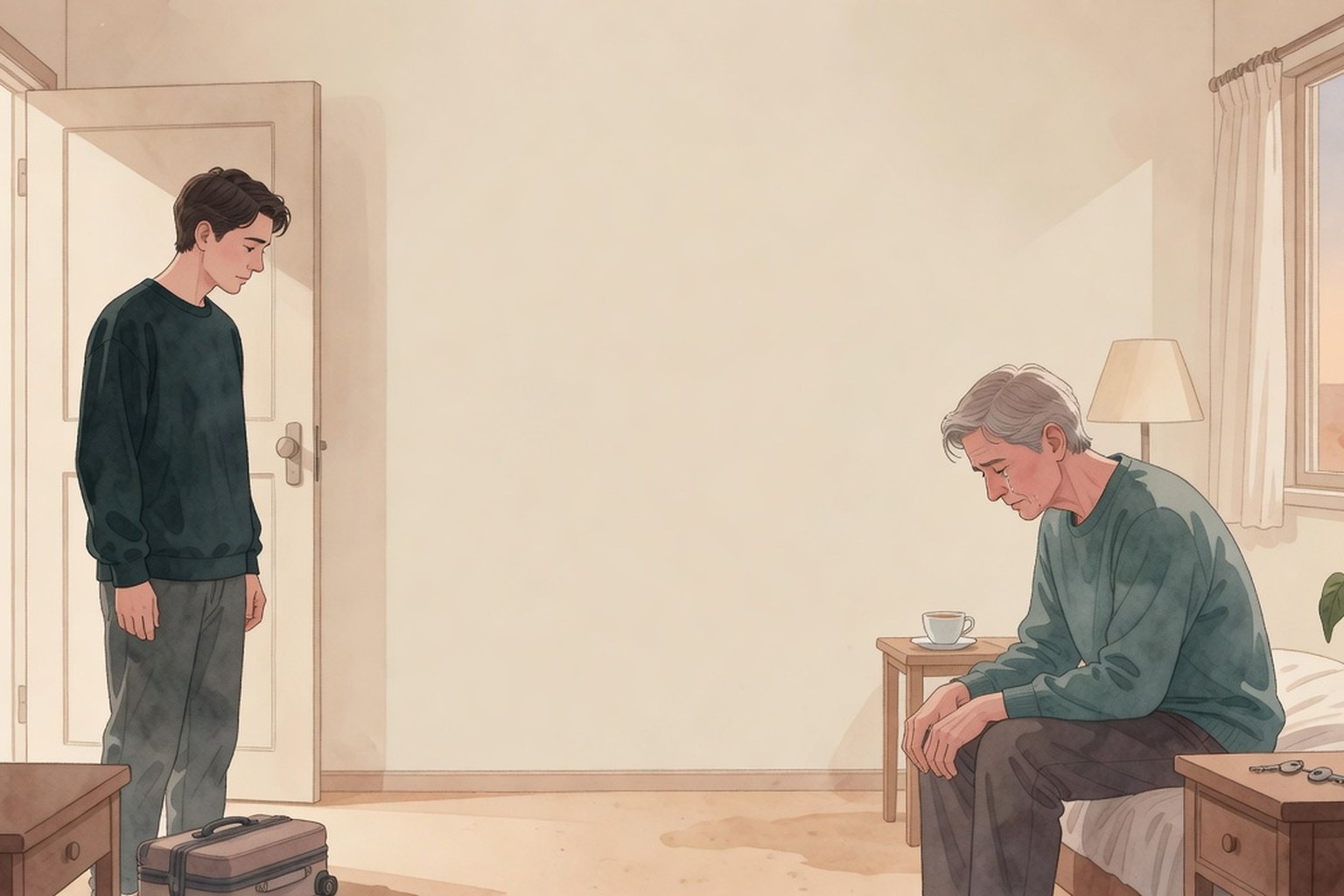
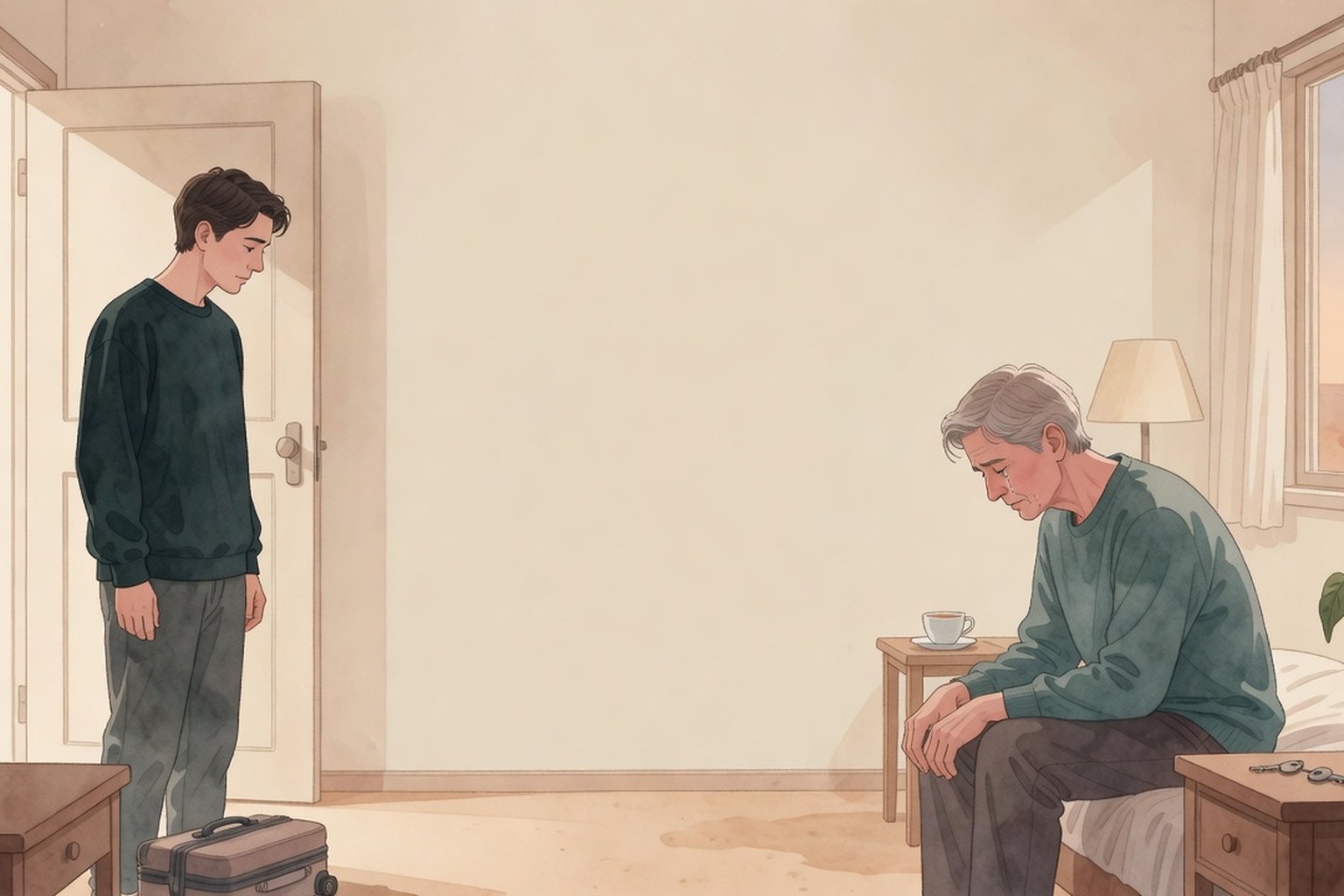
It is 4:10 in the morning. You have been lying on the sofa for an hour and a half, watching the ceiling fan rotate, listening to a partner who has just told you, in the calmest possible voice, that you are the problem. You have heard this sentence before, with different words, and you know that within six hours you will get an apology, an explanation, a memory of something tender. By next week you will believe, again, that this is love. The cup of tea you made at 2:00 a.m. is cold on the table. You have not drunk it. The sofa cushion is at a right angle under your back because you sat up to argue and never lay back down.
You are not in a difficult relationship. You are in a toxic one, and the pattern you are living is the one Stephen Karpman described in 1968 as the drama triangle. The pattern works because it gives you a role to play, and the role makes the chaos feel like a story you are inside, not a trap you are caught in. The trap is that the role keeps changing. This week you are the victim. Next week you are the rescuer. The week after, you are the persecutor. The roles rotate, and so does the pain, but the triangle stays the same.
This piece is not about blame. Karpman’s model is a tool for clarity, not a verdict about you or about your partner. If you recognize yourself in one of the three roles, the work is to notice that the role is keeping you in the pattern, not to condemn yourself for being there. People fall into the drama triangle for a reason: it once helped, somewhere, to take a particular role. Today, the same role is hurting you. The shift is from playing a role to stepping outside the triangle.
1. The three roles, in plain language
The Karpman triangle has three points. The victim is the one who is suffering; the persecutor is the one who is being blamed; the rescuer is the one who is trying to fix things. In a healthy relationship, when something goes wrong, two adults take responsibility together, and a third party (a friend, a therapist) might help if needed. In a toxic relationship, the same two people keep swapping which of them is the victim and which is the persecutor, and a third person (a parent, a friend, sometimes a child) keeps being pulled in as the rescuer.
You can recognize the pattern by what it does, not by what people say. After an incident, the conversation does not end in resolution. It ends in role assignment. One person is now officially the one who was wrong; another is the one who was hurt; a third is the one who must make it right. The next incident will reshuffle the roles. That is the triangle working.
The model is widely used in clinical practice. Nelson (2015) describes how the Karpman triangle shows up in situations where one person is doing emotional labour on behalf of another, and the “rescuer” role becomes a way of avoiding the structural change that would actually help. Karpman’s original work is from transactional analysis, and the framework is taught in many therapy trainings because it gives people a word for a pattern that often feels invisible from the inside.
2. Stay or leave, and the third option that almost no one names
When you are inside a toxic relationship, the question people ask is binary: stay or leave. The Karpman triangle reframes the question. You cannot leave a triangle by yourself if you are still playing one of its roles. If you are the rescuer, leaving the relationship while still being the rescuer means you will rescue someone else in three months. If you are the victim, leaving while still being the victim means you will narrate the next relationship in terms of what the new partner is doing to you. The role is portable. The triangle follows you.
The third option, which is rarely named, is to step out of all three roles at once. The shift is internal: from being in a role, to seeing that you are in a role, to choosing to step out of it. The other person may or may not change. The triangle dissolves when at least one person refuses to keep playing their part.
Practically, this looks like the following sequence. First, you notice which role you are playing this week. Second, you notice what the role costs you: time, money, sleep, friendships, self-respect. Third, you ask what you would do today if you were not in that role. Fourth, you do that thing. Sometimes the fourth step is to leave. Sometimes it is to stay but refuse the role. Sometimes it is to ask for help from a third party who is not a rescuer — a paid therapist, a hotline, a doctor. The triangle loses its shape when one of its three points is no longer willing to perform.
3. What each role costs in concrete terms
The victim role feels like a release: someone else is the problem, the persecutor is wrong, the rescuer will save. The cost of the victim role is that you stop being the author of your own life. Decisions get made for you, or against you, and you accept them because “this is what happens to me.” The role is comfortable when you are exhausted; the role is destructive when it becomes your permanent self-image.
The persecutor role feels like power: you see clearly what is wrong, you name it, you demand change. The cost of the persecutor role is that you become the person others avoid, and you lose access to the help you need. Persecutors are rarely told they are hurting themselves, because the people who would tell them have learned to stay quiet. The persecutor is the role that has to be most careful, because the persecutor is often the one who is most convinced that they are the healthy one in the room.
The rescuer role feels like love: you are the one who helps, you are the one who stays, you are the one who pays the bill, you are the one who listens. The cost of the rescuer role is that you become indispensable in a system that is hurting you, and you start to mistake the cost for your value. Nunn (2026) describes the rescuer as the role most likely to be recruited in situations of intimate partner abuse, because the rescuer appears to be the helper and is therefore least likely to be questioned.
4. A scene that probably sounds familiar
It is 4:10 a.m. The cup of tea is cold. You are on the sofa because the bed is a contested space and the sofa is the only place that does not feel like a verdict. Your partner has gone to bed, or is in the next room, or has left the apartment. The argument was about something small: who was supposed to pick up the dry cleaning, or who forgot to call the plumber, or whether the tone of a sentence you sent was correct. The argument is not about any of those things. The argument is about the role each of you was supposed to play tonight.
You played the rescuer last week. You were the one who noticed the small thing, brought it up gently, and offered a solution. Your partner played the victim. This week the roles are reversed. You are the one who was wrong. Your partner is the one who is hurt. The persecutor role is the one that gets the moral high ground, and the persecutor is rarely questioned. You have apologized twice, and the apology has not landed, because in the triangle, the persecutor’s pain is real, but it also does not leave when the apology arrives.
In the morning, things will be calm. There will be coffee. There will be a sentence that is tender. You will believe, briefly, that the cycle is over. It is not over. The cycle is the cycle.
5. The first shift: noticing the role, not the person
When you are inside the triangle, the most common reaction is to focus on the other person’s role. If you are the victim, you are focused on the persecutor. If you are the persecutor, you are focused on the victim. If you are the rescuer, you are focused on whether your help is being appreciated. The triangle is designed to keep the attention on the other person, because if the attention stays on the other person, the role you are playing remains invisible.
The first shift is to look at your own role. Not the other person’s role. Yours.
A practical way to do this: after the next argument, instead of writing down what the other person did, write down what you did, in order. The first thing you did, the second thing, the third. Then read it back and ask, “What role was I playing?” Often the answer is clear within a few sentences. The role is what you do, not what you feel. The role is the action, and the action is something you can change.
The first time you do this exercise, the role is usually the rescuer. Most people, when they ask themselves honestly what they did, find that they were the one who was trying to fix things. That is normal. The rescuer role is the most flattering role. The next step is not to feel guilty about the role. The next step is to notice what the role costs.
6. The cost of each role in a single sentence
- Victim: “I am suffering, and the only way out is for someone else to change.”
- Persecutor: “I am right, and the only way out is for someone else to admit it.”
- Rescuer: “I am needed, and the only way out is to keep helping, even when no one asked.”
Each of these sentences contains the words “someone else.” That is the common factor. In the triangle, the solution is always somewhere else. The triangle keeps the solution out of reach by design.
The shift out of the triangle begins when you remove “someone else” from your sentence. The victim sentence becomes: “I am suffering, and the only way out is for me to change something I can control.” The persecutor sentence becomes: “I am right about the problem, and the only way out is for me to change how I respond to it.” The rescuer sentence becomes: “I am needed, and the only way out is for me to stop offering help that is not asked for.”
The sentences are not pretty. They remove the drama. That is the point.
7. Bars: who pays the most in a toxic relationship
In a research-informed way, here is what the cost looks like in three bars. These are not clinical scales; they are a way of seeing the imbalance.
| Cost area | Victim role | Persecutor role | Rescuer role |
|---|---|---|---|
| Sleep | High | Moderate | Very high |
| Money | Moderate | Low | High |
| Friendships | High | Moderate | High |
| Self-trust | Very low | Moderate | Low |
| Hope | Low | High | Moderate |
| Energy | Low | Moderate | Very high |
These are not real measurements. They are a way of seeing that the cost is not evenly distributed. In a toxic relationship, the person playing the rescuer role pays the most in every bar except the persecutor bar. The person playing the victim role pays the most in self-trust, hope, and friendships. The person playing the persecutor role pays the least, which is why the persecutor role is so hard to give up.
8. The three observable differences between staying and leaving
The question is not “stay or leave.” The question is “what is observable from the outside.”
If you stay, three things are observable. First, the cycle continues. The same kind of argument, with the same kind of resolution, repeats every few weeks. Second, you are still doing the same work. The same person is still being the rescuer. The same person is still being the victim. The same person is still being the persecutor. Third, the relationship continues to take more from you than it gives back, and the gap between what you give and what you get back is widening, not narrowing.
If you leave, three other things are observable. First, the cycle ends. The same argument, with the same person, no longer happens. Second, you do new things. The energy that went into the cycle goes somewhere else. Third, the gap between what you give and what you get back closes, because the new relationships you build tend to be more reciprocal than the one you left.
The third observable is the one that matters most. The triangle teaches you that love is sacrifice, that sacrifice is love, and that the relationship is the most important thing. When you leave, you learn, sometimes slowly, that love is not sacrifice, and that the relationship is not the most important thing. The thing that is the most important thing is your own willingness to be in a relationship where you are not performing a role.
9. When the triangle is not the answer
The Karpman triangle is a tool. It is not the answer to every question. It is most useful when the pattern is repeating and you can see the same person playing the same role over and over. It is less useful when the relationship is genuinely one-time, when the conflict is structural (housing, money, immigration), or when one person is being subjected to violence that requires safety planning rather than self-reflection.
Walker (1984, 2006) describes the cycle of violence in ways that overlap with Karpman’s model but also go further. The cycle of violence includes a phase of calm, a phase of tension, a phase of explosion, and a phase of reconciliation. If you are in a relationship where the cycle of violence is active, the Karpman triangle is useful as one of many tools, but it is not a substitute for safety planning. If you are in immediate danger, the answer is not to step out of a role. The answer is to call a crisis line, a friend, or a family member, and to leave the space.
If you are not in immediate danger, but the pattern repeats, the Karpman triangle is one of the most useful tools available. It is not a verdict. It is a vocabulary. The vocabulary lets you see the pattern, and the seeing is what allows the shift.
10. The shift out of the triangle, in three steps
- Notice which role you are playing this week. Not last week's role, this week's. The role can change. The noticing is the practice.
- Name the cost of the role. Not the cost to the other person. The cost to you. Sleep, money, friendships, self-trust, hope, energy. The cost is real.
- Do one thing today that is not in the role. The thing can be small. The thing can be to sleep in the bed instead of the sofa. The thing has to be outside the role.
The shift out of the triangle is not a single decision. It is a practice.
The first step is to notice which role you are playing this week. Not last week’s role, this week’s. The role can change. The noticing is the practice.
The second step is to name the cost of the role. Not the cost to the other person. The cost to you. Sleep, money, friendships, self-trust, hope, energy. The cost is real. The cost is not a character flaw. The cost is the price of the role.
The third step is to do one thing today that is not in the role. The thing can be small. The thing can be to sleep in the bed instead of the sofa. The thing can be to call a friend you have not called in three months. The thing can be to say, out loud, in the room, “I am not willing to be the rescuer in this conversation.” The thing does not have to be brave. The thing has to be outside the role.
The three steps are not a one-time event. They are a practice. The triangle will come back. The role will come back. The noticing is what makes the shift possible.
11. What you tell yourself vs what is observable
The Karpman triangle is also a tool for separating what you tell yourself from what is observable. The triangle teaches you to listen to the story you are telling yourself about why you are in the role, and to ask whether the story is observable.
The victim says: “I have to stay because they will fall apart without me.” The observable is: the person is an adult, and adults do not fall apart because one specific person is not in their life. The statement may be true in a small number of cases; in most cases, it is the story that keeps the victim in the role.
The persecutor says: “I have to stay because no one else will tell them the truth.” The observable is: the person has access to other sources of feedback, including the court system, the medical system, and the people around them. The statement may be true in a small number of cases; in most cases, it is the story that keeps the persecutor in the role.
The rescuer says: “I have to stay because I am the only one who can help.” The observable is: there are other helpers available, including paid professionals, friends, family, and community resources. The statement may be true in a small number of cases; in most cases, it is the story that keeps the rescuer in the role.
The story is the role. The story is what you can change. The story is the practice.
12. A question to ask before bed tonight
Before you go to sleep tonight, ask yourself one question. The question is not “is this relationship working.” The question is “which role am I playing tonight, and what is the cost of that role tomorrow morning.”
If the answer is “I do not know,” that is also a useful answer. It means the role is so familiar that you are not noticing it. The noticing is the practice.
If the answer is “the victim,” the cost tomorrow is self-trust. If the answer is “the persecutor,” the cost tomorrow is relationships with other people. If the answer is “the rescuer,” the cost tomorrow is your own time and energy.
The question is not meant to make you feel guilty. The question is meant to make the cost visible. The cost is already there. The question does not add the cost; the question just lets you see the cost that was already there.
13. Let’s go back to 4:10 a.m.
Let’s go back to 4:10 in the morning. To the sofa at a right angle. To the cup of tea that was not drunk. To the partner who is in the next room, or who has left, or who is asleep. To the argument that was not about the dry cleaning.
The argument is about the role. The role is the one you have been playing. The role is the one you can step out of. The role does not have to be played tonight.
If the role is the victim, you can step out by writing down what you did, not what the other person did. If the role is the persecutor, you can step out by noticing what you want, not what the other person owes. If the role is the rescuer, you can step out by offering help that was asked for, not help you decided to give.
The cup of tea is cold. The sofa cushion is at a right angle. The ceiling fan rotates. The next argument will come. The question is not whether the argument comes. The question is which role you will be in when the argument arrives.
Crisis support — if you are in crisis now
If you are in immediate danger, thinking about harming yourself, or unable to stay safe because of the pressure of a relationship that is hurting you, contact emergency services now. If someone is threatening or violent, the priority is your safety. You are not alone.
| Region | Number | Notes |
|---|---|---|
| Colombia | 123 | Línea de emergencias, 24/7, gratuita |
| Colombia (orientación) | 106 | Orientación psicosocial, 24/7, gratuita |
| United States | 988 | Suicide & Crisis Lifeline, free and confidential |
| United Kingdom | 116 123 | Samaritans, free |
| Canada | 988 | 9-8-8 Suicide Crisis Helpline, free and confidential |
| Australia | 13 11 14 | Lifeline Australia, free and confidential |
| International | findahelpline.com | Directory of local crisis lines |
Pedí ayuda profesional → https://rdkterapia.com?utm_source=momentovital&utm_medium=hub&utm_campaign=relacion-toxica&utm_content=triangulo-karpman-trampas
What is the Karpman drama triangle?
It is a 1968 model by Stephen Karpman describing how three roles — victim, persecutor, and rescuer — rotate in destructive relationships. The pattern keeps everyone stuck because the same person can switch roles every few weeks. The model is used in clinical practice to help people notice which role they fall into most often, so they can step out of the cycle rather than rotate through it.
How do I know if I am in the triangle?
Look for two patterns: first, you feel like you are reacting more than acting — the script writes itself; second, the same emotional cycle (calm → tension → explosion → reconciliation) repeats every few weeks. If you notice the same conversation happening with different words, the triangle is likely active. The Karpman triangle is a tool for naming the pattern, not for blaming any party.
Can I exit the triangle without my partner exiting too?
Yes. You cannot control what your partner does, but you can change which role you play. If you stop playing the victim and the rescuer, the persecutor role loses its audience. In practice, this looks like setting a clear boundary, accepting that the other person may not change, and being willing to walk away if the pattern keeps repeating. The triangle dissolves when at least one person refuses to keep playing their part.
citations:
- id: “walker-1984-cycle” authors: “Walker, L.” year: 1984 title: “Descriptions of Violence and the Cycle of Violence” journal: “The Battered Woman Syndrome” doi: “10.1891/9780826170996.0005”
- id: “nelson-2015-karpman” authors: “Nelson, J.” year: 2015 title: “The Karpman Drama Triangle and Diabetes” journal: “AADE in Practice” doi: “10.1177/2325160314562242”
- id: “nunn-2026-ipv” authors: “Nunn, L.” year: 2026 title: “Investigating Intimate Partner Abuse” journal: “Ending Intimate Partner Abuse” doi: “10.4324/9781003639817-3”
Por MomentoVital · Substance clínica honesta, no reemplazar ayuda profesional.