MV Moment · Self-worth and value
When you need everyone to tell you you're okay
Needing others' approval as the base of your well-being is an old substitution. Here is how to build a foundation of your own, and stop asking outside for what you can already give yourself.
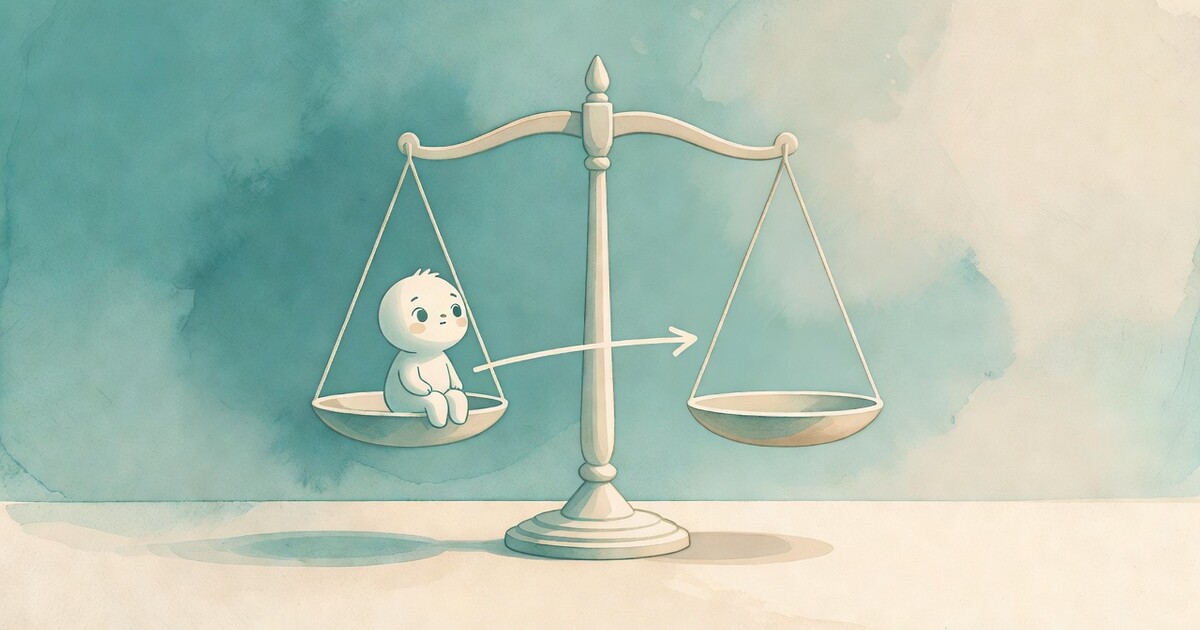
Why do I depend on others’ approval?
Approval dependence is a substitution: you learned to use others’ applause as the base of your well-being because as a child your value depended on what others said. Getting out requires building a foundation of your own, not stopping looking for approval.
What it feels like (and why it hurts so much)
You did something well and you wait for someone to notice. The comment did not come, and you sank. Your partner looks at you with a neutral expression and your head runs: “what did I do wrong? Is she angry? Does she see me as ugly?” You posted something and check the likes counter every twenty minutes.
Approval dependence has three textures:
What it feels like in the body: tight chest, tense stomach, an inner voice that repeats “am I doing this right? Do they see me well? What are they going to think?”
You are not weak: you are using an old substitution
Approval dependence is not a moral defect. It is a substitution: you use others’ applause because as a child affection was conditional on what others said about you. If you were loved when you were “a good student,” you learned that your value depended on results. If you were loved when you were “quiet,” you learned that your value depended on not making trouble.
Today, as an adult, you repeat the pattern: you look outside for what you did not learn to generate inside. It is not that you are weak; it is that you are using an old tool for a new problem.
The substitution has one advantage: it pulls you out of loneliness. If your value depends on the other, you are never alone. But that same dependence leaves you in a permanent state of alert: if the other person pulls away, you sink.
Applause as substitute: why it is never enough
A metaphor helps. Imagine you are thirsty, but the only way to get water is to ask someone to give it to you. If that person is available, you drink. If not, you die of thirst. That is approval dependence: your internal thirst (the need to feel you are worth something) depends completely on someone else quenching it.
The problem: outside water does not quench inside thirst. You can receive a thousand compliments and still be thirsty, because the thirst was not about water but about an internal foundation you did not learn to build.
The way out is not to stop drinking water. It is to learn to have your own faucet. A daily practice that tells you “you did this well, this is yours, this is enough” without waiting for anyone to tell you. That is a foundation of your own. And it is the one you train.
What psychology knows (without putting you to sleep in the process)
Approval dependence has a technical name: contingencies of self-worth. Crocker and Park (2004, DOI 10.1111/j.1467-8721.2004.tb00300.x) showed that self-esteem based on achievements, appearance, or others’ approval is more fragile than self-esteem based on virtues or personal growth. People with contingent self-esteem report more anxiety, more avoidance, and more rumination when things go wrong.
What the data shows: stable (non-contingent) self-esteem is associated with greater sustained well-being, better relationships, and more resilience. It is not that you never look for approval; it is that your well-being does not depend on it.
The action is not “stop looking for people to love you.” It is to build a foundation of your own that does not need external weather. That is trained with daily practice, not with a speech.
Three exercises for today (no motivation needed)
Here are three, not to do all of them, but so you can choose the one that resonates most. Each one takes five minutes.
One. The search map. Today, write down every time you asked for approval or waited for a compliment. Don’t analyze; just register. The time, the context, what you expected. At the end of the day, look at the map. The repetition alone shows you the bar.
Two. The inner faucet. Tonight, before sleeping, say three concrete things of yours. Say: “today I did X, not because anyone asked me to, but because I wanted to. I like how I feel with that.” You don’t need anyone to say it. The words you say them to yourself.
Three. The small “no.” Today say no to something you don’t want but that was hard to say. A plan, a favor, an idea. Not out of rebellion; out of honesty. The approval that matters is yours, not the one who asked.
With just one, done this Monday, you already have new information about what it feels like to look at yourself from inside instead of looking outside.
What you actually need this week (not your whole life)
Approval dependence is not solved with a big speech. It is solved with daily practice that installs another foundation. Three small steps that work:
Day 1 and 2: just observe. Day 1 and 2: just observe. Every time you notice you are looking for approval, note the time and context. Without trying to change it. Just register.
Day 3 to 5: translate. Day 3 to 5: translate. When the need shows up, instead of fighting it, say softly: “I am looking outside for what I can already generate inside.”
Day 6 and 7: review. Day 6 and 7: review. Note: how many times this week did you give yourself the validation you were looking for outside? You are looking for more moments of your own foundation.
If you do just this for a week, you will see a difference you can feel in your body: the chest loosens in some situations where it used to tighten. If that happens, it counts. If not, that is also fine: the substitution has been going on for years; getting out takes weeks or months.
A fourth element: register the small victory of each day. If today you said no to an invitation that drained you, that counts. If you sat down to eat without your phone next to you, that counts. The foundation of your own is built with the archive of those things.
The thermometer for when to ask for professional help
Approval dependence deserves professional attention if:
- It is constant and severe, and modifies your behavior in almost every interaction.
- You have isolated yourself from people close to you out of fear of not being liked.
- You have thoughts of not being enough if someone leaves you, even if they are brief.
- You have stopped keeping basic routines: sleeping, eating, moving.
- The body has started expressing it physically: headache, contractures, anxiety attacks.
If any resonates, do not keep reading. Booking a session with a professional is the first step, not the last resort. Traducción y Anclaje Therapy works specifically with the old substitution. It is not exaggeration. It is taking care of yourself for real.
What you feel vs. what is underneath
| What you feel | What is usually underneath | What to try today |
|---|---|---|
| “I need them to tell me I am okay” after doing something | Your value is contingent on outside; the internal thirst asks for water from outside | Say it to yourself: “I did this, it is okay, it is mine” |
| Hypersensitivity to someone’s silence | You read silence as disapproval because you learned that love = response | Note what you think the silence means, then verify |
| Changing your mind depending on who is around | You are modulating your self to get external approval | Note what you really think, without an audience |
| Checking likes and messages compulsively | The body looks for water outside because the inner faucet does not produce it | Replace 5 min of scrolling with 5 min of saying things to yourself |
| Doubting a decision if nobody approves it | The inner bar did not develop; you depend on the external stamp | Ask yourself: “if nobody knew about this, would I still do it?” |
What this article does not promise you
It does not promise that tomorrow you will stop looking for approval. It promises a map: where the substitution comes from, what holds it up, what to do when it appears. The map does not take you, it orients you. The walking part is still yours, small every day.
This is not a defect of your character. It is an old substitution you no longer need. What you learned to look for outside was, for a long time, a way of regulating yourself. You no longer need that substitution because you can learn to regulate yourself from inside. Your body can learn to have its own faucet, and it starts with you: stop waiting for someone to tell you that you are okay and start telling it to yourself.
Questions you might be asking yourself
Why do I need others’ approval?
Because you learned to use others’ applause as a substitute for a foundation of your own. If as a child your value depended on what others said, today you keep looking outside for what you did not learn to generate inside. The dependence is not weakness; it is a substitution for something that was missing.
How do I stop depending on others’ approval?
Four steps: 1) name the moments when you look for approval (a like, a compliment, a message from someone you need to say yes), 2) separate real approval from fleeting validation, 3) build a daily practice of recognizing your own things without waiting for anyone to say them to you, 4) start saying no to things you don’t want just because someone else asked for them.
Is needing approval the same as low self-esteem?
It is one of the symptoms. Low self-esteem rests on an external bar (what others say about me). A person with stable self-esteem has an inner bar (what I know about myself). Approval dependence is usually the adult form of a wound where love was conditional. It is treatable with psychotherapy.
How do I know if I am looking for healthy or unhealthy approval?
Healthy approval is information that serves you to grow and that you can also give to yourself. Unhealthy approval makes you dependent: if you receive it, you are okay; if you don’t, you sink. The test: could you be okay today without anyone telling you that you did well? If the answer is no, the dependence is high.
When is approval dependence a clinical problem?
When it starts making decisions: not saying what you think for fear of losing approval, avoiding necessary confrontations, modifying your personality depending on who is in front of you, depending emotionally on a particular person. Also when the search becomes compulsive (checking likes, messages, signs of validation constantly). That is no longer a trait; it is treatable suffering.
If this has been heavy for a while, talking to someone trained helps
Reading helps, but when approval dependence already dominates decisions — not saying what you think, modifying your personality depending on the audience, depending emotionally on a particular person — the work slows down if you do it alone. A trained professional can help you build the foundation of your own.
Ricardo De Castro King’s practice offers online sessions of Traducción y Anclaje Therapy. The first one is an evaluation session, at your pace and without commitment.
This content is for educational and informational purposes and is not an evaluation or treatment by a mental health professional. It is written by Ricardo De Castro King, psychologist, Professional License 106127. If you are in crisis or have thoughts of harming yourself, please seek immediate professional help or contact an emergency line in your country.
Your substitution map: 6 minutes to build your inner faucet
This tool is not a test. It is a map: walk through five questions to see when and where you look for approval outside, and start building an inner foundation that does not depend on the weather.
To take with you
The pocket guide for this moment
5 pages: the 5 translations you just lived, the 6 steps of your substitution map, and a 7-day plan to build your own foundation. I'll send it to your email, free.
Professional support
And if this has been heavy for a while, talking helps?
Reading helps you understand. Talking with someone trained helps you change. This is the practice of Ricardo De Castro King, psychologist, Professional License 106127.
When to seek professional help
This is information, not a diagnosis. If any of these signs are in your life right now, talking with someone trained matters more than continuing to read.
- USA & Canada — 988, Suicide & Crisis Lifeline
- UK & ROI — Samaritans 116 123
- Australia — Lifeline 13 11 14
- International — findahelpline.com