Grief Has No Timeline (Stop Apologizing)
Grief does not follow a calendar. Here is why other people timelines are not yours, and what the research actually says about how grief evolves.
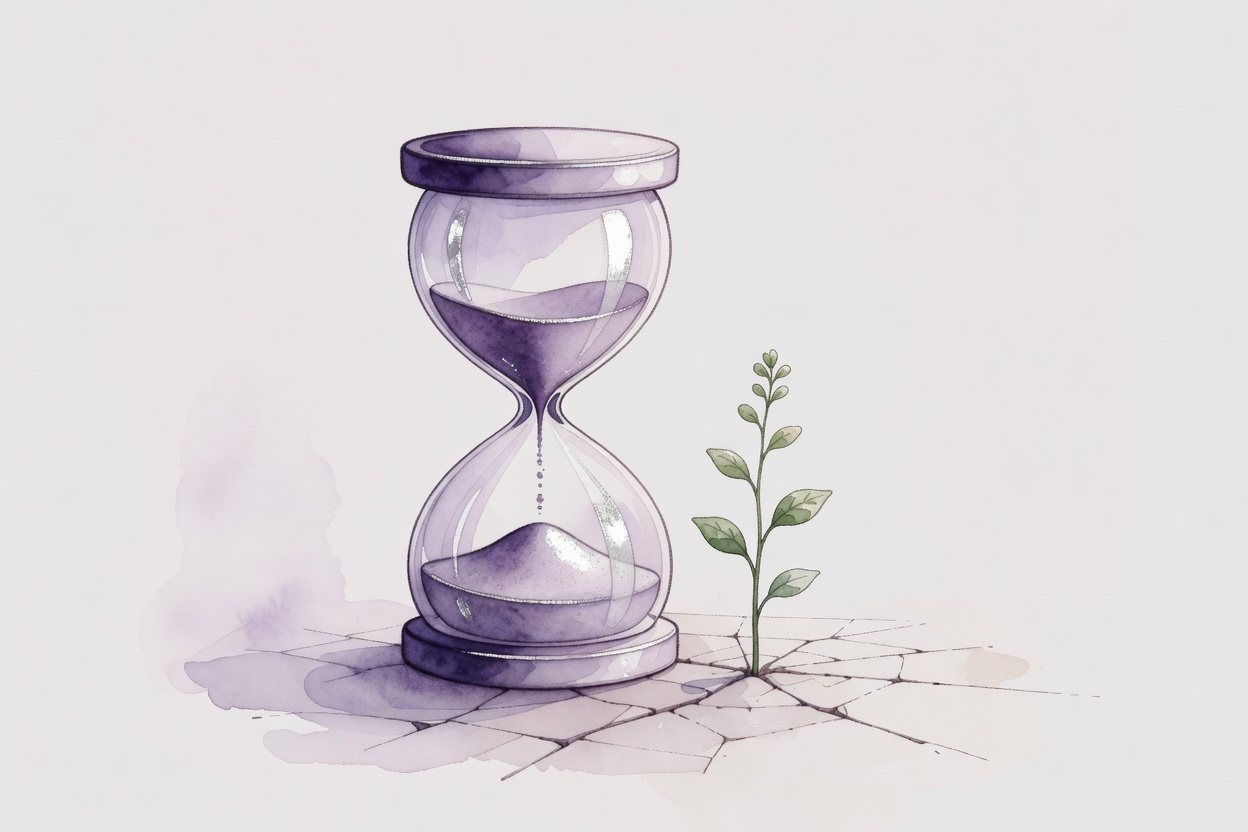
Grief Has No Timeline (Stop Apologizing)
It’s been three months. Or six. Or two years. And someone says: “Are you still upset about that?”
Yes. You are. And you don’t owe anyone an explanation.
Grief doesn’t follow a schedule. It doesn’t care that it’s been “long enough.” It doesn’t know that your coworkers think you should be “back to normal.” Grief operates on its own clock, and that clock has nothing to do with the calendar.
The Myth of the Stages
You’ve probably heard of the “five stages of grief” — denial, anger, bargaining, depression, acceptance. They’re the most famous framework in psychology, and they’re wildly misunderstood.
Elisabeth Kubler-Ross developed them to describe the experience of dying patients, not bereaved families. They were never meant to be a linear roadmap. You don’t “complete” denial and “move on” to anger. You don’t “finish” grieving when you reach acceptance.
Neuroscience research published in the Psychonomic Bulletin & Review proposes a more accurate model: grief is a form of learning. When someone dies, your brain has to literally learn new rules for navigating the world. Every time you reach for the phone to call them and remember you can’t, that’s your brain updating its internal map. It’s not failing to “move on” — it’s processing millions of micro-predictions that no longer match reality.
In reality, grief is more like weather than a highway. It moves in all directions. Some days are clear. Some days a storm hits out of nowhere. You can feel acceptance in the morning and rage by lunch. That’s not regression — that’s grief.
Why People Want You to Move On
When someone tells you to “get past it” or “focus on the positive,” they’re rarely being cruel. They’re usually:
- Uncomfortable with your pain. Your grief reminds them that loss is real and could happen to them.
- Helpless. They can’t fix it, and humans hate feeling helpless. Offering a timeline gives them the illusion of a solution.
- Following cultural scripts. Society gives us funerals, memorial services, and a few weeks of acceptable sadness. After that, the script says you should be functioning.
None of that is about you. It’s about their discomfort with the permanence of loss.
What Grief Actually Looks Like Over Time
The first weeks
Shock and survival mode. You may function surprisingly well — or not at all. Both are normal. Your brain is protecting itself from the full weight of what happened.
Months 2-6
Often the hardest period. The shock has worn off, but the reality hasn’t softened. Everyone else has gone back to their lives. You’re left alone with the absence. This is when grief feels most isolating.
6-12 months
“Firsts” hit hard — the first birthday without them, the first holiday, the first time something happens and you reach for your phone to tell them. Each “first” is a small loss inside the big one.
Year 2 and beyond
Grief doesn’t end at year one. It changes shape. The acute pain dulls, but grief waves still come — triggered by a song, a smell, a random Tuesday. The difference is that these waves exist inside a life you’ve rebuilt, not in the wreckage.
Some people describe this as “carrying grief” rather than “going through grief.” It doesn’t leave. You just learn to carry it differently.
What You DON’T Have to Do
- You don’t have to “stay strong.” Crying isn’t weakness. Falling apart isn’t failure.
- You don’t have to be grateful. “At least they’re not suffering anymore” might be true, but it doesn’t erase your suffering. You’re allowed to be grateful AND devastated.
- You don’t have to “honor them” by being happy. The person you lost would want you to be okay eventually — but they’d also understand if you’re not okay yet.
- You don’t have to forgive on anyone’s timeline. If there’s complicated feelings — anger, guilt, regret — those are part of the process, not obstacles to it.
- You don’t have to do it alone. A grief therapist (BetterHelp can match you with one) isn’t a sign of weakness. It’s a sign of someone taking their healing seriously.
Permission Slips
If you need someone to say it:
- You’re allowed to still be sad.
- You’re allowed to laugh without guilt.
- You’re allowed to talk about them — even if it makes others uncomfortable.
- You’re allowed to not talk about them when you don’t want to.
- You’re allowed to have good days without feeling like you’re betraying their memory.
- You’re allowed to take as long as you need.
The Only Timeline That Matters
Yours.
Not your family’s. Not society’s. Not your therapist’s. Not this article’s.
You’ll know when grief has shifted from consuming your life to coexisting with it. Not because the calendar says so — but because one day, you’ll notice you went a whole afternoon without the heavy feeling. And then a day. And then it comes back. And then it goes again.
That’s not “getting over it.” That’s living with it. And that’s the only timeline that’s real.
Research confirms what you already feel: most people continue to experience waves of grief for years, but typically their grieving begins to shift within 12 months. In about 7-10% of cases, grief becomes “complicated” — prolonged, intense, and stuck. If that sounds like you, it doesn’t mean you’re broken. It means you need support. A grief-specialized therapist through BetterHelp can help you process what’s stuck.
Grief doesn’t end. It changes shape. The acute pain dulls, but the love stays. And learning to carry both is the most human thing you’ll ever do.
Take your time. The people who truly love you will wait.