The inner critic voice: it wasn't born with you
The inner critic is a learned voice, not your identity. Learn how it forms, why it persists, and how to answer it with a more honest voice
 Ricardo De Castro KingPsychologist · Meet the author
There’s a voice inside that almost never shuts up. It tells you what you just said sounded wrong. That they’re being nice out of obligation. That when they get to know you well, they’ll leave. That you’ll never measure up. And worst of all: it sounds like yours. Same tone, same accent, same words. That’s why it seems obvious it’s yours.
It isn’t. It’s a learned voice. And knowing this changes how you’re going to work with it.
What it is exactly
Robert Firestone, clinical psychologist, developed the concept of inner critic voice in 1988 in The Fantasy Bond and Voice Therapy. He defined it as: a set of negative thoughts toward oneself, organized in the form of voice or internal discourse, which were internalized from external sources during early history and now operate as if they were one’s own.
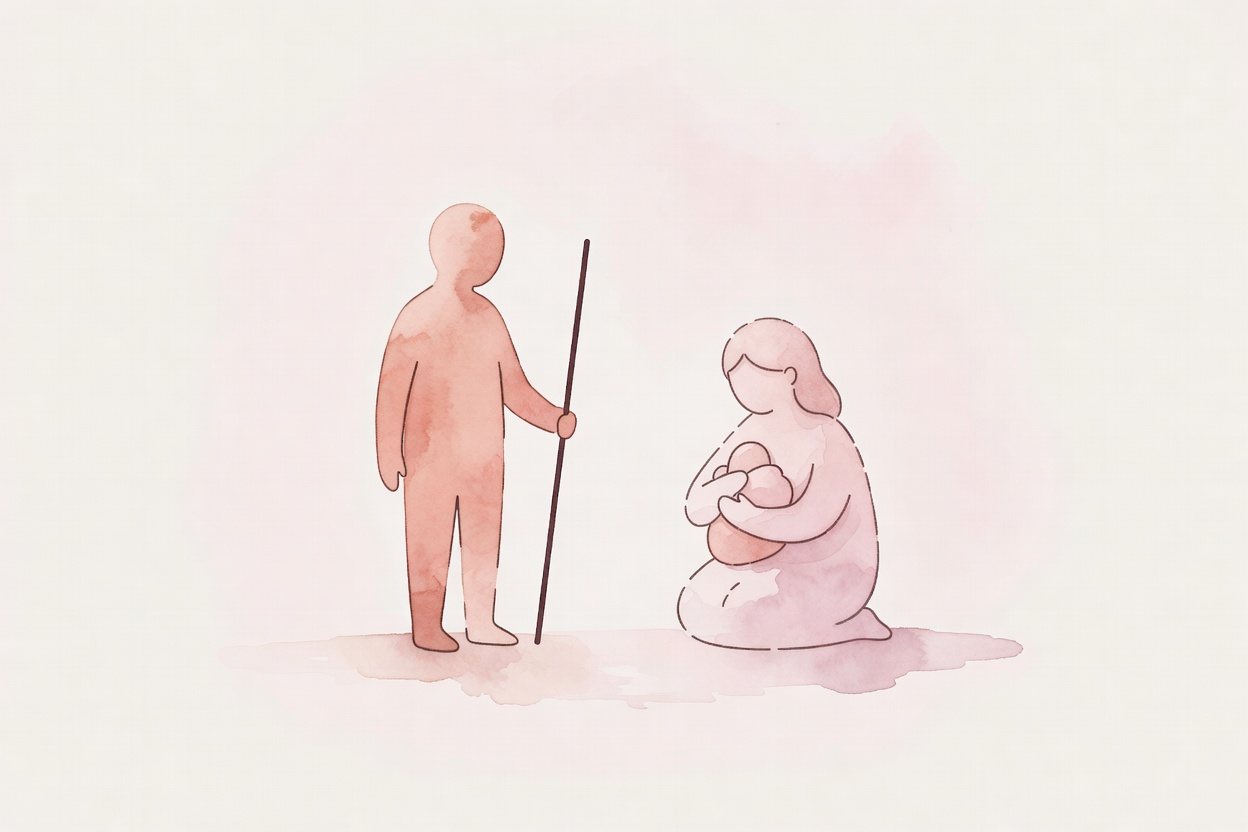
Firestone’s key distinction: the critical voice is not your voice. It’s the internalization of an external critical voice — usually from important care figures in childhood — that was taken in, internalized, and now keeps functioning inside the head even though the original emitters are no longer there or have changed.
How it got installed
The documented mechanisms:
Identification with the aggressor
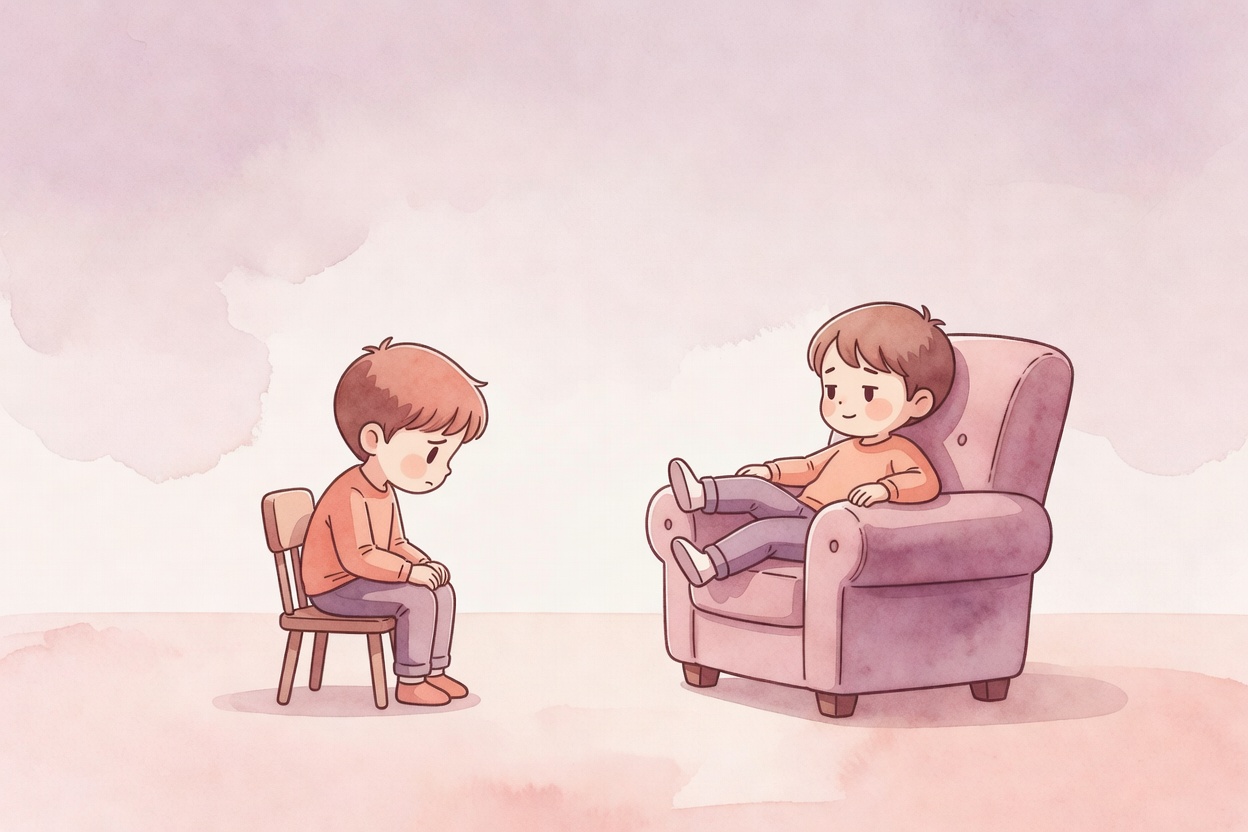
When a significant adult (parent, harsh teacher, older sibling) systematically criticized with specific phrases — “you’re impossible”, “you’re lazy”, “you always ruin everything” — the child’s brain had two options. Confront (impossible for a child with an adult) or absorb the voice. By absorbing it, the child could anticipate: “I already know what they’ll say, better tell myself first.” It’s a protection mechanism — knowing beforehand hurts less.
The problem is the voice stays afterwards. The adult disappears or changes. The voice keeps operating as if the adult were still there.
Early maladaptive schemas
Jeffrey Young (2003) called these structures early maladaptive schemas: deep beliefs about oneself installed in childhood from what significant adults returned — or failed to return. Two appear especially in low self-esteem:
- Defectiveness/shame: “There’s something wrong with me. If they know me well, they’ll leave.”
- Unrelenting standards: “If I’m not perfect, I’m worthless.”
They’re not character flaws. They’re records of how you were treated when you couldn’t defend yourself.
Critical environmental language
Sometimes there’s no specific critical figure, but a critical environment — constant comparisons (“look at how your sister behaves”), silent impossible standards (only excellence was applauded), or subtle messages about when you were “too much” (too loud, too sensitive, too needy). The child absorbs an implicit standard: “I’m only acceptable if…”
Rejection or neglect
Absence of validation also builds critical voice. If a child was almost never seen in the positive, the space where the message “you’re loved, you’re enough” should be stays empty. The brain fills the void — and usually does it with the worst available explanation: “they didn’t look at me because I wasn’t worth it.”
How it sounded, how it sounds now
Some of the phrases you recognize probably trace back to specific voices:
- “You think too highly of yourself” → probably from a context where self-affirmation was discouraged.
- “No one will put up with you” → probably from an adult frustrated with your legitimate needs.
- “Don’t do it, it’ll come out wrong” → probably from an anxious adult who projected their fear.
- “You won’t be able to” → probably from a context where confidence in you was low.
- “You’re too intense/weird/sensitive” → probably from figures who didn’t know how to regulate their own discomfort with what was yours.
The list can continue. The useful exercise is to try to attribute each phrase to a specific source. You don’t always succeed 100%, but often a face appears, a moment, a familiar repetition. When it appears, the phrase loses weight — because it’s no longer heard as “the truth about me” but as “the echo of X person in Y context.”
Why it stays active
Three factors keep it alive:
1. Familiarity
The brain prefers what’s familiar even if painful. A critical voice you’ve heard for decades gives you a sense of stability, even though it hurts. Turning it off can generate a void that initially produces anxiety. That’s why many people, when they start letting go of the voice, feel inexplicable distress — until they recognize they’re losing a negative but consistent company.
2. Apparent protective function
Many people internally defend the critical voice with the idea that “without it I’d become lazy, pretentious, insufferable.” It’s a false but potent belief. Neff (2003) and decades of subsequent research showed the opposite is true: self-compassion, not self-criticism, produces better sustained performance. We’ll return to this in the article on self-compassion vs. self-demand.
3. Circular reinforcement
The voice generates behaviors (avoidance, procrastination, self-sabotage) that produce low results the voice later uses as evidence. “See, I told you you couldn’t.” The loop sustains itself.
How to start separating it
You don’t silence it overnight. You disidentify — that is, you start recognizing it’s one voice among many, not the voice, and relating to it differently.
Step 1: Listen to it and transcribe it
For a week, carry a small notebook or notes on your phone. Every time you notice a self-critical phrase, write it verbatim. Don’t edit, don’t soften. Write exactly what the voice said. At the end of the week you’ll have a catalog — and something will change just from seeing them written. Internal voices lose power when they move from head to paper.
Step 2: Attribute
For each phrase, ask yourself: who ever said something like this to me? In what era? What context did that person have? Sometimes it’s a specific person. Sometimes it’s an environment. Sometimes nothing comes up and it stays as “I don’t know exactly where.” That’s also information.
Step 3: Change the pronoun
When the voice appears, reformulate it in second person. Instead of “I’m a disaster,” “this voice is telling me I’m a disaster.” Instead of “I won’t be able to,” “the critical voice is saying I won’t be able to.” This change is central — Firestone called it “voice therapy.” Separating the pronoun creates space between you and the voice.
Step 4: Ask it what it wants
Sounds strange but it works. “What are you trying to protect me from today?” Often the critical voice has a learned protective function: it tries to prevent rejection by anticipating it, prevent failure by demotivating the attempt. When you yourself acknowledge its attempt, it loses intensity — it no longer needs to shout to be heard.
Step 5: Respond with your honest voice
This is the hardest and the most important. After each phrase from the critical voice, write a response you’d give to a friend in the same situation. If your friend just slipped up in a meeting, would you say “you’re a disaster, you always ruin everything”? No. You’d say something else. Write that something else — directed at you. Over time, your honest voice starts weighing more than the critical voice.
The voice identifier tool
The activity on the low self-esteem section landing is designed for this process: you take a phrase the voice repeats to you, you run it through 5 questions (who said it, how often, how useful it’s been, what you’d say to a friend, what more honest version you want to put in the notebook) and you come out with a second voice written next to it. It doesn’t erase the original. It accompanies it.
With regular practice, the second voice — your honest one — starts to gain space. It’s not instant replacement. It’s slow accumulation.
When the voice indicates therapy is needed
Three signs:
- The voice is very intense and constant (no pauses, not even in calm moments).
- There are thoughts of hurting yourself or that “it’d be better if I weren’t here.”
- The voice changes your behavior in important ways: you stop doing things that matter to you, you move away from people, you drop whole areas of your life.
If any of that applies, the article when to seek help has detail on what kind of therapy and what professional.
Closing
The critical voice is not your voice. It’s a tenant that stayed after whoever brought it left. It’s settled in so well you think it’s part of the building — but it’s a tenant, not the owner.
It’s not going to leave overnight. It gets evicted with sustained work. The good news: every phrase you recognize as its and not yours, is a phrase that loses power. And every response you write with your honest voice, is a piece of recovery.
With time, what gets written in your notebook weighs more than what others wrote before in yours without your permission.
One more thread worth pulling, since you are already naming that voice: where it comes from and how to answer it without arguing. What the inner child is clears up the metaphor, and the voice that pushes you works on exactly how to lower its tone while keeping your standard.
Before concluding it is self-esteem, measure: the self-esteem test (Rosenberg) is ten items. Free, no registration.