6 Myths About Anhedonia That Keep You Flat
Six myths about anhedonia that sound reasonable and keep the pattern going — what each one hides, what the evidence says, and the move that replaces it.
 Ricardo De Castro KingPsychologist · Meet the author
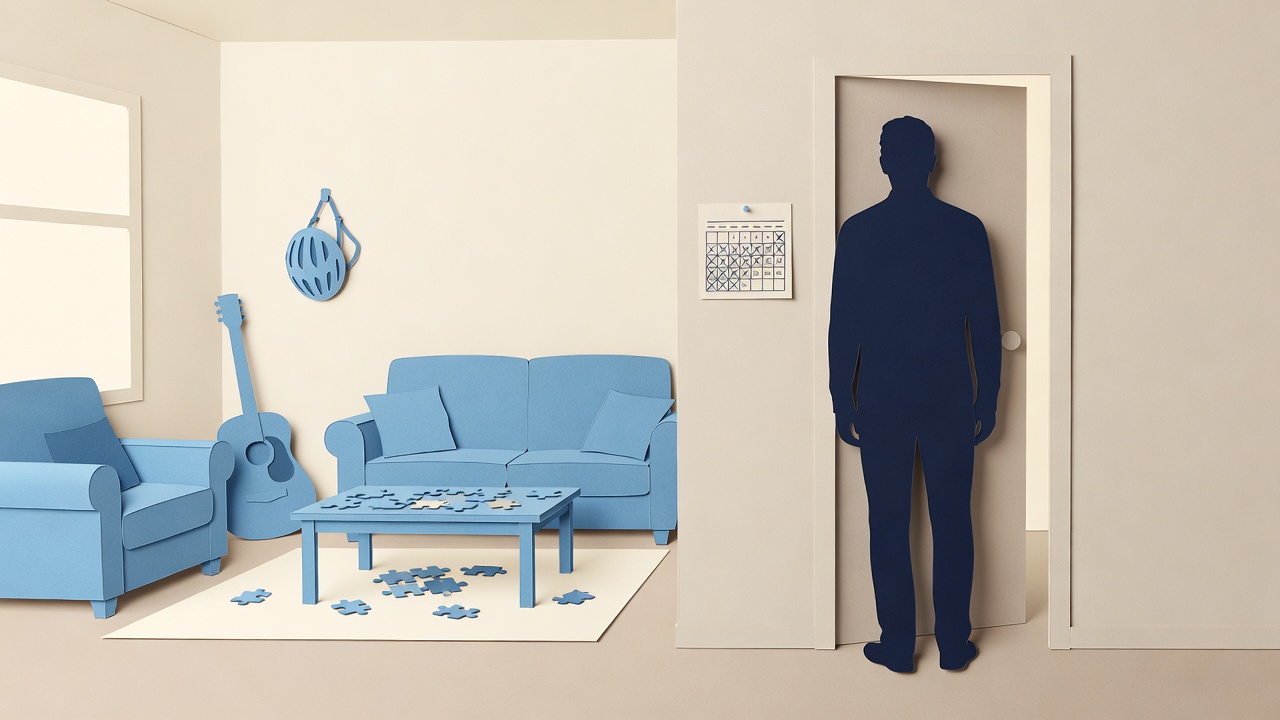
You are sitting at the kitchen table on a Saturday morning. The coffee is in front of you. The book you have been meaning to read is open to the page you marked a week ago. The morning light is in the room, the kind you usually love. You are aware of all of it. None of it lands. You have been sitting there for twenty minutes. You have not turned the page. You have not picked up the cup. You are not tired. You are not sad. You are sitting in a room full of small pleasures, and none of them has arrived.
If that scene has any edges that fit, the six myths in this piece are some of the reasons the pattern keeps holding. Each one sounds reasonable. Each one, the evidence contradicts. And each one, once it lets go, makes room for a different move — the move that actually shifts the pattern.
1. The myth that anhedonia is just sadness with a different name
This is the most common myth, and it is the one that does the most damage.
The story goes: you have lost interest in things, you feel flat, you are not enjoying life, that is sadness, the treatment for sadness is antidepressants, the antidepressants will help, end of story. The story is wrong, and the reason it is wrong is in the research.
Treadway and Zald (2011) reviewed the translational literature and argued that the field had been collapsing distinct mechanisms into one word. They separated the anticipation of pleasure (wanting) from the pleasure itself (liking) — a distinction the animal literature had supported for decades and that human imaging was beginning to confirm. DOI: 10.1016/j.neubiorev.2010.06.006. Two years later, the same authors proposed parsing anhedonia into three subtypes — anticipatory, consummatory, motivational — each with distinct circuits and distinct responses to treatment. DOI: 10.1177/0963721412474460. Rizvi and colleagues (2016) mapped the measurement strengths and pitfalls: self-reports underestimate what laboratory reward tasks reveal, and anhedonia — especially the anticipatory and motivational forms — predicts worse response to standard SSRI treatment. DOI: 10.1016/j.neubiorev.2016.03.004.
What this means for the myth is simple. Anhedonia is not sadness with a different name. It is a distinct pattern with distinct mechanisms, and the intervention with the most evidence (behavioral activation) is not what most people get when they ask for help with “sadness.” The next time you hear yourself say “I am not depressed, I just don’t feel anything,” the pattern is probably more anhedonia than sadness, and the move should be different.
1.1 · Why the myth keeps holding
The myth holds because the symptoms overlap. Low mood and anhedonia often travel together. Most people who seek help for depression have both. The shorthand “depression” works for the first session, and the standard treatment (SSRIs) helps the mood piece, and the anhedonia piece persists. Rizvi and colleagues (2016) called this out: anhedonia is the dimension most likely to remain after mood symptoms improve. DOI: 10.1016/j.neubiorev.2016.03.004. The myth hides the persistence.
2. The myth that anhedonia is permanent
You have been this way for a long time. The flatness has been the background of your weeks for months, maybe years. The myth says: this is who you are now. The evidence says no.
Treadway and Zald (2011) reviewed the evidence on reward-circuit plasticity and concluded that the circuit remains responsive to structured exposure across the lifespan. DOI: 10.1016/j.neubiorev.2010.06.006. The mechanism is doing → registering → repeating. When you do an activity (even at low pleasure), register the number (even if it is 2/10), and repeat (even on days you do not feel like it), the circuit responds. The response is measurable. The change is not heroic. It is incremental. And it is available to you at any age, at any duration of the pattern.
2.1 · What the myth hides
The myth hides the difference between duration and treatability. A pattern that has been there for five years is not, by virtue of duration, untreatable. A pattern that has been there for two weeks is not, by virtue of recency, automatically responsive. The only thing that distinguishes treatable from untreatable is whether the pattern responds to intervention. The test is the intervention, not the duration.
3. The myth that medication alone fixes anhedonia
You went to a doctor. You described the flatness. You got a prescription. You took it for six weeks. Some things got better. Some things did not. The myth says: medication alone is the treatment. The evidence says it usually is not.
Rizvi and colleagues (2016) reviewed the evidence on anhedonia treatment response and found that anhedonia — especially in its anticipatory and motivational forms — predicts worse response to standard SSRI treatment. DOI: 10.1016/j.neubiorev.2016.03.004. The implication is not that medication is useless. Medication helps the mood piece reliably. Medication does not reliably shift the reward-circuit function that underlies the anhedonic dimensions. The treatment that has the most evidence for those dimensions is behavioral activation — structured exposure to mildly pleasurable activities, registered, repeated.
3.1 · What works in medication’s place
Medication is a complement, not the spine. The spine is activation. The first move is to pick one activity you used to enjoy, assign it a concrete day and time this week, do it even if you do not feel like it, and register the pleasure 0-10. Treadway and Zald (2011) reviewed the translational evidence: the reward circuit reorders with structured exposure, not with pharmacology alone. DOI: 10.1016/j.neubiorev.2010.06.006. Medication can support the work. It cannot do the work.
4. The myth that anhedonia is the same as depression
They overlap. They share mechanisms. They are not the same thing.
Sadness is an emotional state — felt heaviness in response to events. Anhedonia is a reward-processing deficit — the diminished capacity to anticipate, experience, or be motivated by pleasure. You can have depression without prominent anhedonia (the mood is heavy but the pleasure system still works). You can have anhedonia without depression (the pleasure system is muted but the mood is not). You can have both. The clinical literature — Treadway and Zald (2013) — parses anhedonia into dimensions precisely because the dimensions need different interventions. DOI: 10.1177/0963721412474460.
4.1 · How to know which one you have
Ask: when something happens that would normally upset you, do you feel the upset in your body? If yes, the sadness dimension is working. Ask: when you listen to music you love or watch a movie that used to move you, does something stir? If no, the anhedonia dimension is doing less work. The treatment differs by which dimension is dominant. If sadness dominates, the work is mood-focused (talking, medication, cognitive work). If anhedonia dominates, the work is activation-first. If both, the work is combined.
5. The myth that willpower will get you out
You have tried. You made a plan. You did not follow through. You told yourself you lacked discipline. The myth says: try harder. The evidence says: try differently.
Treadway and Zald (2011) reviewed the mechanisms of anhedonia and concluded that the deficit is in the reward system, not in the will. DOI: 10.1016/j.neubiorev.2010.06.006. The motivational dimension — not making effort for reward even when you want the result — is one of the three anhedonic dimensions the research parses out. Willpower works against intentions. It works less well against a reward system that has gone quiet. The mechanism that shifts the pattern is structured exposure, not strength of will.
5.1 · What works in willpower’s place
Structure. A concrete day and time, written down. A specific activity that you used to enjoy, named in advance. A way to register what happened (the pleasure 0-10). A commitment to repeat for two weeks before deciding whether it is working. The structure does the work that willpower cannot. Treadway and Zald (2011) were explicit: the circuit reorders with structured exposure, not with motivation. DOI: 10.1016/j.neubiorev.2010.06.006. The myth of willpower keeps people trying to push harder at a system that needs them to show up differently.
6. The myth that breaking the pattern requires finding the cause
You have looked for the cause. The loss that started it. The job that flattened you. The relationship that left you cold. You have looked, and you have not found it, and you have decided that you cannot move until you find it. The myth says: identify the cause, then you can heal. The evidence says no.
Treadway and Zald (2013) parsed anhedonia into dimensions precisely to separate the mechanism from the trigger. DOI: 10.1177/0963721412474460. The trigger (the loss, the job, the relationship) is real, but the pattern is in the circuit, not in the trigger. You can have a clear trigger and a treatable anhedonia. You can have no clear trigger and a treatable anhedonia. The treatment that works is the same either way: structured activation, registered, repeated. The cause-finding can be useful for meaning-making. It is not necessary for the circuit to come back online.
6.1 · What changes when you stop believing this myth
You stop treating activation as conditional on insight. You stop waiting for the cause to be clear before you start the work. You start the work this week, with the activity you already have, on the day you already have. The insight, if it comes, comes after the doing — not before. Treadway and Zald (2011) reviewed the evidence and concluded that the circuit reorders with structured exposure regardless of whether the cause has been identified. DOI: 10.1016/j.neubiorev.2010.06.006. The myth of cause-finding keeps people who cannot find the cause stuck. The myth is wrong. The work is available without the cause being clear.
7. Table: the myths and what each one hides
| Myth | What it hides | What the evidence says |
|---|---|---|
| Anhedonia is just sadness | The distinct mechanisms and the activation-first intervention | Treadway & Zald 2011/2013; Rizvi 2016 |
| Anhedonia is permanent | The plasticity of the reward circuit | Treadway & Zald 2011 |
| Medication alone fixes it | The need for activation alongside pharmacology | Rizvi 2016 |
| Same as depression | The dimensional structure and differential treatment | Treadway & Zald 2013 |
| Willpower gets you out | The reward-circuit deficit that needs structure | Treadway & Zald 2011 |
| Must find the cause first | The mechanism being independent of the trigger | Treadway & Zald 2013 |
Each myth is reasonable. Each one is wrong. Each one, when you let it go, makes room for a different move — the move that the evidence actually supports.
8. Table: what to do in the myth’s place
| Myth | The move the myth blocks | The size of the move |
|---|---|---|
| Just sadness | Activation-first intervention | Medium |
| Permanent | Two-week structured trial | Small |
| Medication alone | Pick one activity this week | Small |
| Same as depression | Distinguish dimensions, target the dominant one | Small |
| Willpower | Concrete day and time, written down | Small |
| Find the cause first | Start the work without waiting for insight | Small |
Six myths. Six moves. Each one is small enough to hold. None of them require willpower against the pattern — they require structured exposure to the activities the reward system has gone quiet on.
9. The piece people don’t usually read
"But I have done therapy. It did not work."
It may not have been the right therapy. Behavioral activation — structured exposure to mildly pleasurable activities, registered, repeated — is the intervention with the most evidence for anhedonia specifically. Standard talk therapy helps the mood piece; cognitive work helps the inner critic; activation helps the reward system. Treadway and Zald (2011) reviewed the evidence: the circuit reorders with structured exposure, not with insight alone. DOI: 10.1016/j.neubiorev.2010.06.006. If your therapy has been mostly talk, it may have been working on a different dimension than the one most active in your pattern.
"I tried behavioral activation and it did not work."
It may have been too big. The activation that has the most evidence is small — one activity, one concrete time, one number registered. The heroic version (redecorate the apartment, take up a new sport, commit to daily gym) is not what the research supports. Treadway and Zald (2011) were explicit: the mechanism is structured exposure producing measurable changes in reward-circuit responsiveness. DOI: 10.1016/j.neubiorev.2010.06.006. If the activity was too big, the circuit could not respond to it. If the time was vague, the brain did not register it as a commitment. Try again, smaller.
"But I do not feel like doing anything. That is the whole problem."
That is exactly why willpower does not work and structure does. Treadway and Zald (2013) parsed the motivational dimension of anhedonia precisely: not making effort for reward even when you want the result. DOI: 10.1177/0963721412474460. The motivational dimension is the one most strongly tied to disrupted reward-circuit function and least responsive to willpower. The mechanism that works is doing anyway, registering the number, and repeating. The feeling comes after the doing — that is the part the research supports.
"Maybe I am just an introvert who likes quiet."
Maybe. And the pattern may still be there. Personality does not protect against anhedonia. Introverts enjoy their quiet activities as much as extroverts enjoy theirs. The marker is whether the things you used to enjoy still register pleasure at the level they used to. If your reading has gone flat, your cooking has gone flat, your walking has gone flat, and the quiet that used to be restorative is now just empty — that is the pattern, not the personality. Treadway and Zald (2011) noted that duration does not distinguish personality from anhedonia. DOI: 10.1016/j.neubiorev.2010.06.006. The honest test: try one small activation for two weeks and see if anything shifts.
"What if there is something medically wrong?"
There can be. Thyroid disorders, vitamin deficiencies, sleep apnea, hormonal shifts, neurological conditions — all can produce anhedonic patterns. Rizvi and colleagues (2016) noted that anhedonia is transdiagnostic, present across multiple medical and psychiatric conditions. DOI: 10.1016/j.neubiorev.2016.03.004. If the pattern is new, if it has changed suddenly, if it is accompanied by other physical symptoms (fatigue, weight change, cognitive fog), it is worth a medical workup. The behavioral activation work still helps, but the underlying cause matters and is treatable separately.
10. Exercise: your two-week myth-busting
This is not therapy. It is a starting point you can begin today, in less than 20 minutes.
Day 1 · The honest log
For one day, write down every time you hear one of the six myths running in your own head. The hour. The myth. What you were about to do (or not do) because of it. At the end of the day, count the myths. Count the moments you held back because of one. Notice the moments that surprised you. Do not judge. Write down what is there.
Day 2-3 · Pick one myth to release
Look at the log. Pick the one myth that comes up most often. Decide this week to do one small thing in the place of that myth. If the myth was “permanent,” pick one activity and do it. If the myth was “willpower,” write down a concrete day and time. If the myth was “find the cause first,” start anyway. Pick one. Only one. Write it down. Specific.
Day 4-7 · Hold the move
Hold that one move for four days. No more. The first three days will feel harder than you expected. That is normal. If you missed it on one day, do not punish yourself. Pick it back up the next day. Register the pleasure 0-10 each time. Watch the number, not the feeling.
Day 8-14 · Release another myth
If the first myth has loosened, pick a second. If it has not, try a smaller version of the first move. The work is incremental, not heroic. The myths release one at a time. The moves stack. The circuit responds. Two weeks does not fix a pattern. It tells you whether the pattern is responsive to small moves. Most patterns are.
11. ARIA progressbars — what each myth lets go
These are visual references for the myths and the moves that replace them. They are not precise instruments — they are honest mirrors. The values are placeholders, not measurements of you.
Myth 1 active · treating anhedonia as sadness · expecting SSRIs alone to fix it
Myth 1 releasing · recognizing the distinct mechanisms · considering activation alongside any medication
Myth 2 active · believing the pattern is permanent · having stopped trying
Myth 2 releasing · holding a two-week structured trial as evidence the pattern is responsive
Myth 5 active · relying on willpower · planning vaguely · not following through
Myth 5 releasing · writing down a concrete day and time · treating structure as the mechanism
Myth 6 active · waiting to find the cause · not starting the activation work
Myth 6 releasing · starting the work without waiting for insight · doing → registering → repeating
The last thing the six myths ask of you is to let go of the ones that are doing the most work in your own head. You can know the research and still believe, somewhere underneath, that the pattern is permanent. You can take the medication and still believe, underneath, that the cause has to be clear before you can act. The point of naming the myths is not to collect another intellectual framework. It is to make the next afternoon available — to make the move that the evidence actually supports, instead of the one the myth is blocking.
12. When to talk to someone (and what to expect)
If any of these is happening to you, do not wait for it to pass on its own: you have been trying to break the pattern on your own for more than two weeks and the pattern has not moved; the myths are running your decisions even when you know better; sleep or relationships or work are paying a cost; someone close has commented that you have “gone flat” and you cannot remember the last time you initiated anything.
Talking is not giving up. It is the first move with intention. The first session is usually lighter than you expect — most clinicians who work with anhedonia use a structured protocol (behavioral activation is the most evidence-based, sometimes combined with cognitive work on the identity-merge piece and, in many cases, medication). The first session is mostly listening: history, current patterns, what you have already tried, what you want. You do not have to have the right words. You can say “I have been trying to break this pattern and the myths are keeping me stuck” and that is enough to start.
In the first three or four sessions, you and the professional will usually agree on a working plan: which dimension to start with, how to track, what counts as progress. If after four sessions you feel the fit is wrong, you can say so. A good clinician hears that and adjusts, or refers you. The first clinician is not always the right one — and that is a normal thing, not a failure on your part.
13. Crisis box — if you are in crisis NOW
If right now you are overwhelmed or you are having thoughts of harming yourself:
| Country | Phone | Type |
|---|---|---|
| United States | 988 | Suicide & Crisis Lifeline (free, 24h) |
| United Kingdom | 116 123 | Samaritans (free, 24h) |
| Canada | 988 | Suicide Crisis Helpline (free, 24h) |
| Australia | 13 11 14 | Lifeline (free, 24h) |
| International | findahelpline.com | Global directory |
If you are in immediate danger, call your country’s emergency number (911, 112, 999, etc.)
By rdkterapia · No spam · Unsubscribe anytime
Six myths. Six moves. Pick the myth that is doing the most work in your own head this week. Pick the move that replaces it. Hold it for two weeks. The circuit responds. The myths release one at a time. The pattern is responsive. The work starts with one.
Where to get urgent help
If you are in crisis now: Colombia 123 and 106; USA 988; UK Samaritans 116 123.