Anhedonia Signs: 8 Markers Most People Miss
Eight signs of anhedonia from reward research: anticipation, effort, and flat pleasure — plus the first move each one asks.
 Ricardo De Castro KingPsychologist · Meet the author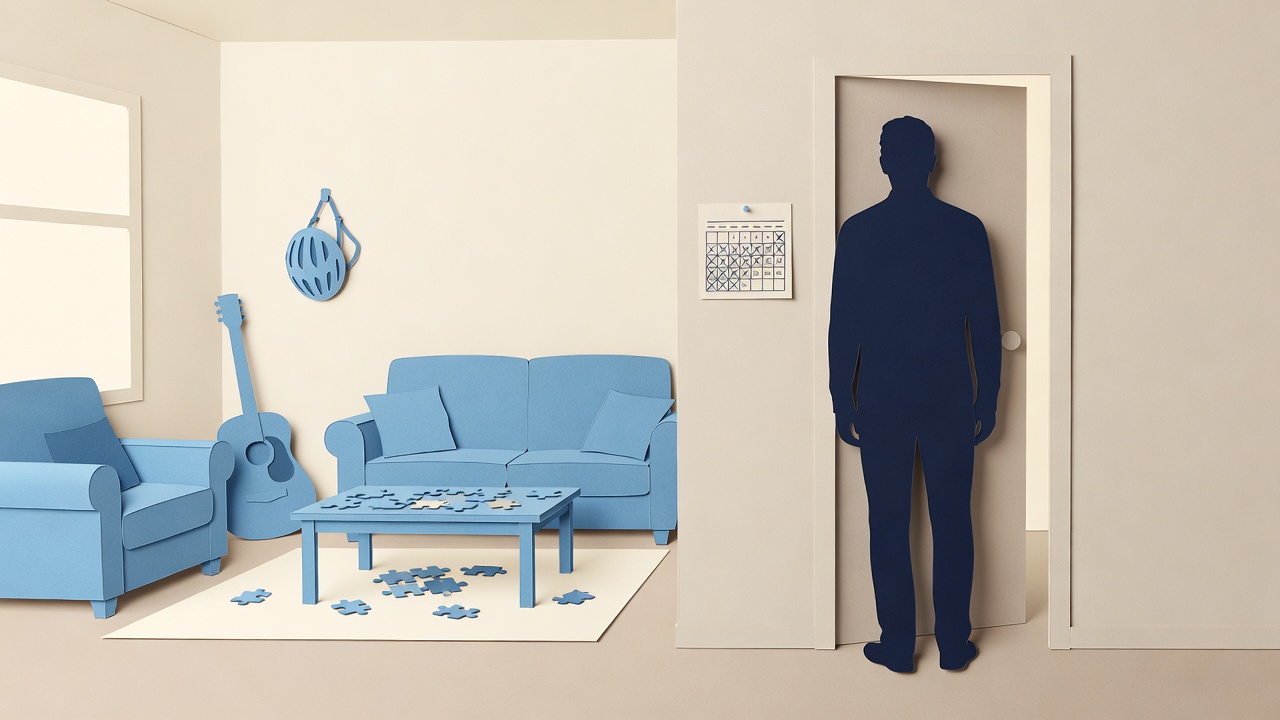
“I just don’t feel like myself lately.” If that sentence — or something like it — has crossed your mind this week, it is worth continuing to read. And yes: the answer matters more than it seems.
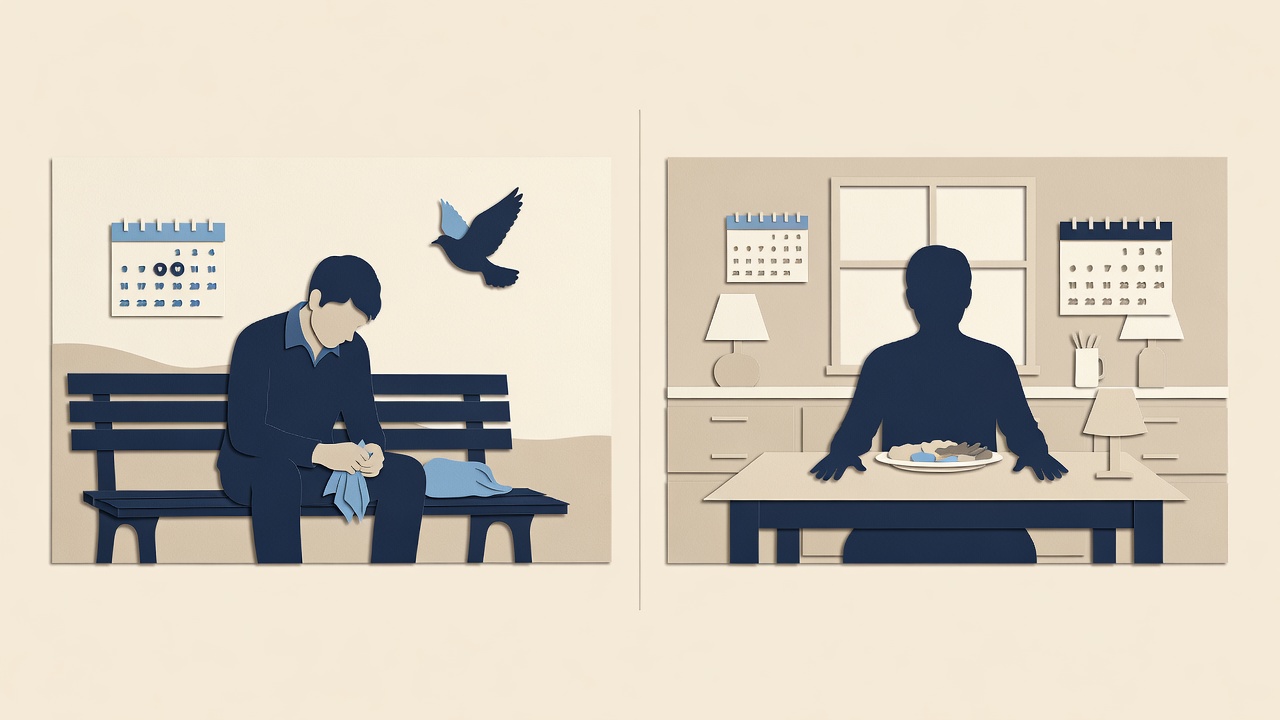
Anhedonia is not what most people think. It does not arrive with a big moment — not a loss, not a crisis, not a visible grief. It arrives quietly. It is in the morning coffee that tastes the same as yesterday but produces nothing. It is in the music you used to love and now hear without moving. It is in the half-finished book on the nightstand that you are not avoiding — you just have no reason to pick up. And it is in the slow disappearance of your own initiative — the moment you realize you have not suggested a plan with a friend in three months.
This piece is about the eight concrete markers that clinical research has consistently identified — the ones most people miss because they look like ordinary fatigue, the ones that hide inside the joke “I’m just in a mood.” It is about the moment when a low phase stops being a phase and starts being a pattern. None of this is a verdict. It is a mirror — and a mirror is the first thing you need before any change can land.
1. The clinical frame: what the research means by “anhedonia”
“Anhedonia” is a heavy word, and most people have only heard it in a clinical context. The research is more careful than the popular use, and what it finds is more useful than the label.
Treadway and Zald (2011) reviewed the translational research on the loss of pleasure and argued that the field had been collapsing distinct mechanisms into one word. They separated the anticipation of pleasure (wanting) from the pleasure itself (liking) — a distinction the animal literature had supported for decades and that human imaging was beginning to confirm. DOI: 10.1016/j.neubiorev.2010.06.006. Two years later, the same authors proposed “parsing anhedonia” into three subtypes: anticipatory (not expecting pleasure), consummatory (not feeling pleasure during the activity), and motivational (not making effort to obtain it). DOI: 10.1177/0963721412474460. Rizvi, Pizzagalli, Sproule, and Kennedy (2016) mapped the measurement strengths and pitfalls: self-reports tend to underestimate what laboratory reward tasks reveal, and anhedonia — especially the anticipatory and motivational forms — predicts worse response to standard antidepressant treatment. DOI: 10.1016/j.neubiorev.2016.03.004.
What this gives you is a way to read your own behavior that is not moral. It is descriptive. There are markers. You can look for them. If you see enough of them, sustained across more than two weeks, the pattern has a name — and it has research-backed paths out.
A rough week is a week. Anhedonia is a sustained drop across at least two of the four dimensions (anticipation, consummation, motivation, relational) for more than two weeks, with measurable cost in at least one life domain. The eight signs below describe what crossed the line.
2. Loss of anticipation, consummatory flatness, and the first three signs
Loss of anticipation — you no longer look forward. You know your friend is coming on Saturday. You used to think about the menu, what to wear, what to tell her. Now you register the date on the calendar and feel nothing — neither dread nor pleasure, just the date. Treadway and Zald (2011) called this anticipatory anhedonia: the wanting system has quieted before the activity has even begun. DOI: 10.1016/j.neubiorev.2010.06.006. The detail that matters: this is not pessimism about a specific event. It is a generalized quiet across events you would ordinarily want. If you can still look forward to one or two things intensely while the rest feels flat, you are probably in a rough patch. If the flatness is broad, the pattern has widened.
Consummatory flatness — the pleasure in the moment is muted. You open the book you have been meaning to read. You make the recipe you have been saving. You sit down to the series a friend told you about. You finish the chapter, plate the meal, end the episode — and notice you did not feel anything arrive. Treadway and Zald (2013) called this consummatory anhedonia: the in-the-moment pleasure system is responding less than it used to. DOI: 10.1177/0963721412474460. The detail that distinguishes it from a bad day: a bad day has good moments even if you have to look for them. Consummatory anhedonia has muted moments across days, including the moments you would expect to land.
Motivational withdrawal — initiating has become harder. You know you want to go for a walk. You know the walk would probably be good for you. The knowing is there. The starting is not. Treadway and Zald (2013) parsed this as motivational anhedonia: the effort-cost calculation has shifted so that even wanted activities feel heavier than they used to. DOI: 10.1177/0963721412474460. Rizvi and colleagues (2016) found that this dimension — the willingness to make effort for reward — is the one most consistently disrupted in depression with prominent anhedonia, and the one least responsive to standard SSRI treatment. DOI: 10.1016/j.neubiorev.2016.03.004.
3. Relational quiet, planning collapse, and the middle two signs
Relational quiet — conversations feel like work. You are on a call with someone you care about. You are present. You are responding. And somewhere in the middle of the second story, you notice you are waiting for it to end. Treadway and Zald (2011) framed anhedonia as fundamentally a reward-processing deficit — and relationships are among the strongest reward systems humans have. DOI: 10.1016/j.neubiorev.2010.06.006. When the relationship reward circuit has quieted, the conversation is still happening, but the felt pleasure of being-with-someone has gone quiet. The detail that catches people: this is not irritability, not anger, not dissatisfaction with the person. It is a felt flatness that arrives in the middle of conversations you actually want to be having.
Planning collapse — you have stopped suggesting things. Someone close to you has noticed. “We used to do stuff. Now you only say yes when I plan it.” You cannot remember the last time you initiated. The pool of ideas you used to draw from — restaurants to try, walks to take, friends to invite — has emptied out. This is the motivational dimension showing up in the relational domain, and it is one of the most reliable external markers. Rizvi and colleagues (2016) found that the motivational component of anhedonia correlates most strongly with interpersonal withdrawal — not because people choose to withdraw, but because the initiative that drives connection has gone quiet. DOI: 10.1016/j.neubiorev.2016.03.004.
4. Sleep disruption, absence-dominant attention, and the last three signs
Sleep disruption — too much or too little. You are sleeping ten hours and waking tired. Or you are lying awake at 3 AM with no particular worry, just awake. Treadway and Zald (2011) noted that sleep dysregulation is among the most common companions of sustained anhedonia — not as a cause, but as a marker that the reward system and the circadian system are both off-line. DOI: 10.1016/j.neubiorev.2010.06.006. The detail: when sleep disruption arrives alongside the other signs, the picture is more than a rough week. When it has been going on for more than two weeks, the pattern is sustained.
Absence-dominant attention — noticing what’s missing more than what’s there. You walk through a Saturday. The afternoon light is in the kitchen, the dog is at your feet, a friend sends you a good message. You register each of these things as they happen — and what you register most strongly is that none of it landed. The noticing of absence is itself a clinical marker. Treadway and Zald (2013) pointed at it as the cognitive signature of anhedonia: the reward system is not just responding less to positive stimuli, it is actively tracking the gap. DOI: 10.1177/0963721412474460. The work this creates is heavy: every pleasant moment carries a small note of “but I should be feeling more.”
Identity merge — “this is just how I am.” You have stopped thinking of the flatness as a state. You have started thinking of it as a fact. “I have always been this way.” “I never really liked going out.” “I just don’t get excited about things.” Treadway and Zald (2011) noted that this identity merge is one of the most clinically important signs — not because it proves the pattern is permanent, but because it removes the possibility of noticing the pattern as something other than yourself. DOI: 10.1016/j.neubiorev.2010.06.006. Rizvi and colleagues (2016) called it out as a measurement problem too: people who have merged with the pattern rate themselves as “normal” on self-reports, even when behavioral tasks show clear anhedonia. DOI: 10.1016/j.neubiorev.2016.03.004. The detail that breaks the merge: a memory of a specific moment when the pleasure arrived — and the recognition that you cannot reach that memory from where you are now.
5. Table: how the eight signs interact with the evidence
|| # | Sign | What you notice | Source | ||---|---|---|---| || 1 | Loss of anticipation | You no longer look forward | Treadway & Zald 2011 | || 2 | Consummatory flatness | The pleasure in the moment is muted | Treadway & Zald 2013 | || 3 | Motivational withdrawal | Starting has become harder | Treadway & Zald 2013 / Rizvi 2016 | || 4 | Relational quiet | Conversations feel like work | Treadway & Zald 2011 | || 5 | Planning collapse | You stopped suggesting things | Rizvi 2016 | || 6 | Sleep disruption | Too much or too little, two weeks + | Treadway & Zald 2011 | || 7 | Absence-dominant attention | Noticing what’s missing | Treadway & Zald 2013 | || 8 | Identity merge | “This is just how I am” | Treadway & Zald 2011 / Rizvi 2016 |
A single sign is not a diagnosis. The clinical literature is consistent on this: it is the combination, sustained across weeks, that defines the pattern. Two or three signs for a bad week is stress. Five or more signs across two months is a pattern worth working on.
A practical self-check: pick a quiet ten minutes. Take a piece of paper. Draw the eight signs down the page. For each, mark whether it has been present in the last two weeks. If you have five or more “yes” or “sometimes,” the pattern is there. That is not a verdict. It is a starting line.
6. Table: where each sign points — first move for each
|| Sign | The first small move that addresses it | ||---|---| || Loss of anticipation | Pick one small thing tomorrow and write down the day and time — anticipation needs a target to come back online | || Consummatory flatness | Do the activity anyway and register the pleasure 0-10. The number is baseline, not a verdict | || Motivational withdrawal | Lower the bar to “five minutes” instead of “the whole walk” — the doing comes before the feeling | || Relational quiet | Suggest one small thing this week, even if you do not feel like it. Initiative is the muscle that went quiet | || Planning collapse | Keep a list of three activities you used to enjoy. Look at it when the well is empty | || Sleep disruption | One week of fixed wake time — even on weekends. Sleep rhythm responds to rhythm, not to willpower | || Absence-dominant attention | Once a day, write down one thing that arrived (even at 2/10). Train the system to register presence | || Identity merge | Write down a specific memory of a moment the pleasure was strong. The merge breaks when the past becomes reachable |
If the pattern is mild, the work is small: one activity this week, registered. If the pattern is heavy — affecting sleep, work, or relationships — that is the moment to talk to a professional.
7. The piece people don’t usually read
"But I still enjoy some things — it can't be anhedonia."
It can. Anhedonia does not need to be total. The clinical literature — especially Treadway and Zald (2013) — is explicit that anhedonia is dimensional, not categorical. You can still enjoy your morning coffee at 3/10 where it used to be 8/10. You can still love your children and notice the music has gone quiet. The pattern shows up in the breadth of the flatness and the loss of initiative, not in the total absence of pleasure. If you have one or two things that still land and the rest is muted, the pattern is there.
"I am not sad — does that mean it can't be depression or anhedonia?"
It can. Rizvi and colleagues (2016) explicitly note that anhedonia can appear without low mood — that it is one of the dimensions of depression that responds least to standard SSRI treatment, and that it is the dimension most likely to persist after mood symptoms improve. DOI: 10.1016/j.neubiorev.2016.03.004. The popular image of depression — sadness, crying, low mood — is only part of the picture. The flatness is the other part, and it can stand on its own.
"I have been this way for years. Isn't it just personality?"
It might be. It also might be a long-running anhedonic pattern that has merged with identity. Treadway and Zald (2011) noted that duration does not distinguish personality from anhedonia — the only thing that distinguishes them is whether the pattern responds to intervention. DOI: 10.1016/j.neubiorev.2010.06.006. The honest test: try one small structured activation for two weeks and see if anything shifts. If nothing shifts, the pattern may be deeply entrenched and need professional support to dislodge. If something shifts, the pattern was anhedonia, not personality.
"Isn't this just getting older?"
Some of it is. Pleasure physiology does shift across the lifespan — energy, novelty-seeking, sensory responsiveness all change. But anhedonia is more than that. It is a sustained drop across multiple dimensions for someone who has not been at that baseline before. If you are 47 and you feel like you did at 25 except with the volume turned down on most things, that is not aging. That is a pattern. Treadway and Zald (2013) parsed the dimensions precisely so that age-related shifts would not be confused with anhedonia. DOI: 10.1177/0963721412474460.
"What if I am just lazy?"
The honest answer is that “lazy” is a word we use when we do not understand the mechanism. The motivational component of anhedonia — not making effort for reward even when you want the result — looks like laziness from outside. From inside, it is a felt heaviness that does not respond to willpower. Rizvi and colleagues (2016) found that this dimension is the one most strongly tied to disrupted reward-circuit function. DOI: 10.1016/j.neubiorev.2016.03.004. The mechanism is not laziness. It is a circuit doing less work than it used to. The treatment is structured activation, not more discipline.
8. Exercise: your two-week baseline
This is not therapy. It is a starting point you can begin today, in less than 20 minutes.
Day 1 · The honest log
For one day, write down four moments of pleasure — real or attempted. The hour. The activity. The pleasure rating from 0 to 10. The anticipation before (0-10). The motivation to start (0-10). At the end of the day, read the four entries. Notice the moments that surprised you. Do not judge. Write down what is there.
Day 2-3 · The reflection
Look at the log. Are there moments you would not have predicted — moments that landed at 3 when you expected 8? Pick one moment that you would like to shift. Decide what you will do this week, with a concrete day and time. Write it down. Specific.
Day 4-7 · One activation
Hold that one activation for four days. No more. The first three days will feel harder than you expected. That is normal. If you missed it on one day, do not punish yourself. Pick it back up the next day. Register the pleasure 0-10 each time. Watch the number, not the feeling.
Day 8-14 · Review and decide
At the end of two weeks, look at the numbers. Did they shift? Did anything move? If yes, decide what to keep. If no, decide what to try differently — or decide to talk to someone.
Two weeks does not fix a pattern. It tells you whether the pattern is responsive to small moves. Most patterns are. Treadway and Zald (2011) reviewed the evidence: the reward circuit reorders with structured exposure, not with willpower. DOI: 10.1016/j.neubiorev.2010.06.006.
9. ARIA progressbars — two self-checks
Reading the eight signs is one thing. Holding them against yourself is another. These are visual references for what the clinical literature points at as severity bands, and for the size of the first move that matches the pattern. Treat them as a self-check, not a diagnosis.
Mild pattern · fewer than three signs present · sustained under two weeks · low interference with sleep or relationships
Mid pattern · three to five signs present · sustained two to six weeks · some interference with sleep or relationships
High pattern · six or more signs present · sustained over six weeks · clear interference with sleep, work, or relationships
Clinical range · sustained over six months · multiple life domains affected · identity merged with the pattern
2-3 signs · small move · one activity this week, registered 0-10
4-5 signs · structured change · pick one domain (anticipation or consummation) and activate it daily for 21 days
6+ signs · professional support · talk to a clinician · the small moves still help but they are not enough alone
0-1 signs · preventive · no change needed yet · monitor monthly
The last thing the eight signs ask of you is honesty without theater. You can still love your people and still find most meals flat. You can still go to work and still notice that the weekend has nothing in it. You can know the research and still register most days at 2/10. The point of naming the signs is not to collect a label. It is to make the next afternoon measurable, so the pattern stops hiding inside a vague story about aging or character.
10. When to talk to someone (and what to expect)
If any of these is happening to you, do not wait for it to pass on its own: more than two weeks of broad flatness across activities you used to enjoy; sleep consistently worse than a month ago with no other obvious cause; someone close has commented more than once that you have “gone quiet”; you have tried to push yourself into activities and the pattern keeps pulling you back; you feel the absence of pleasure more than the presence of it across most of your week.
Talking is not giving up. It is the first move with intention. The first session is usually lighter than you expect — most clinicians who work with anhedonia use a structured protocol (behavioral activation is the most evidence-based, sometimes combined with cognitive work on the identity-merge piece). The first session is mostly listening: history, current patterns, what you have already tried, what you want. You do not have to have the right words. You can say “I think the pleasure circuit is doing less work in my day than it used to” and that is enough to start.
In the first three or four sessions, you and the professional will usually agree on a working plan: which dimension to start with (often consummation, because it is the most measurable), how to track, what counts as progress. If after four sessions you feel the fit is wrong, you can say so. A good clinician hears that and adjusts, or refers you. The first clinician is not always the right one — and that is a normal thing, not a failure on your part.
11. Crisis box — if you are in crisis NOW
If right now you are overwhelmed or you are having thoughts of harming yourself:
| Country | Phone | Type |
|---|---|---|
| United States | 988 | Suicide & Crisis Lifeline (free, 24h) |
| United Kingdom | 116 123 | Samaritans (free, 24h) |
| Canada | 988 | Suicide Crisis Helpline (free, 24h) |
| Australia | 13 11 14 | Lifeline (free, 24h) |
| International | findahelpline.com | Global directory |
If you are in immediate danger, call your country’s emergency number (911, 112, 999, etc.)
By rdkterapia · No spam · Unsubscribe anytime
One activity this week, not all of them at once. If this piece did anything, let it be this: pick the one moment that surprised you most in the log, write down what you will do instead, and hold it for four days. The bars above are not a promise — they are what the evidence points at when small moves are repeated. The pattern is responsive. The work starts with one.
Where to get urgent help
If you are in crisis now: Colombia 123 and 106; USA 988; UK Samaritans 116 123.