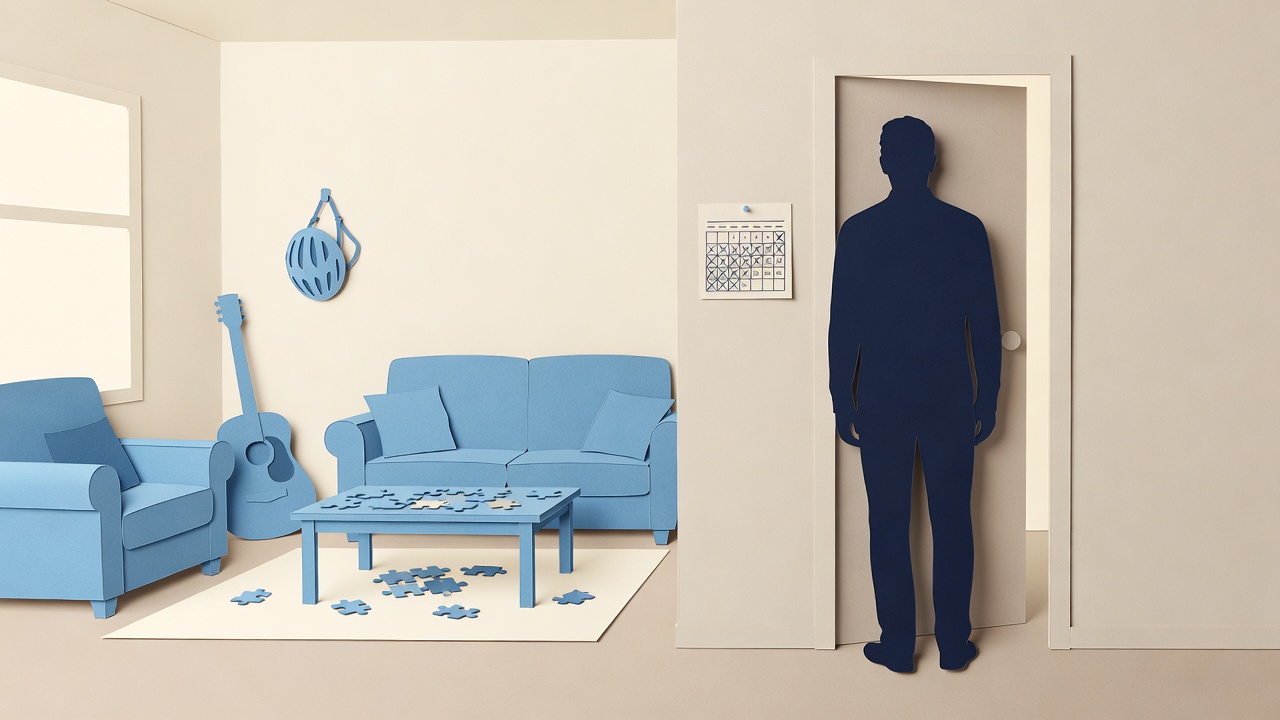
Anhedonia vs Sadness: 7 Differences That Matter
Anhedonia is not just sadness. How to tell them apart, what the research measures, and what to change first when the distinction is clear.
 Ricardo De Castro KingPsychologist · Meet the author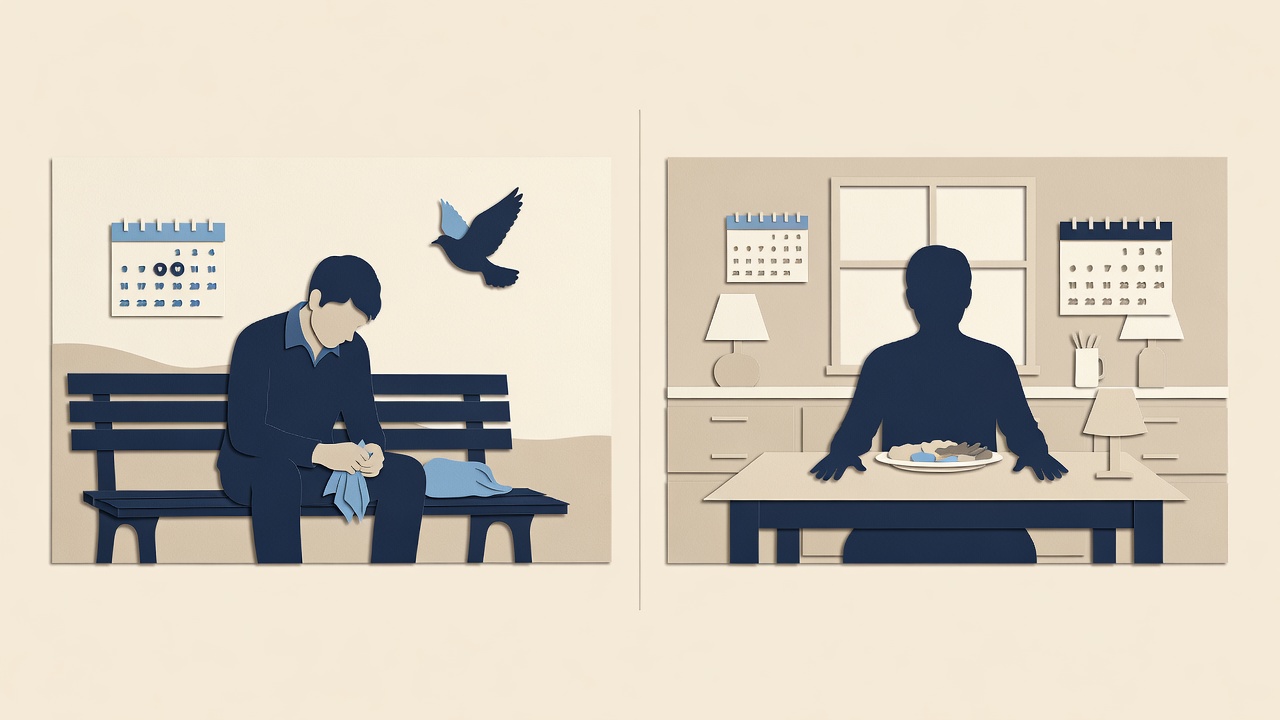
“I am not sad. I just don’t feel anything.” If that sentence — or something like it — has crossed your mind this week, it is worth continuing to read. And yes: the difference matters more than it seems.
Anhedonia is not sadness with a different name. They overlap, they travel together more often than not, and they are not the same thing. Sadness is an emotional state — a felt heaviness in response to a loss, a disappointment, or sometimes nothing in particular. Anhedonia is a reward-processing deficit — the diminished capacity to anticipate, experience, or be motivated by pleasure. The distinction matters because the interventions are different, and treating anhedonia as if it were sadness is one of the most common reasons the pattern keeps holding.
This piece is about that distinction. If you have been telling yourself “I am not depressed, I just don’t feel like anything,” this is the piece that names what is happening — and tells you what to do on either side of the line.
1. How the distinction became clinical
The clinical study of anhedonia is recent. For most of the twentieth century, anhedonia was treated as a symptom of depression — a piece of the picture, not a pattern of its own. The shift happened in the early 2010s, when translational researchers began to argue that anhedonia had distinct mechanisms that deserved their own framework.
Treadway and Zald (2011) reviewed the translational research and argued that the field had been collapsing distinct processes into one word. They separated the anticipation of pleasure (wanting) from the pleasure itself (liking) — a distinction the animal literature had supported for decades and that human imaging was beginning to confirm. DOI: 10.1016/j.neubiorev.2010.06.006. Two years later, the same authors proposed “parsing anhedonia” into three subtypes: anticipatory (not expecting pleasure), consummatory (not feeling pleasure in the moment), and motivational (not making effort to obtain it). DOI: 10.1177/0963721412474460. Rizvi, Pizzagalli, Sproule, and Kennedy (2016) mapped the measurement strengths and pitfalls: self-reports tend to underestimate what laboratory reward tasks reveal, and anhedonia — especially the anticipatory and motivational forms — predicts worse response to standard antidepressant treatment across multiple disorders. DOI: 10.1016/j.neubiorev.2016.03.004.
What this gives you is a way to read your own experience that is not moral. It is descriptive. There are markers. You can look for them. If the pattern is more anhedonia than sadness, the move is different than if it is more sadness than anhedonia.
2. How each pattern starts
Sadness and anhedonia often start with similar events — a loss, a disappointment, a change you did not choose, a slow accumulation of small disappointments. The difference is what happens next.
A sadness-dominant pattern produces felt emotion. You cry, you ruminate, you call a friend, you feel the loss in your body. The music might still move you — even more than usual, because sadness amplifies certain kinds of pleasure (the bittersweet ones). The pleasure system is still working. It is being filtered through a heavy mood.
An anhedonia-dominant pattern is different. Somewhere along the way, the music stopped moving you. The friend’s call feels like work. The activity you planned for Saturday produces nothing on the day. The heaviness is not felt as emotion — it is felt as absence. Treadway and Zald (2013) described this as the reward system going quiet: the circuits that normally respond to anticipated or experienced pleasure are doing less, and the subjective experience is flatness rather than sadness. DOI: 10.1177/0963721412474460.
3. Where you are now (the honest read)
You can read your own pattern with seven questions. Answer without trying to convince yourself of anything.
- Emotion in response to loss. When something happens that would normally upset you (a rejection, a piece of bad news, an unexpected bill), do you feel the upset in your body? Or do you register the event and feel nothing?
- Music and stories. When you listen to music you love or watch a movie that used to move you, does something stir? Or does the scene pass through you without effect?
- Anticipation. When you make a plan for next week, do you feel something — pleasure, dread, anything? Or does the future feel like a blank calendar?
- Effort for reward. When you want the result of an activity (a walk, a conversation, a meal), do you start? Or do you find reasons to delay?
- Crying. Have you cried in the last month? Or has the well run dry in a way that does not feel like peace?
- Self-criticism. When you notice the flatness, do you have a sharp inner voice telling you what is wrong with you? Or do you have a quieter observation that the pleasure is just not there?
- Sleep. Has your sleep changed — too much, too little, or restless in a way that is not about worry?
The first question measures the felt presence of sadness. The next two measure the anticipatory and consummatory dimensions of anhedonia. The fourth measures the motivational dimension. The fifth measures the absence of emotional expression. The sixth measures the cognitive overlay (often present in depression, often muted in pure anhedonia). The last measures the circadian dysregulation that often accompanies both.
Sadness-dominant patterns usually get the first, fifth, and sixth questions. Anhedonia-dominant patterns usually get the second, third, and fourth. Both can get the seventh.
4. Table: anhedonia vs sadness at a glance
| Dimension | Sadness-dominant | Anhedonia-dominant |
|---|---|---|
| Core experience | Felt heaviness in response to events | Absence of felt pleasure across activities |
| Music and stories | Still moves you, sometimes more than usual | Passes through without effect |
| Anticipation | Mixed — dread and pleasure still present | Broad flatness — neither dread nor pleasure |
| Effort for reward | Initiates but does not enjoy | Does not initiate even when wanting the result |
| Crying | Accessible, sometimes more frequent | Well has run dry; not a relief |
| Self-criticism | Sharp inner voice, often present | Quieter, more observational |
| Sleep | Disrupted by rumination | Disrupted by circadian dysregulation |
| After-the-event pleasure | Bittersweet can still land | Even the good moments register at 2/10 |
| Time course | Usually days to weeks | Usually weeks to months |
| Treatment response | SSRIs often help mood | Behavioral activation needed; SSRIs less reliable |
The last row is the one the clinical literature points at most consistently. Rizvi and colleagues (2016) reviewed the evidence: anhedonia — especially in its anticipatory and motivational forms — predicts worse response to standard SSRI treatment. DOI: 10.1016/j.neubiorev.2016.03.004. The implication is not that medication is useless, but that medication alone is rarely sufficient when anhedonia is the dominant pattern. The treatment that has the most evidence is behavioral activation — doing, registering, repeating.
5. The seven observable differences (in detail)
5.1 · Music and stories
Sad people still cry at movies. Anhedonic people notice that the scene that would have wrecked them last year passed without effect. Treadway and Zald (2013) described this as consummatory anhedonia: the in-the-moment pleasure system is responding less than it used to. DOI: 10.1177/0963721412474460. The detail that distinguishes them: sadness can amplify certain kinds of pleasure (the bittersweet, the cathartic). Anhedonia mutes across the board. If the only thing that still moves you is grief, the music may be telling you something.
5.2 · Anticipation
Sad people look forward with mixed feelings — dread and pleasure interleaved. Anhedonic people look forward to nothing. Treadway and Zald (2011) framed anticipatory anhedonia as the wanting system going quiet before the activity has even begun. DOI: 10.1016/j.neubiorev.2010.06.006. The detail that catches people: this is not pessimism about a specific event. It is a generalized quiet. If the next weekend produces nothing on Wednesday, the pattern has widened.
5.3 · Effort for reward
Sad people initiate things and then find the pleasure muted. Anhedonic people do not initiate even when they want the result. Treadway and Zald (2013) parsed this as motivational anhedonia: the effort-cost calculation has shifted so that even wanted activities feel heavier than they used to. DOI: 10.1177/0963721412474460. Rizvi and colleagues (2016) found that this dimension is the one most strongly tied to disrupted reward-circuit function and least responsive to standard SSRI treatment. DOI: 10.1016/j.neubiorev.2016.03.004.
5.4 · Crying and emotional expression
Sad people cry. The tears are accessible, sometimes more frequent than usual, sometimes cathartic. Anhedonic people notice that the well has run dry — not as relief, but as absence. The detail that distinguishes them: sadness without tears is still sadness (some people never cry). Anhedonia without tears is anhedonia. The clinical threshold is whether the emotional system is responsive, not whether tears are produced.
5.5 · Self-criticism
Sad people often have a sharp inner voice — “I am ruining everything,” “I am a burden,” “I will never feel better.” Anhedonic people more often have a quieter observation — “the pleasure is just not there,” “I used to like this,” “I do not know what is wrong.” The cognitive overlay is different. Treadway and Zald (2011) noted that the identity-merge pattern in anhedonia (“this is just how I am”) is more about resignation than self-attack. DOI: 10.1016/j.neubiorev.2010.06.006.
5.6 · Sleep
Both patterns disrupt sleep, but differently. Sad people often lie awake with rumination — the same thoughts cycling. Anhedonic people more often describe a circadian dysregulation — sleeping too much or too little, without the racing thoughts. The mechanism Treadway and Zald (2011) described is reward-circuit dysregulation affecting the systems that regulate sleep-wake cycles. DOI: 10.1016/j.neubiorev.2010.06.006.
5.7 · After-the-event pleasure
Sad people often register the bittersweetness of a good moment in the middle of a hard week. Anhedonic people notice that even the good moments register at 2/10. Treadway and Zald (2013) called this the consummatory deficit: the in-the-moment pleasure is muted even when the context would predict otherwise. DOI: 10.1177/0963721412474460. The detail that breaks the confusion: if the only thing that still moves you is grief, the pattern may be more sadness than anhedonia. If nothing moves you, the pattern is more anhedonia.
6. The continuum, not the switch
The literature is consistent on this: sadness and anhedonia are not on either side of a line. They are at different points on a curve, and the curve has three useful markers.
- Sadness-dominant. Mood is heavy, but the reward system is still working. The intervention is mood-focused — psychotherapy, sometimes medication, lifestyle adjustments. Behavioral activation is helpful but secondary.
- Mixed. Both are present, both contribute. The intervention is combined — mood work alongside structured activation. Most people who seek help for depression are in this range.
- Anhedonia-dominant. The pleasure system is doing less work than the mood system. The intervention is activation-first, with mood work as a complement. SSRIs alone are less reliable here.
The curve moves in both directions. The small change you do this month can move you from anhedonia-dominant back to mixed. The combined work you do with a clinician can move you from mixed back to sadness-dominant. The pattern is responsive — but the response depends on the right move for where you are.
7. What changes when you know which one you have
Most of the confusion people feel about anhedonia comes from treating it as if it were sadness. The two need different responses. If your pattern is more sadness than anhedonia, the work is mood-focused (talking helps, antidepressants often help, cognitive work on the inner critic helps, and behavioral activation is a helpful complement but not the spine). If your pattern is more anhedonia than sadness, the work is activation-first (pick one activity, assign it a concrete day and time, do it, register the pleasure 0-10, repeat; talking can help but the spine is the activation). If your pattern is mixed, the work is combined — most clinicians who treat depression use a structured protocol of behavioral activation alongside cognitive work and, in many cases, medication. Rizvi and colleagues (2016) found that combined treatment works better than either alone when both dimensions are present. DOI: 10.1016/j.neubiorev.2016.03.004.
8. The piece people don’t usually read
"I am not sad, so it can't be depression. So what is it?"
It can still be anhedonia — which is one of the two core symptoms of major depression (the other is low mood). You can have anhedonia without the mood piece, especially in its anticipatory and motivational forms. Rizvi and colleagues (2016) reviewed the evidence and concluded that anhedonia is often transdiagnostic — present across depression, schizophrenia, Parkinson’s, and other conditions — and that its presence predicts worse treatment response across most of them. DOI: 10.1016/j.neubiorev.2016.03.004. The absence of sadness does not mean the absence of a treatable pattern. It means the pattern needs a different framing.
"If I am anhedonic and not sad, does that mean medication won't help?"
It means standard SSRI treatment is less reliable. Rizvi and colleagues (2016) found that anhedonia — especially in its anticipatory and motivational forms — predicts worse response to standard SSRIs. DOI: 10.1016/j.neubiorev.2016.03.004. The implication is not that medication is useless, but that medication alone is rarely sufficient when anhedonia is dominant. Behavioral activation is the intervention with the most evidence. Medication can help, especially if there is a mood component, and some newer agents (like those targeting the dopamine system directly) show promise for the anhedonic dimensions specifically.
"I have been anhedonic for years. Is it too late?"
It is not too late. Treadway and Zald (2011) noted that duration does not distinguish treatable from untreatable anhedonia — the only thing that distinguishes them is whether the pattern responds to intervention. DOI: 10.1016/j.neubiorev.2010.06.006. The honest test: try one small structured activation for two weeks and see if anything shifts. If nothing shifts, the pattern may be deeply entrenched and need professional support to dislodge. If something shifts, the pattern was anhedonia, not character. The reward circuit remains plastic across the lifespan.
"Can I be sad and anhedonic at the same time?"
Yes — most people who seek help for depression are in the mixed range. The mood is heavy AND the pleasure system is doing less work. The treatment that has the most evidence for the mixed pattern is combined: behavioral activation (for the anhedonia) alongside mood work (for the sadness). Treadway and Zald (2013) parsed anhedonia into dimensions precisely so that clinicians could identify which dimensions need which interventions. DOI: 10.1177/0963721412474460. If you are in the mixed range, you do not have to choose. Both pieces get worked on.
"What if I cry easily but I am also anhedonic?"
That is the mixed pattern. The tears are accessible (the sadness dimension is working), but the pleasure system is muted (the anhedonia dimension is working too). The treatment is combined — behavioral activation for the muted pleasure, mood work for the tears. The tears are not a sign that the anhedonia is not real. They are a sign that both pieces are present. The work is both pieces. The plan is both pieces.
9. Exercise: your two-week positioning
This is not a diagnostic. It is a positioning exercise, to help you name where you are on the curve between sadness and anhedonia.
Day 1 · The seven-question check
Answer the seven questions in section 3. Write the answers down. Count how many of them point to sadness and how many to anhedonia. Be honest — the number you write is for you, not for anyone else.
Day 2-3 · Look at the shape
If most of your “yes” answers are on the sadness side (emotion accessible, music still moves you, self-criticism present, tears available): you are in the sadness-dominant range. The work is mood-focused.
If most of your “yes” answers are on the anhedonia side (music flat, anticipation absent, initiation absent, tears dry): you are in the anhedonia-dominant range. The work is activation-first.
If your answers are split: you are in the mixed range. The work is combined.
Day 4-7 · Pick the move
For sadness-dominant: pick one mood-focused move (one session, one call to a friend who knows you, one evening of doing something you used to enjoy even if it does not feel like much).
For anhedonia-dominant: pick one activity, assign it a concrete day and time, do it, register the pleasure 0-10. The mechanism Treadway and Zald (2011) described is doing → registering → repeating. DOI: 10.1016/j.neubiorev.2010.06.006.
For mixed: do both. One mood move and one activation move. The work is both pieces.
Day 8-14 · Hold the move
For all three: hold the move for the full two weeks. Recheck at the end. The question is not whether the move is perfect — it is whether the pattern around it has shifted.
Two weeks does not move a pattern from anhedonia-dominant to sadness-dominant. It tells you whether the pattern is responsive to a small, consistent change. Most patterns are.
10. ARIA progressbars — where you are on the curve
These are visual references for where you might be on the sadness–anhedonia curve. They are not precise instruments — they are honest mirrors. The values are placeholders, not measurements of you.
Sadness-dominant · mood is heavy · pleasure system still working · music and stories still move you
Mixed · both sadness and anhedonia are present · intervention is combined
Anhedonia-dominant · pleasure system doing less work than mood · activation is the spine
Clinical anhedonia range · sustained over six months · activation with professional support
Mood-focused move · one session · one evening of something you used to enjoy · mood work as the spine
Combined move · one mood move and one activation move · held for 14 days
Activation-first · one activity · concrete day and time · registered 0-10 · repeated
Just checking · if this is where you are · the rest of this piece is probably more than you need today
11. What to do on either side of the line
11.1 · If the line says you are sadness-dominant
The work is mood-focused. Three moves are enough to start: one session with a clinician or a trusted person who knows you (talk is the work); one antidepressant conversation with a doctor if the pattern has lasted more than two weeks (SSRIs are reliable for the mood component); one evening of doing something you used to enjoy — even if it does not feel like much (activation is a complement, not the spine). Kept, these three are enough for most sadness-dominant patterns to begin shifting.
11.2 · If the line says you are anhedonia-dominant
The work is activation-first. Pick one activity you used to enjoy. Assign it a concrete day and time this week. Do it. Register the pleasure 0-10. Repeat for 14 days. The mechanism Treadway and Zald (2011) described is structured exposure producing measurable changes in reward-circuit responsiveness. DOI: 10.1016/j.neubiorev.2010.06.006. If the change does not hold, the move was too big, or the activity was wrong. Try again with something smaller.
11.3 · If the line says you are mixed
The work is combined. One mood move (session, call, medication conversation) and one activation move (activity, registered, repeated). Hold both for 14 days. Recheck. If the change has held, you have moved toward the sadness-dominant end. If not, the activation was too small or the mood work was not enough. Try again with adjustments.
12. Table: the move that fits where you are
| Where you are | The first move | The size of the move | When to recheck |
|---|---|---|---|
| Sadness-dominant | One session, one evening of something you used to enjoy | Small | Weekly |
| Mixed | One mood move and one activation move, held 14 days | Medium | At 14 days |
| Anhedonia-dominant | One activity with a concrete day and time, registered 0-10 | Medium | At 14 days |
| Clinical anhedonia range | Professional support with activation as the spine | Largest | Per clinician |
The size of the move matters more than its impressiveness. A small move, held, moves the pattern more than a dramatic move that does not hold. Pick the size you can hold.
13. Crisis box — if you are in crisis NOW
If right now you are overwhelmed or you are having thoughts of harming yourself:
| Country | Phone | Type |
|---|---|---|
| United States | 988 | Suicide & Crisis Lifeline (free, 24h) |
| United Kingdom | 116 123 | Samaritans (free, 24h) |
| Canada | 988 | Suicide Crisis Helpline (free, 24h) |
| Australia | 13 11 14 | Lifeline (free, 24h) |
| International | findahelpline.com | Global directory |
If you are in immediate danger, call your country’s emergency number (911, 112, 999, etc.)
By rdkterapia · No spam · Unsubscribe anytime
The distinction between sadness and anhedonia is not academic. The intervention that has the most evidence for sadness is talking and medication. The intervention that has the most evidence for anhedonia is activation, registered, repeated. Most people are somewhere on the curve between the two, and the work is usually combined. Pick the move that fits the shape. Hold it for two weeks. The pattern is responsive. The data point that opened this piece — “I am not sad, I just don’t feel anything” — is not a riddle. It is a positioning statement. What you do with the position is what moves you along the curve, in either direction.
Where to get urgent help
If you are in crisis now: Colombia 123 and 106; USA 988; UK Samaritans 116 123.