The complete guide to low self-esteem
An evidence-backed guide. Early schemas, inner critic voice, double standard, self-compassion, when to seek therapy
 Ricardo De Castro KingPsychologist · Meet the author
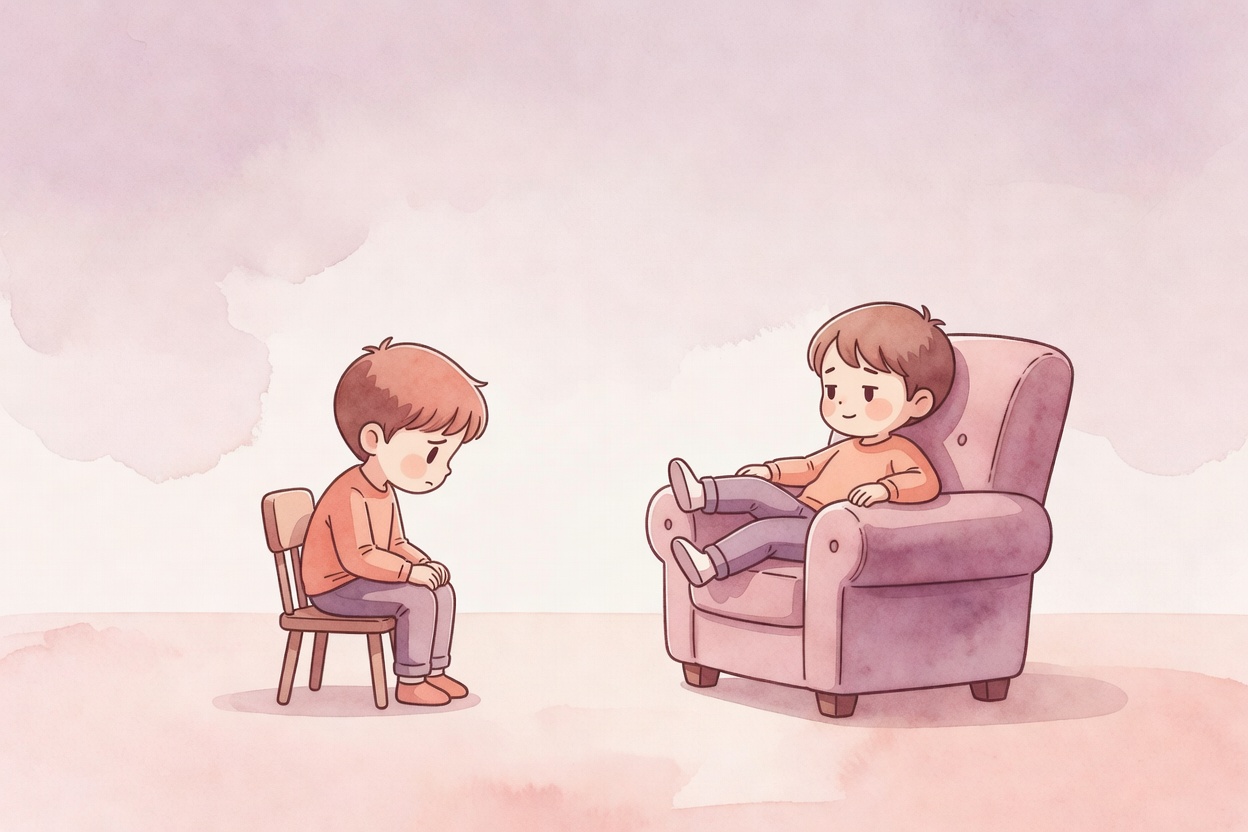
You function well. Your work, your relationships, your daily life — from outside, nothing screams a problem. But inside there’s a voice that almost never shuts up. It tells you you’re not up to it. That when people get to know you better, they’ll be disappointed. That what you achieved was luck or others saved you. That others have something you don’t. And worst of all: it sounds so constant it seems it’s you thinking.
That’s not modesty. It’s not “being realistic.” It’s not weakness of character. It’s low self-esteem — a psychological pattern with documented mechanisms, identifiable roots, and evidence-based work paths. This guide walks through all four — what it is, where it comes from, how it’s maintained, and how to start working it.
In 30 seconds (TL;DR)
- It’s not the same as self-confidence. You can have high self-confidence (capacity) and low self-esteem (worth). They’re worked differently.
- It gets installed in childhood. Early schemas (Young, 2003) — defectiveness, unrelenting standards, emotional deprivation. What significant adults returned (or failed to return) left the record.
- It’s maintained by three mechanisms: inner critic voice (Firestone), double standard (Fennell), self-demand confused with excellence.
- Self-compassion has growing evidence as a way to move it (Neff). It’s not permissiveness: it’s treating yourself the way you would treat someone you love.
- Therapy that works with clinical low self-esteem: CBT (Fennell), Schema Therapy (Young), Mindful Self-Compassion (Neff & Germer), CFT (Gilbert). Structured, evidence-based treatments help many people improve meaningfully; the right fit depends on the person.
- What to do today: apply the voice identifier, start journal prompts, do the friend test with a self-critical phrase.
Guide map
- What low self-esteem is (and isn’t)
- Self-esteem vs. self-confidence
- Where it comes from: early schemas
- The inner critic voice (Firestone)
- The double standard (Fennell)
- Self-compassion: what the evidence says
- What works with evidence
- Concrete work plan
- When to seek professional help
- A concrete month
1. What low self-esteem is (and isn’t)
Self-esteem is the deep valuation you make of yourself as a person, regardless of specific achievements. Low self-esteem is when that background valuation is negative or fragile — “I’m not worth enough”, “there’s something wrong with me”, “if they really know me, they’ll leave.”
Clinical characteristics:
- It’s stable over time (it’s not a bad day).
- It’s resistant to evidence (achievements don’t change it).
- Appears in multiple life areas (it’s not a specific context).
- Has roots in early history (wasn’t built yesterday).
- Generates observable patterns — self-criticism, avoidance, unbalanced relationships, dependence on approval.
What isn’t low self-esteem:
- Passing insecurity before something new.
- Doubting about a big decision.
- Recognizing specific realistic limitations.
- Occasionally comparing yourself with someone on something specific.
- Modesty in contexts where it suits.
The difference is frequency, generalization, and persistence. Occasional is normal. Constant is low self-esteem.
2. Self-esteem vs. self-confidence
Two different concepts many people mix:
Self-confidence = belief in your specific capacity for a task. Built with practice. Situational. Verifiable. Repaired with more practice.
Self-esteem = deep valuation of yourself as a person. Doesn’t depend on performance. Doesn’t repair with achievements. A deeper layer than self-confidence.
You can have many combinations — including the most confusing: high self-confidence + low self-esteem. Successful, competent, admired from outside — but who internally feel they’re worthless when not performing. Detailed article: Self-esteem is not self-confidence.
3. Where it comes from: early schemas
Jeffrey Young (2003) developed the concept of early maladaptive schemas in Schema Therapy. They’re deep mental structures about oneself and others, formed before age 10-12, that operate later as lenses through which all of life is interpreted.
The schemas that most appear in low self-esteem:
Defectiveness/shame
“There’s something wrong with me. If they know me well, they’ll leave. I’m less than others.” Gets installed when a child repeatedly received messages (explicit or implicit) that there was something wrong with him — not with what he did, with what he was.
Unrelenting standards
“If I’m not perfect, I’m worthless.” Gets installed when only excellence was rewarded and what fell short was ignored or punished. Produces demanding, exhausted adults who never allow themselves to rest.
Emotional deprivation
“No one will really understand me. No one will care for me as I need.” Gets installed when the child’s emotional needs weren’t responded to consistently — not necessarily gross neglect, sometimes just well-intentioned emotionally unavailable adults.
Abandonment/instability
“Those who matter to me end up leaving. I can’t depend on anyone.” Installed by early losses, difficult divorces, illness or death of caregivers, or emotional inconsistency.
Subjugation
“I have to prioritize what others need. My opinion matters less.” Installed when the child learned that to receive affection he had to fold to adults.
These schemas aren’t your fault. They’re not character defects. They’re records of how you were treated when you couldn’t defend yourself. But working on them now is your responsibility — no one else can.
4. The inner critic voice (Firestone)
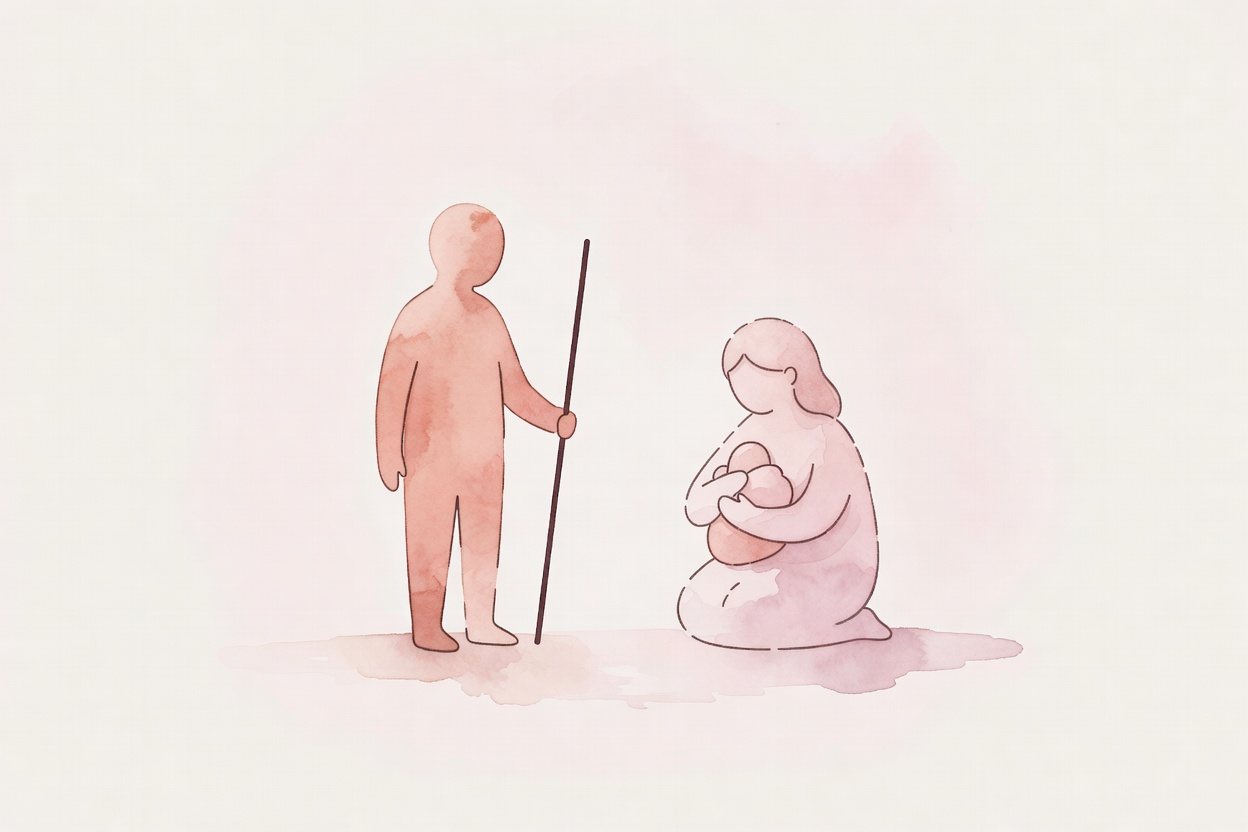
Robert Firestone (1988) developed the concept of inner critic voice — that negative, constant internal discourse that “sounds like you” but isn’t your real voice. It’s the internalization of external critical voices (critical parents, harsh teachers, comparison environments) that installed and keep operating inside the head even though the emitters are no longer there.
The mechanism: identification with the aggressor. A systematically criticized child had two options: confront (impossible) or absorb the voice to anticipate it (“I already know what they’ll say, better tell myself first”). By absorbing it, it protected the child. But the voice stays afterwards. The adult disappears. The voice continues.
The central part: it’s not your voice. It’s a tenant that stayed. Working it starts by disidentifying — listening to it, attributing it, changing pronoun (“this voice says I’m a disaster” instead of “I’m a disaster”).
Full article: The inner critic voice: it wasn’t born with you. Tool on the landing: voice identifier.
5. The double standard (Fennell)
Melanie Fennell (1999), in the cognitive model most used for low self-esteem, described the double standard as a central mechanism: you treat your mistakes with a harshness you’d never accept for someone you love. Same facts, opposite readings.
Three dimensions:
- Asymmetric standards — you have to be perfect, others can fail.
- Asymmetric attributions — when you fail it’s because of you, when others fail it’s because of circumstances.
- Asymmetric emotional consequences — you punish yourself for days, you tell others “don’t take it to heart.”
The central exercise: the friend test. When a self-criticism appears, write it verbatim. Then write it directed to your dearest friend. Read it aloud. Notice if you’d say it to her. Write what you would say. Redirect it to you.
Full article: The double standard.
6. Self-compassion: what the evidence says
Kristin Neff (2003) defined self-compassion with three components:
- Self-kindness (instead of harsh judgment).
- Common humanity (suffering is part of being human, not personal defect).
- Balanced mindfulness (observing the emotion without denying it or over-identifying).
The robust evidence:
- MacBeth & Gumley (2012) meta-analysis: self-compassion negatively correlates with depression (r = -0.52), anxiety (r = -0.51), stress (r = -0.54).
- Breines & Chen (2012): self-compassion produces more motivation to improve after failing — not less. Dismantles the myth “if I forgive myself, I become lazy.”
- Leary et al. (2007): self-compassionate people take more responsibility and better repair mistakes.
- Neff & Germer (2013): Mindful Self-Compassion program (8 weeks) produces significant reductions in depression, anxiety, and shame, with effects maintained at one year.
Full article: Self-compassion vs. self-demand.
7. What works with evidence
For moderate low self-esteem
- CBT Fennell — structured protocol 12-20 sessions. Good evidence.
- Mindful Self-Compassion (MSC) — 8 weeks group. Good evidence, very accessible.
- Consistent self-work with specific tools (critical voice, double standard, self-compassion). Can work if there’s real commitment.
For severe low self-esteem or with traumatic background
- Schema Therapy (Young) — 1-3 years. Better evidence for deep schemas from childhood.
- Compassion Focused Therapy (CFT, Gilbert) — especially useful for chronic shame + severe self-criticism.
- Long-haul psychodynamic — when there are deep relational patterns.
For low self-esteem + comorbidity
- Depression → CBT + SSRI if severe.
- Anxiety → CBT + exposure.
- Eating disorders → urgent specialized treatment.
8. Concrete work plan
If mild-moderate low self-esteem and no active depression
- Week 1: identify 5 most frequent critical voice phrases. Attribute them to sources (who told me this at some point).
- Week 2: apply friend test to those 5 phrases. Write compassionate response for each.
- Week 3: self-compassion pause (Neff) 3 times a day in difficult moments.
- Week 4: start genuine achievements journal — without minimizing, without asterisks (“yes, but…”).
If there’s depression or signs of severity
- Add therapy. Prioritize evidence-based approaches (CBT-Fennell, Schemas, MSC).
- Self-work complements, doesn’t replace.
If there’s trauma or dysfunctional relational pattern
- Schema Therapy is the approach that most touches the core.
- Duration 1-3 years. Patience.
9. When to seek professional help
Clear signs:
- Low self-esteem conditions important decisions.
- Depression is emerging or established.
- Thoughts of hurting yourself or disappearing.
- Eating disorders, substance use, repetitively painful relationships.
- Years of self-work without significant change.
- Growing isolation.
Full article: When to seek professional help. Acute crisis — free 24/7 lines listed in that article.
10. A concrete month
Week 1 — Internal diagnosis
- Carry notebook: every time you notice self-criticism, write it verbatim.
- At the end of the week, catalog of 15-20 phrases.
- Try to attribute each to a source (person or environment).
Week 2 — Friend test
- Choose the 5 most frequent phrases.
- For each, write what you’d say to a friend in the same situation.
- Redirect those responses to yourself.
- Practice at least 1 time per day.
Week 3 — Self-compassion
- Three daily self-compassion pauses (60 seconds each).
- A self-compassion letter (whole week, once).
- Notice which schema is most active (defectiveness, standards, etc.).
Week 4 — Consolidation
- Combine the three tools (voice, double standard, self-compassion).
- Evaluate: what changed? what didn’t?
- If nothing significant changed → consider professional therapy.
- If something changed → continue another month with the same tools.
Closing
Low self-esteem doesn’t get fixed with “love yourself more” as generic advice. It’s worked with specific mechanisms — critical voice, double standard, self-compassion, schemas — that have protocols and evidence.
The good news: although it’s been around for a long time, it responds to sustained work. People who work with these tools consistently (4-6 months or structured therapy) report real, non-cosmetic changes — the background sense about themselves starts moving.
The critical voice is not your voice. The double standard is a learned habit, not a truth. Schemas are records of how you were treated, not descriptions of who you are. And self-compassion isn’t permissiveness — it’s the most effective way to produce real change.
Start this week. One self-critical phrase written verbatim. One compassionate response directed at you. One 60-second pause. What sounds small, multiplied over months, is what builds a different relationship with yourself.
If you want a concrete reading of where you stand, the self-esteem test (Rosenberg) takes ten items. Free, no registration.