You lose it over something tiny, then feel ashamed
You lose it over something tiny, then feel ashamed. It is not your temper: it is a load looking for a way out. How to discharge it before it goes off.
 Ricardo De Castro KingPsychologist · Meet the author
“No big deal happened to me. I am not like this.” Almost everyone who explodes over something trivial thinks the same thing: that the reaction had no proportion to the cause. The uncomfortable fact is different. Holding in what you feel is not free either, and you do not have to take my word for it: in a classic study of two ways of handling emotion, suppressing and reappraising left measurable differences in the affect, the relationships and the well-being of the people who use them (DOI: 10.1037/0022-3514.85.2.348).
Direct answer. What explodes is not what just happened: it is the load you had been collecting. Every emotion swallowed without being processed stays in the body and hunts for a way out at the weakest point, almost always a small noise. The shame that lands afterwards fixes nothing: it only confirms the trigger was never the problem.
1. How it started: the morning your patience ran out
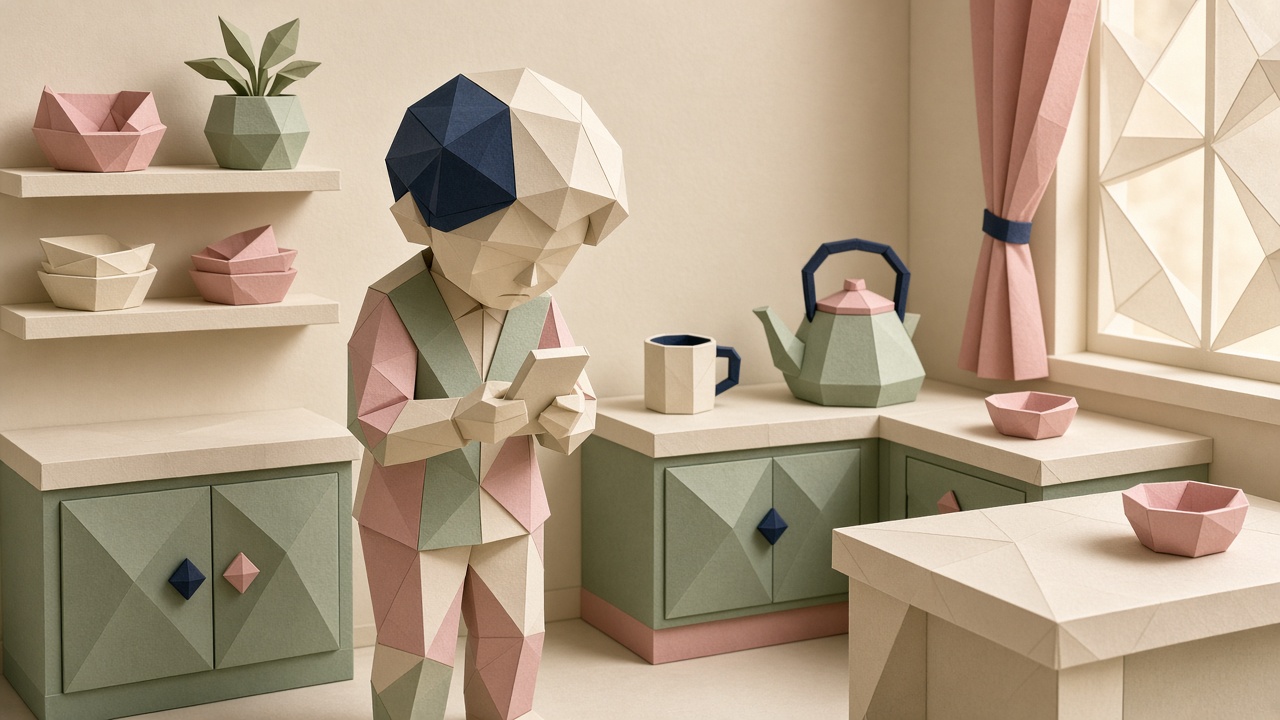
It is twenty to eight in the morning. There are two children in the kitchen, one without socks and the other with the cereal already poured. They ask you the same question for the fourth time, the one you have already answered three times, and something breaks inside without warning. You shout. It is not a considered shout: it comes out whole, in a voice you do not recognise.
Then the silence. The younger one goes still, watching you. The older one walks to his room without a word. And that thick shame drops onto you, the kind that stays all day, the kind that makes you promise tomorrow will be different.
That morning is what brought you here. The detail that matters is not the shout. It is the question: the same one, the fourth time, the thing that on another day would have made you laugh.
Something happened before that kitchen. What you call “nothing bad happened” almost always has a list behind it, and the list started days earlier.
If you go back over that morning, three or four things will show up that have nothing to do with the cereal. The short night. The call you left waiting. The email you answered with your jaw tight. Each one weighs little and none of them got resolved. In the moment none seemed important, and that is exactly the point: the load is built out of things that at the time did not seem worth the trouble.
2. How it installs itself: the explanation you were given about your temper
It is the first thing you are told, and the first thing you tell yourself. That you run hot, that everyone in your family is like that, that it is your nature and there is not much to do.
It sounds like an explanation and works like a sentence. If it is temperament, then there is nothing to look at: not the sleep you lost, not the conversation you left open, not the month you have gone without an hour to yourself. Temperament absolves everyone, and above all it absolves you from reviewing the week.
The trouble is that temperament has no schedule. If your short fuse were a fixed trait, it would be steady seven days a week, at six in the morning and at ten at night, with your children and with the neighbour. It is not. There is almost always a stretch where you explode and another where you do not, and that difference is not produced by a trait: it is produced by a load.
Look at it in your own week. When does your patience crack? Most people answer the same way: Sunday night, the hour before dinner, the day after a particular call. A personality trait knows nothing about days. An accumulation does.
What if everyone in my family really is explosive?
It can be true and it does not change the mechanism. What gets passed down more often is not the shout: it is the habit of swallowing what you feel, because nobody in that house taught anyone to say it in time. If you grew up watching emotion being stored until it burst, you learned both halves of the cycle: the silence and the eruption. The half that can be replaced is the first one, and changing the first one takes the fuel out of the eruption.
3. And why it does not shift: holding it in is not processing
And here is the part that costs the most, the one that dresses up as a virtue. They told you to hold it in, not to answer back, not to make a scene, to be the adult in the room. Each of those pieces of advice sounds like maturity and works in the opposite direction.
Holding in is not processing. They are two different operations and only one of them lowers the pressure. When you process an emotion, you name it, you locate it, you understand what produced it and you decide what to do with it; after that there is less inside. When you hold it in, you do none of that: you clamp the lid down and carry on.
And the lid works. That is the problem. For a while you feel fine, even superior, because you managed it without losing composure. The calm of the lid is real and it is short. What it did not do was lower the contents, and what does not come down accumulates with interest.
Think of a pot with the lid on. The pot did not stop boiling because you put a lid on it. It keeps boiling, only where it cannot be seen. The difference is that the pot has a valve and you do not. Your valve ends up being the fourth question about the cereal.
One signal confirms holding in is the problem and not the solution. Watch what happens when the explosion finally arrives. If the trigger were the cause, relief would follow the shout. Something else shows up instead: a discharge that does not leave you calm either, because you know that what came out was far more than the moment was asking for.
4. The spark and the fuel: why it looks like the emotion of the moment
This is where the second belief settles in, the one with an educated version and a popular one, and both fail the same way. The popular one says it was the stress of the day. The educated one says the emotion of the moment overflowed your capacity to regulate it. Both put the cause in the instant, and the instant is almost never the cause.
Think of the spark and the fuel. A spark on its own lights nothing, however large it is. What burns is what was already stacked up: the month without good sleep, the argument left unclosed, the load of holding things nobody sees. The spark that sets it off is always the same small thing, and that is why the small thing looks like the problem.
There is a simple and unpleasant test. Take two days of your week on which exactly the same thing happened: the same noise, the same question, the same traffic jam. On one of the two you reacted calmly and on the other you exploded. If the trigger were the cause, the reaction would have been identical. It was not, because the trigger was there both times and the load only once.
That does not mean the trigger is irrelevant. It means the trigger is the last piece, not the first. It is the drop that makes the glass spill, and nobody blames the drop for the water that was already underneath.
| What is believed | What it promises | What it leaves inside |
|---|---|---|
| ”It is my temper” | An explanation and peace | Nothing that can be changed, because a trait cannot be edited |
| ”If I hold it in, it passes” | Composure and calm | More stored pressure, with a future release date |
| ”It was the emotion of the moment” | Innocence about everything else | The small trigger ends up carrying the blame for all of it |
| ”Better not to feel anything” | Protection | Emotion with no name, hunting for the first gap to get out |
None of those four beliefs makes you more explosive; they hide the water already in the glass.
5. What the evidence does support
The two studies I cited point to the same place without agreeing on it first. The first compared two ways of handling emotion and found measurable differences: whoever reappraises what they feel and whoever stores it do not end up in the same place of affect, relationships or well-being. The second reviewed together the strategies that come out of the process model of emotion and found something even more useful for you: some strategies are more effective than others, and they do not all work the same (DOI: 10.1037/a0027600).
That takes the generic advice apart. “Control yourself”, “breathe”, “do not pay it any attention” are instructions that can be very good or very bad depending on what you are doing on the inside. Storing does not work. Distracting works for a while and then hands the emotion back to you with a pending label on it.
What the evidence supports is duller and more effective. Naming what you feel. Locating where it comes from. Deciding what you will do with it today and who you are going to tell what. None of those four things is heroic, and all four lower the load before it starts looking for the kitchen door.
One honest warning: none of this works like a switch. There are weeks when you do everything right and still explode, because sleep, work or health carry more weight than any technique. What changes with practice is not the absence of explosions. It is that fewer of them happen, they arrive with less force and, above all, you understand what happened when they do.
6. Where you are now: the signs you are carrying a load
The trouble with a load is that it does not announce itself with a sign. It announces itself with things that seem to belong to another order: sleep, the body, the threshold.
The first signal is the threshold. Everyone has a point past which they stop tolerating small things, and the difference between a good week and a bad one is not in the trigger: it is in where the threshold ended up. If the neighbour’s noise enrages you today and last week you did not even notice it, the noise did not change. The threshold did.
The second is the body. The load gets stored in the neck, the jaw, the shoulders, the breathing that turns short for no reason. When the body has been tight for days, patience has a thinner floor.
The third is memory. Loaded days look like each other: you reach the evening without remembering what you ate, you lose the thread of a conversation, you read the same paragraph twice. That is not distraction: it is mental capacity occupied holding what was never processed.
Why do explosions almost always happen at home and not at work?
Because at home there is no facade left to hold. All day you held it in around people who are not allowed to see you at your worst, and home is the first place where the lid can come off. That also explains the shame: you explode with the people you love most, and not because you love them less, but because with them you drop the guard you held up for ten hours.
7. Carolina’s case, 38, two small children
Carolina is 38 and has two children, one of five and one of two. She works part time from home. On a Wednesday night she shouted at the older one because he left the balcony door open. The shout was so out of proportion that the boy stood still with the glass of water in his hand, not moving, waiting.
She says herself that the trigger was not the door. The door was the point where something found a way out. That day she had slept four hours, had a tense meeting in the morning, had silently swallowed a comment from her mother on the phone, and had gone eleven days without an hour to herself. The door was the drop.
| What she was carrying | How it looked from outside | What it actually needed |
|---|---|---|
| Four hours of sleep | An ordinary Wednesday | One full night, no exception |
| Her mother’s comment | Just another call | Telling her it stung, or writing it down |
| Eleven days without time alone | A devoted mother | One hour alone, with a time and a date |
| The tense meeting | A day at work | Closing it with someone she trusts |
| None of the four ever said | A calm woman | Naming at least two of them |
The hardest part was not naming the list but accepting the last row: eleven days without telling anyone she was tired, because saying it felt like failing. A load does not build only out of what happens. It builds out of what cannot be said.
Carolina did two things. The first was telling the boy what had happened in words he could understand: that she was very tired and that the shout had not been about the door. The second was putting a fixed hour in her week that moved for nothing, neither work nor the house. The explosions did not disappear. The one the following Wednesday came later and with less force, and she saw it coming.
8. How you get out: discharge before it goes off
The opposite of holding in is not shouting. It is an early discharge, which is a far less dramatic thing than the word suggests.
Discharge means doing something with the emotion at the moment it arrives, while it is still small and still fits in one sentence. A nuisance that gets said in time stays a nuisance. The same nuisance filed away for three weeks comes back as a shout about the cereal.
What follows is the comparison this piece calls for, worth reading with your last week in mind rather than in the abstract.
| The moment | What holding in does | What discharging does |
|---|---|---|
| When the annoyance arrives | Clamps down and carries on with the task | Names it: “this is bothering me” |
| With the body | Goes still and sends the tension to the neck | Lets out a long breath and drops the shoulders |
| With the cause | Files it away without looking | Locates what produced it and where it started |
| With the other person | Waits for it to pass | Says something small the same day |
| At the end of the day | Feels it carried something nameless | Knows what weighed on it and why |
Look at the last row. Holding in does not leave you without emotion: it leaves you with an emotion that has no name, and an emotion with no name cannot be resolved because you do not know what it is answering to. Discharging does the opposite, and that is why it wears you out less.
There is a trap in this table and I want to name it. Discharging is not complaining. Complaining is telling the same scene many times without doing anything with it, and that accumulates too. Discharging happens once, with a name and a verb: what I feel, what produced it, what I do.
9. The twelve-minute exercise
This exercise is done today and needs paper, a clock and a chair. It works better at night, when the day is over and you can look at it whole.
- Write down the last three explosions. Not the biggest: the last three. Date, time and visible trigger. The pattern already starts to show with that.
- Next to each one, write what you were carrying. Little sleep, an open conversation, a day without eating well, a week without time alone. Five words per explosion is enough.
- Look for what repeats. There is almost always one thing that appears in all three: sleep, the domestic load, an unresolved relationship. That repetition is your fuel.
- Pick one single thing and give it an hour. Not all three. One: the bedtime, an hour that is yours on Thursday, a pending conversation. Without an hour, intention changes nothing.
- Rehearse the discharging sentence. Something short you can say when the annoyance arrives, before filing it away: “this is bothering me”, “I need a minute”, “let’s talk about this later”. Pick one and say it out loud once.
- Close the paper and write down the time of the next review. One week. A load does not get looked at for one night and get resolved.
Twelve minutes. If it takes you forty, the exercise found its own fuel and is feeding on itself. Close at twelve even if something is missing.
After a week, the table will say something useful. Most people discover that two of the three explosions shared the same fuel while the visible trigger was different. That is the proof you were looking for: the trigger changes, the load repeats.
| After a week | What usually shows up | What to do with that |
|---|---|---|
| Two of three with the same fuel | The real cause is smaller than it looked | Attack that one, leave the others alone |
| Three different triggers, same hour | The clock is the load | Move the routine in that stretch |
| No explosion at all | A light week, not a cure | Write it down anyway: it serves as a comparison |
| Explosions that stay the same | The load is bigger than paper can hold | Look for support, not more exercise |
One honest warning: this exercise does not work the same for everyone. Anyone coming from a childhood where emotion was only ever expressed by shouting needs more than twelve minutes of paper, and probably help from someone trained. The exercise lowers the volume of what accumulates. It does not replace treatment when the case calls for it.
10. What to expect from the process: the shame that arrives afterwards
It is worth talking about what happens after the shout, because that is where most people quit.
Shame arrives with a very concrete sentence: “what kind of person am I”. It is a question with no useful answer, and it produces one effect: hiding the episode. When something gets hidden, it does not get looked at, and what is not looked at cannot be worked on. Shame looks like it will make you better and it leaves you exactly where you were.
There is a version of shame that does serve, and it is the smaller one. Not “what kind of person am I”, but “what was I carrying”. That is a question with an answer and with a direction. The first sinks you; the second hands you the material for next time.
Repairing is part of this too. If someone took the shout, the episode closes better with a sentence said out loud than with an awkward silence. A long apology is not needed. What is needed is saying what happened and what you will do differently, even if the promise only binds you to yourself. Shame also arrives almost always with an audience: if someone heard the shout, the judgement is harsher; alone, it is forgiven more easily. That says where it comes from. It is not born from what you did, it is born from the fear of being seen like that.
Is it not worse to talk about the episode and give it weight?
The opposite. An episode that gets mentioned loses weight; one that gets hidden gains power. The conversation is short and concrete: what I felt, what I did, what I need next time. What has to be avoided is not talking about the episode, it is using it to judge yourself again, which is what shame does when it is left alone.
11. Crisis box — if you are in crisis NOW
If you are in crisis right now, with thoughts of harming yourself or someone else, or after an explosion that slipped out of your hands with someone at risk, put this page down and call.
- Colombia: Line 123 (national emergency) · Line 106 (mental health)
- United States: 988 (Suicide & Crisis Lifeline)
- United Kingdom: 116 123 (Samaritans)
If you can, do not stay alone with this. These lines also help when there is no emergency: there are nights when the only thing needed is a voice that does not panic and does not judge you for what you have just said.
12. Back to the kitchen
Let us go back to twenty to eight in the morning. The two children, the same question for the fourth time, the shout that comes out whole and the shame that falls afterwards.
Now you know what you did not know at the start: the kitchen was not the cause. It was the point where a load of days found a way out, and the visible trigger was only the last piece. That does not excuse you from the shout. It gives you something much better than an apology: a place to look.
The question that remains is not “how do I stop being like this”. It is “what am I carrying this week that I have not told anyone yet”. Start there, and next morning’s kitchen starts changing on its own. You are going to explode again at some point; the difference is not that it stops happening, it is what you do in the two hours afterwards.
The emotional regulation hub gathers the rest of the material, and the interactive tools turn this into something you practise today. If what happens to you is that the emotion arrives before you can decide anything, that is in can’t control my emotions; and if what you are after is the space between what you feel and what you do, it is in react or respond. If you want to see where you stand, there is an emotional regulation test that gives you a photograph, not a diagnosis. And if the load goes back a long way and goes off every week, therapy at rdkterapia is one possible door.