A SPACE TO UNDERSTAND
When your relationship with your parents weighs on you.
Criticism, control or a lack of space for yourself can leave difficult questions. Explore those experiences and your boundaries without using a webpage to diagnose your family.
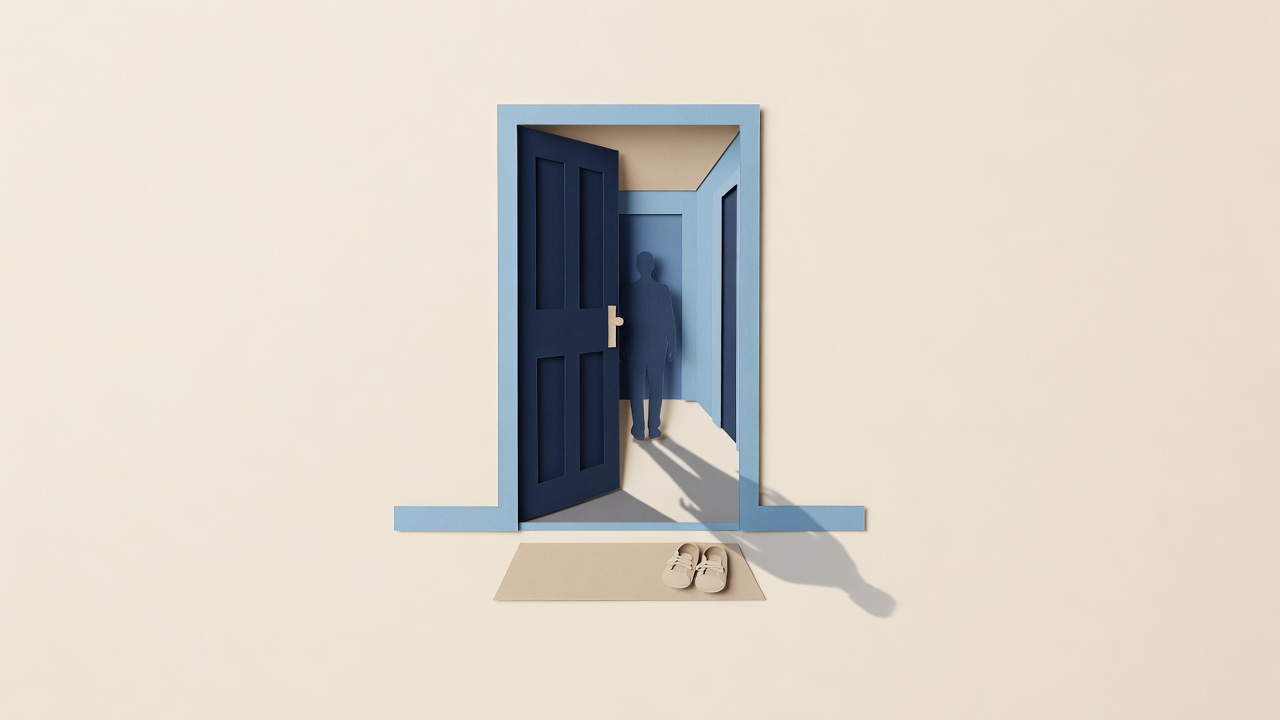
Not being hit does not mean nothing was wrong
Before any idea or any tip, one thing deserves to be said out loud: growing up with a parent who puts themselves at the centre of every room leaves its mark even when there was no shouting and no hitting. Nothing dramatic had to happen. It was enough that you learned, very early, to scan their mood before you dared to feel yours, to swallow what you felt so nothing would blow up, or to hold up someone who was supposed to hold you. That is not you being weak, and it is not ingratitude. It is what children do when they depend on someone to stay safe.
And no, your parent does not have to "be a narcissist" for this to have hurt. Here we talk about patterns and traits, not labels. A diagnosis, if there is one, is made by a professional in an interview. What you can do is recognise the dynamics that went through you, and that needs nobody's permission.
- What lingers shows up mostly in your relationships and in how hard it is for you to say no — not in some flaw of character. That is learned, and it can be relearned.
- There is no single face to this. The grandiose kind is hard to miss; the vulnerable kind — the one disguised as "just difficult" — is the one that is hardest to name, and naming it helps without labelling anyone.
- Many people who grew up like this describe their recovery as work that is possible: not a sentence and not a destiny. It is a pattern you can look at and change.
This may be happening to you
These are not symptoms from a manual and not a list for self-diagnosing anyone — you or your parent. They are experiences that many people who grew up with a self-centred parent recognise. Read them as a mirror, not as a verdict.
When control comes dressed as care
- 1 You can still feel your day being decided by someone else's tone of voice, even when that someone is nowhere near you.
- 2 Asking for something for yourself arrives with a bill attached, as if wanting anything at all put you in debt.
When the voice that puts you down is theirs, in your mouth
- 3 You start explaining why something that hurt you did not really matter — shrinking your own pain before anyone else gets the chance to.
- 4 Their opinion of you has become the voice in your head: you speak to yourself with a harshness you would never allow from anyone else.
When you carried a role that was never yours
- 5 Very young, you became their confidant, their referee or their therapist. Nobody asked whether you could carry that.
- 6 You were the one who calms, the one who fixes, the one who "does not cause trouble". Your job was to add nothing, never to ask for room.
When the weather turned without warning
- 7 There were days of full admiration and, out of nowhere, a chill or a jab you never saw coming. You never knew which one would open the door.
- 8 You learned to walk carefully: predict the reaction, pick the words, avoid certain subjects. Today you still read the room before you speak.
This is not a diagnosis. Seeing yourself in several of these experiences does not mean your parent has a disorder, or that you do. Narcissistic personality disorder is uncommon in the general population and only a professional can diagnose it, in an interview. What you can do with what you just read is understand which dynamics left a mark and decide what you need. If several of them describe you and it has been like this for a long time, the map below shows where it gets into you, and there are helplines at the end if the weight is too much.
Why it takes so long to see it
Nobody grows up thinking "this house runs strangely". You grow up thinking that this is simply how families are, that you are the sensitive one, or that if something feels off then you must be exaggerating. And there is a concrete reason the doubt settles in so deep.
- Love and harm arrive from the same hand. A parent can be generous with money and cold with feeling on the same day. That mixture disarms you more than obvious abuse would: you cannot step back from someone who also gave you good things.
- The official version overwrites yours. When someone tells you it "never happened" or that "you made it up", a part of you starts doubting its own memory. That doubt is not proof you are wrong: it is the effect of having grown up correcting your perception to keep the peace.
- The word is used so badly that it scares you. "Narcissist" gets thrown at anyone who is disliked, and the term rightly turns people off. Nothing here is about pinning a label on anyone or hunting for who is to blame. It is about the patterns you lived having a name — and naming them condemns nobody: it orders things for you.
If reading this brought up guilt for "judging" your family, notice that too: even permission to look at your own story costs you something. That is part of what we are about to look at.
The four faces, and what each one asks of you
The same knot does not pull in the same direction for everyone. These four faces usually travel together, but one of them leads. Find yours and the first move becomes clearer.
| Face | How it sounds inside | Where it shows up this week | First move |
|---|---|---|---|
| Control dressed as care | "I am only asking so you are okay." | You report your plans before they happen, to avoid a reaction. | Do one thing this week without announcing it first. |
| The voice that puts you down | "Who do you think you are?" | Small mistake, and you replay it for two days. | Answer that sentence in writing, in the tone you would use with a friend. |
| The role that was not yours | "If I stop, this falls apart." | You are the one who calls, who mediates, who remembers birthdays. | Let one small thing be handled by someone else, without rescue. |
| The cycle that disorients you | "What did I do to change it?" | Warmth, then distance, and you reorganise your whole week around it. | Name the phase out loud: "this is the cold part coming". |
Only one of these usually leads at a time. The map below measures which one is loudest in you right now.
Where does it get into you today?
Eight questions, no sign-up, no email. They do one thing: show which of the four faces is weighing on you most right now. It does not measure "how much" of anything you have, and it is not a diagnostic test.
Answers may remain saved in this browser. On a shared device, someone else may see them. Use Clear answers to remove this map from this browser.
Saved on this device only (nowhere else). Nothing is sent.
What this map does not say
- It does not measure how much narcissism lives in your family. It measures how much a dynamic you grew up with is weighing on you today.
- A high bar is not a diagnosis of you or of anyone else: it is a sign of where to put the work first.
- If two or more faces come out high and stay there, professional support makes a real difference. You are not short on character: there is simply more material than one page can hold on its own.
One thing to do today: give yourself back the turn to speak
If you grew up listening, holding things up and swallowing what you felt, the practice is not to "set boundaries" all at once. It starts earlier: taking back the right to have your own version. This takes five minutes.
- Pick one specific scene you remember from childhood or your teens. One, not the whole story.
- Write it in the first person and without explaining anything: what happened, what you said, what you felt in your body.
- At the end, add a sentence that starts with "and what I needed was...". Whatever comes out, without correcting it.
- Read it out loud. If guilt shows up, write down the exact sentence you use to blame yourself.
- Do not send it to anyone. It is not a letter: it is proof that your version exists and holds.
- Keep it somewhere you can come back to in two weeks, and compare.
This is not therapy and does not replace a professional. It is the most basic muscle: making your account of things not depend on anyone's permission.
Read something that understands that house
Three pieces, no labels and no diagnoses: the myths that keep you doubting, how to tell a demanding parent from one who erases you, and the signs that still travel with you as an adult.
If you want to keep going with something practical — an exercise you can do today and a tool to bring the guilt down when it shows up — they are here:
See information and availability at rdkterapia.
Frequently Asked Questions
Can I work out on my own whether my parent is a narcissist?
No, and you do not need to. Narcissistic personality disorder is diagnosed by a professional through an interview; an article, a quiz or a checklist of signs does not do that. What you can do is recognise patterns that shaped you and decide what you need from there. Naming a pattern is not sticking a label on someone: it is understanding what happened to you.
Does this mean my parent did not love me?
That is not what we are saying, and it is not something a page can decide about your family. Care and harm can live in the same person, and very often they do. What we look at here is not anyone's intention: it is the effect those dynamics had on you, which is the part you can actually work with.
Do I have to cut my family off?
That is yours to decide, not a text's. Some people put distance, some keep contact with clear limits, some stay close under different rules. What holds up is not a formula for contact but learning to set limits without guilt and to steady the guilt when it shows up. If you do want distance, it works better with support than on your worst day.
When is it worth looking for professional help?
If contact with your family keeps knocking you off balance, if guilt or anxiety will not settle, if you keep replaying at home what you lived back then, or if there is violence or thoughts of harming yourself, this is not material to carry alone. There are 24/7 crisis lines at the end of this page and a bridge to therapy. That gets handled today, not tomorrow.